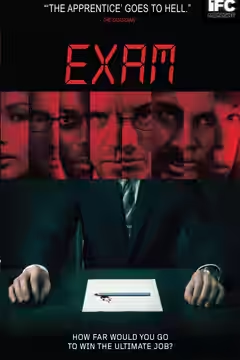
Stuart Hazeldine’s one-room thriller has a first-rate idea and a first-rate opening half hour. After that the writing thins, the acting gets loud and the ending shrugs. Worth a look for the setup, if you are the puzzle sort.
Stuart Hazeldine’s first film puts eight people in a room for the last round of a job interview and hands them an exam with nothing printed on it. That is a fine idea for a thriller, and for its first half hour Exam makes the most of it. Then the candidates start talking, and Hazeldine’s own script, which set the trap so neatly, cannot think of enough for them to say. It is a good premise that becomes an average film.
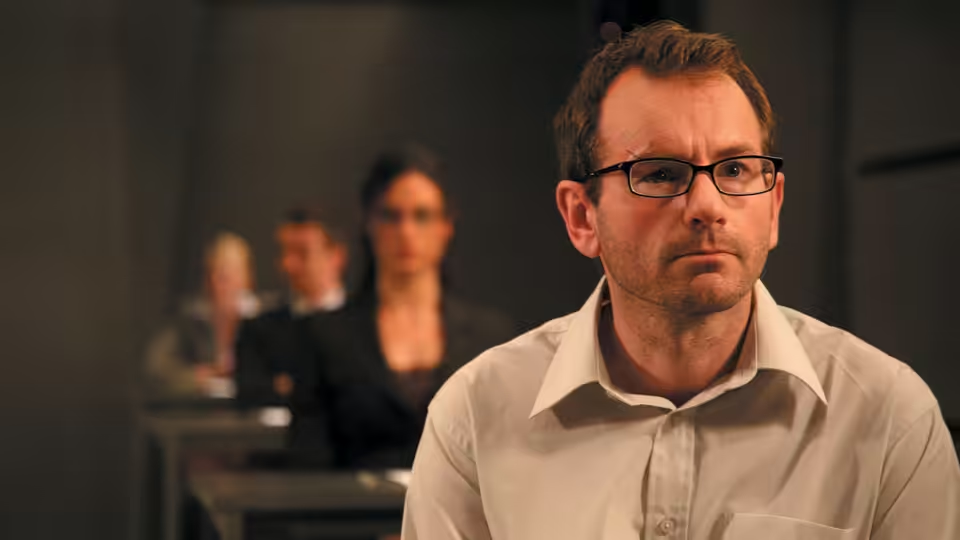
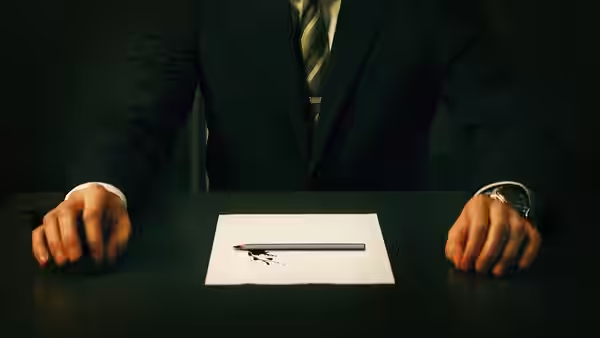
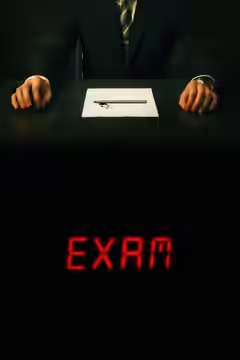
The opening is close to perfect. Colin Salmon’s Invigilator walks in and delivers the rules in the tone of a man who has given this speech many times and enjoyed it: one question, one answer, 80 minutes; spoil your paper, speak to him or the armed guard (Chris Carey) at the door, or walk out, and you are finished. He starts the clock and leaves. The papers are blank. We grinned at that; it is the right size of trick, small and enough to carry an hour if handled well. Within minutes one candidate (Gemma Chan) has written on her paper and been escorted out, and the rest have understood that the test has already begun.
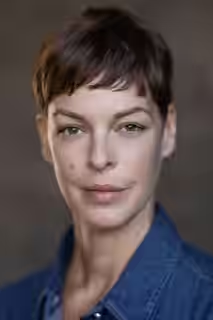
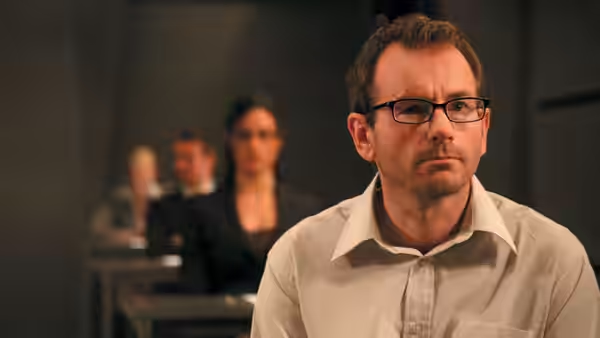
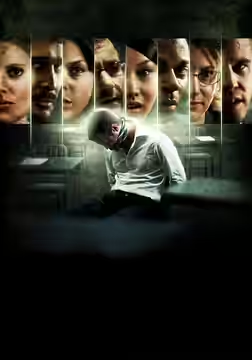
Luke Mably’s White takes charge and hands out names by appearance: Black (Chukwudi Iwuji), Brown (Jimi Mistry), Blonde (Nathalie Cox), Brunette (Pollyanna McIntosh), Dark (Adar Beck) and Deaf (John Lloyd Fillingham), the silent man in the corner nobody thinks to ask. Mably plays White as a salesman who has decided cruelty is confidence with the volume up, and his is the one performance with enough shape to hold the camera for the full length. Iwuji’s Black is the steady, decent man opposite him, and their argument over whether the group should work together gives the film its best stretch. They try the lights. They try the sprinklers. For a while the place is a puzzle and we were happy to be locked in it.
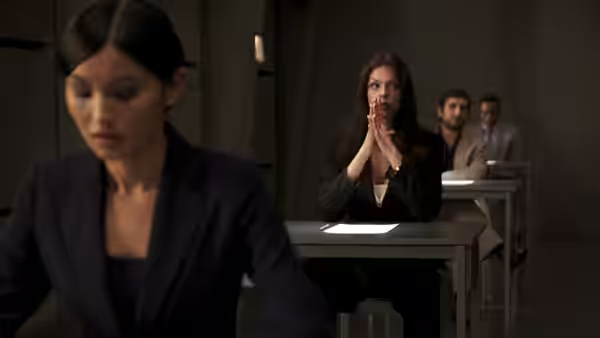
Patrick Bill designs the set as a dark box with eight desks, each under its own lamp, a clock on the wall and a guard at the door. Tim Wooster lights the desks and lets the walls fall away, so you lose any sense of where the space ends, and when the candidates kill the lights the only things left are faces. Rebecca Gore puts everyone in the dark suits they would have put on for the day, so they look alike until they start behaving badly. Stephen Barton’s score ticks and pulses under the talk and knows when to stop. Mark Talbot-Butler cuts close to real time without pretending to it, and the clock never cheats.
Somewhere past the hour the film stops being about the question and starts being about which of these people is worst, and the dialogue, tight when it had rules to recite, goes slack when it has to carry feeling. People shout. People say what they are thinking in complete sentences. A piece of backstory about the company and the illness outside arrives as if somebody had just remembered the film needed stakes. Two of the performances climb to a pitch that would be too much on a stage, let alone two feet from a lens. We went from leaning forward to watching the clock, and it was the film’s own clock, which did not help.
The last ten minutes reach an answer we will not describe. We can say that the solution to the paper is neat and fair in hindsight, and that the second reveal stacked on top of it will have been visible from the middle of the film to anyone who has seen a thriller before. Hazeldine treats the second as the bigger surprise.
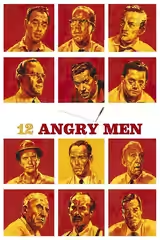
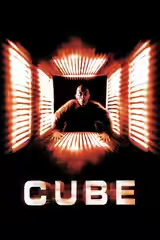
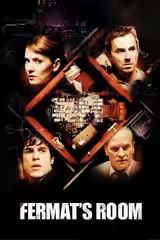
The one-room thriller is a strict form. 12 Angry Men (1957) got 96 minutes out of a jury table because every man at it was a person before he was an argument. Cube (1997) had thin characters and knew it, so it kept the traps coming. Exam wants the people of the first and the mechanism of the second and manages about half of each. Hazeldine can plainly direct; his next film needs another writer in it.
Watch it at home with someone who likes puzzles and does not mind being shouted at, and agree beforehand not to guess out loud. It runs 101 minutes, carries a 15, and the best half hour is the first.