René Laloux’s animated science fiction is worth seeing for its disturbing creatures and Alain Goraguer’s music. The characters are less absorbing, but the drawings make its warning about coexistence difficult to shrug off.
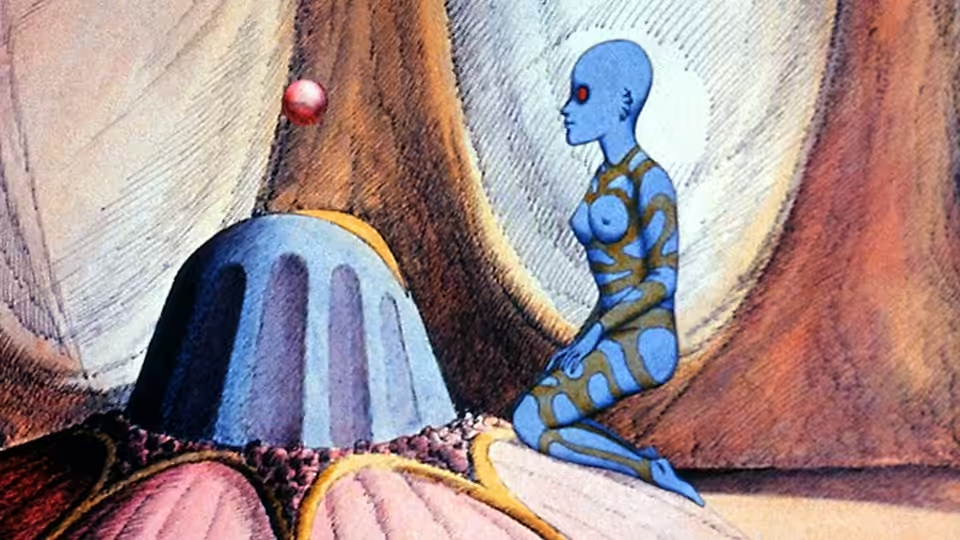
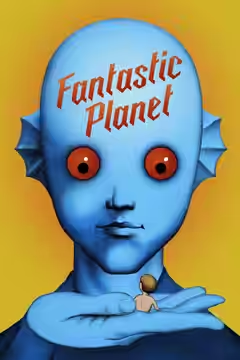
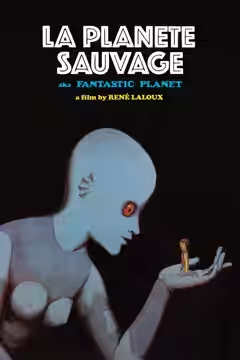
Fantastic Planet is worth an evening for its creatures and landscapes, with the caveat that its characters are less absorbing. René Laloux makes an unfamiliar world sufficiently unsettling that simply looking around becomes a good reason to stay. At 72 minutes, the film gives its strange inhabitants time to register without demanding an expedition from the audience. We recommend it warmly, though anyone hoping for a close attachment to Terr may find the scenery doing most of the work.
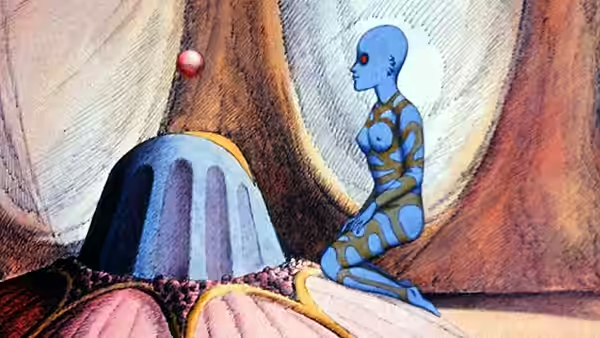
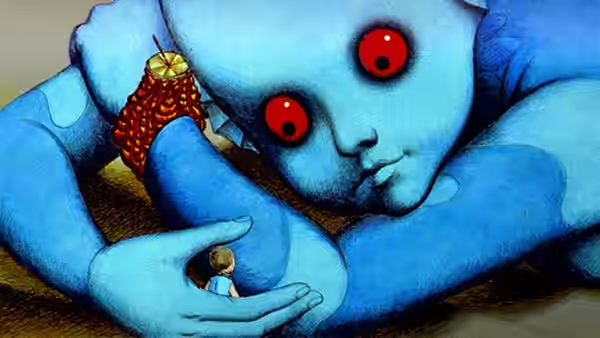
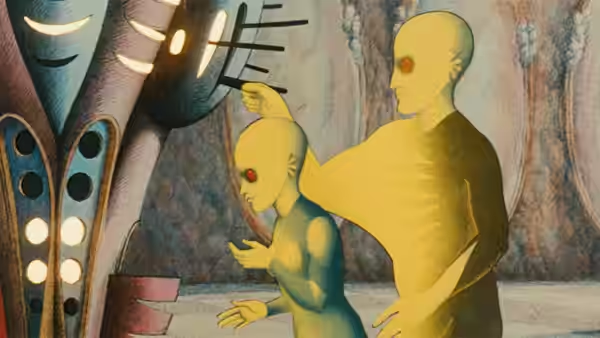
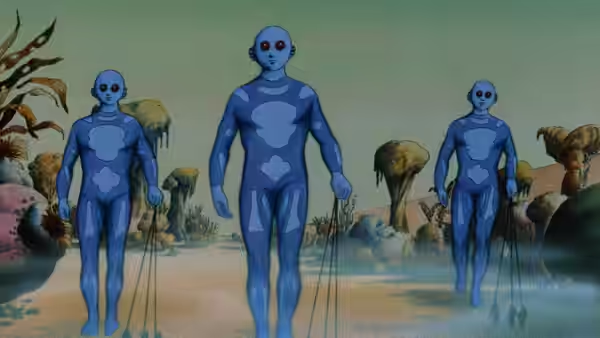
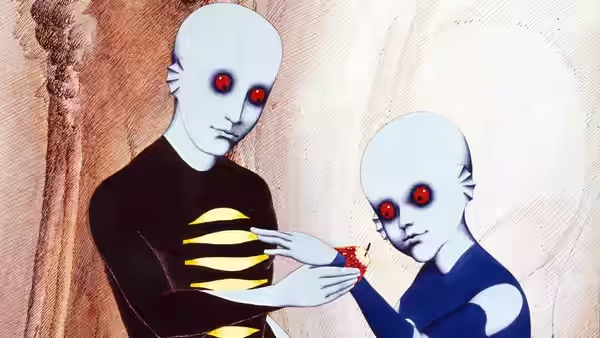
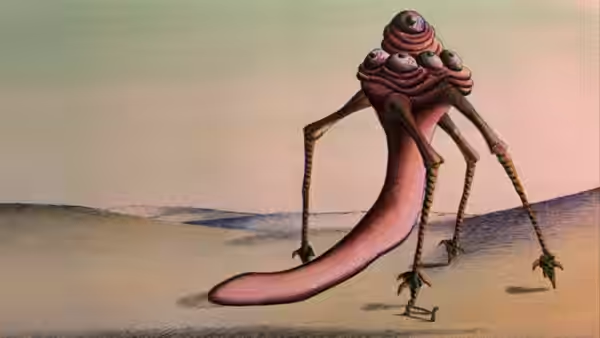
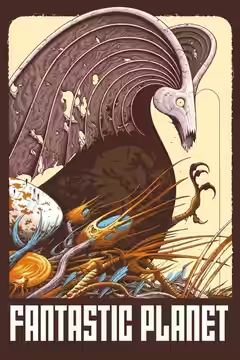
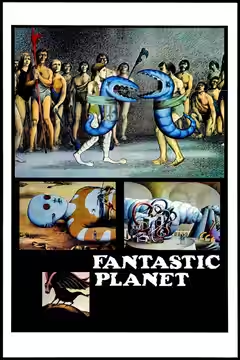
Roland Topor’s designs are the principal attraction, and their unpleasantness is an important part of their appeal. The scenery seems as alive and potentially dangerous as the creatures moving through it, making the distinction between a place and something inhabiting it feel unreliable. We were unsettled by the creatures because their unfamiliar shapes gave us so little help in deciding what they might do. The drawings reward close attention without making that attention particularly comfortable.
The cinematography by Lubomír Rejthar and Boris Baromykin serves those designs well, allowing their odd proportions and unfamiliar surroundings to remain legible. The relatively simple animation occasionally makes the figures feel stiff, but fluid movement would not necessarily improve their disturbing appearance. There is pleasure in having enough time to examine a drawing rather than merely following something across it. Some of the images invite a longer look than the action strictly requires, and the film is sensible enough to allow one.
The screenplay by René Laloux and Roland Topor, adapted from a novel by Stefan Wul, is less consistently rewarding. Its concern with coexistence is clear, but the characters do not always acquire enough individuality to make that concern feel personal. Jean Valmont’s adult Terr supplies the narration, which helps us follow the story without bringing us especially close to its central figure. We understand the warning readily enough; the difficulty is finding somebody whose company matters as much as the next strange creature.
Marta Látalová and Hélène Arnal’s editing gives the film a measured pace that generally suits its drawings. There is room to take in the surroundings, and the story remains manageable despite how unfamiliar everything looks. A short running time does not automatically make a film brisk, nor does this one need to hurry through its chief attraction. The weaker passages are those in which the characters have to sustain our attention without much help from their environment.
Alain Goraguer’s music makes a substantial difference here. Its unhurried ease offers a welcome way into a film whose inhabitants can be difficult to warm to, and it keeps the solemnity from becoming oppressive. We enjoyed listening even when the storytelling had become rather thin. The score gives the images room to disturb us without insisting that every unusual creature must arrive accompanied by an instruction to be afraid.
Science fiction often spends so much effort explaining an unfamiliar place that it makes the place sound like somewhere we already know. This film leaves enough strangeness intact to make exploration worthwhile, even when its lesson is plain. Its imagination is more persuasive than its characterisation, and that remains a meaningful limitation rather than a reason to dismiss it. Choose it when a remarkable collection of unsettling drawings sounds like sufficient company for the evening.