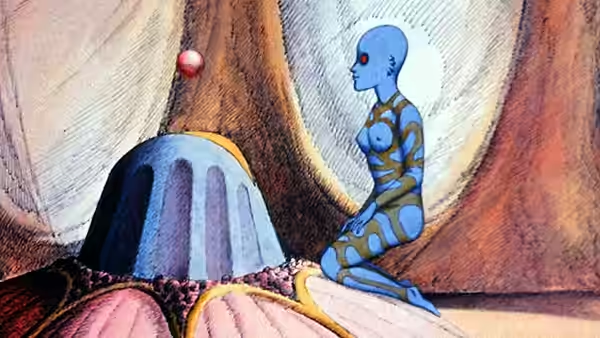
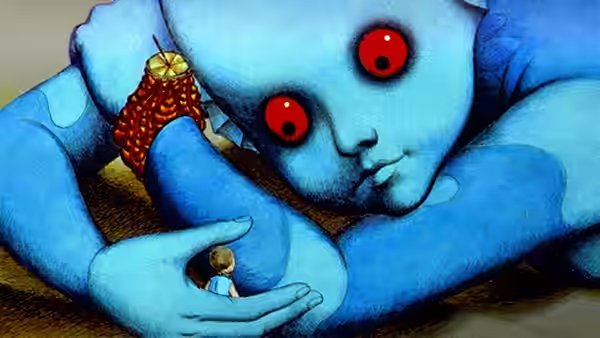
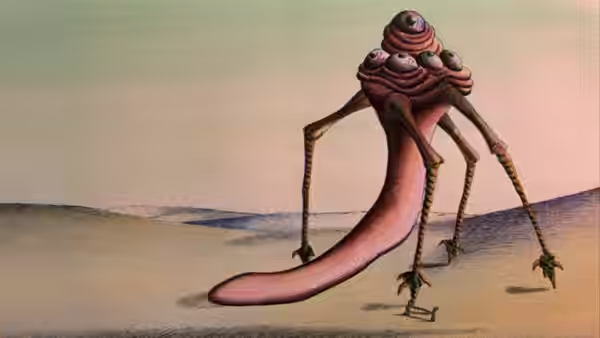
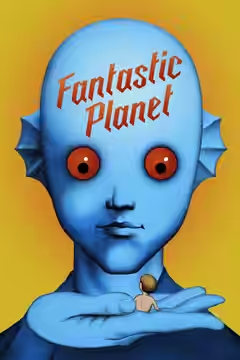
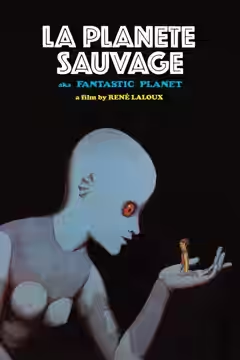
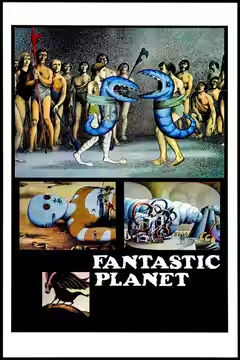
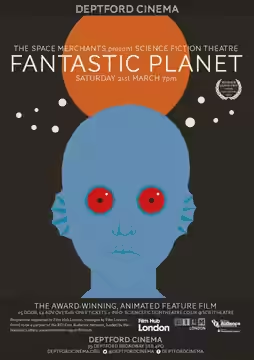
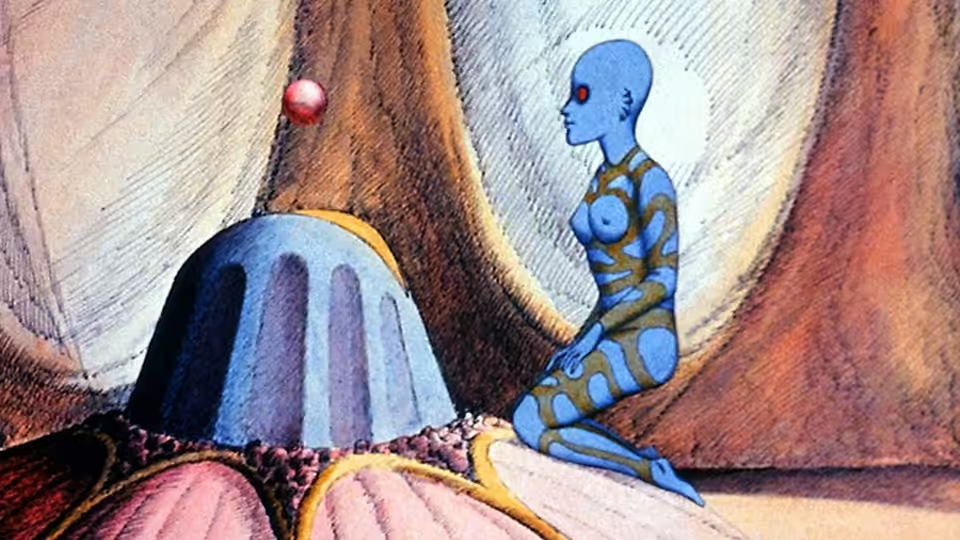
A blue Draag sits on a ledge beside a massive tree trunk
Film review

Fantastic Planet

1973 · Directed by René Laloux · 1h 12m

In a sentenceA planet worth visiting for the music, provided none of the wildlife notices us

On an alien planet, living creatures occupy a landscape full of unfamiliar and dangerous life. Terr’s story is narrated by his adult self (Jean Valmont), with Éric Baugin voicing Young Terr and William Coryn voicing Teenager Terr. Tiwa (Jennifer Drake) and Master Taj (Gérard Hernandez) also inhabit this world. The relationships between its inhabitants raise the question of how different creatures can coexist. René Laloux directs this animated science-fiction story, based on a novel by Stefan Wul.

Fi1m review

René Laloux’s animated science fiction is worth seeing for its disturbing creatures and Alain Goraguer’s music. The characters are less absorbing, but the drawings make its warning about coexistence difficult to shrug off.

Fantastic Planet is worth an evening for its creatures and landscapes, with the caveat that its characters are less absorbing. René Laloux makes an unfamiliar world sufficiently unsettling that simply looking around becomes a good reason to stay. At 72 minutes, the film gives its strange inhabitants time to register without demanding an expedition from the audience. We recommend it warmly, though anyone hoping for a close attachment to Terr may find the scenery doing most of the work.

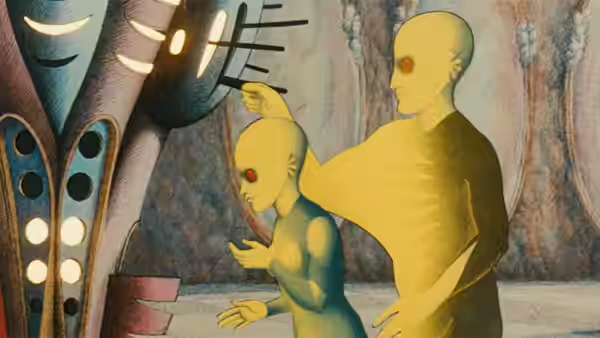
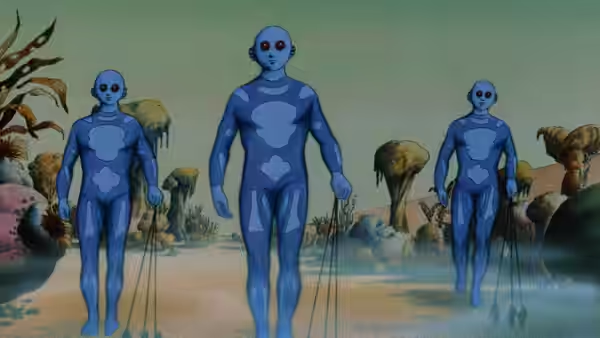
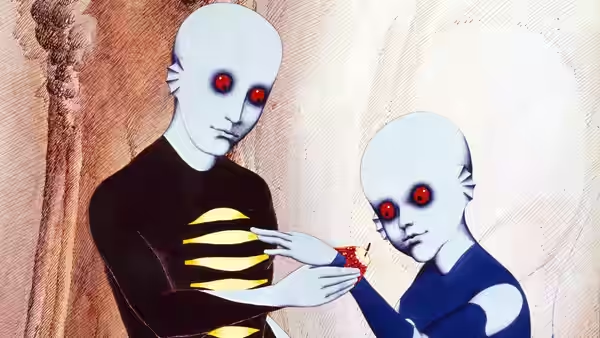
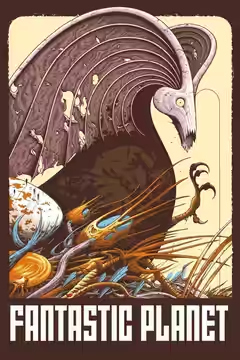
Roland Topor’s designs are the principal attraction, and their unpleasantness is an important part of their appeal. The scenery seems as alive and potentially dangerous as the creatures moving through it, making the distinction between a place and something inhabiting it feel unreliable. We were unsettled by the creatures because their unfamiliar shapes gave us so little help in deciding what they might do. The drawings reward close attention without making that attention particularly comfortable.

The cinematography by Lubomír Rejthar and Boris Baromykin serves those designs well, allowing their odd proportions and unfamiliar surroundings to remain legible. The relatively simple animation occasionally makes the figures feel stiff, but fluid movement would not necessarily improve their disturbing appearance. There is pleasure in having enough time to examine a drawing rather than merely following something across it. Some of the images invite a longer look than the action strictly requires, and the film is sensible enough to allow one.

The screenplay by René Laloux and Roland Topor, adapted from a novel by Stefan Wul, is less consistently rewarding. Its concern with coexistence is clear, but the characters do not always acquire enough individuality to make that concern feel personal. Jean Valmont’s adult Terr supplies the narration, which helps us follow the story without bringing us especially close to its central figure. We understand the warning readily enough; the difficulty is finding somebody whose company matters as much as the next strange creature.

Marta Látalová and Hélène Arnal’s editing gives the film a measured pace that generally suits its drawings. There is room to take in the surroundings, and the story remains manageable despite how unfamiliar everything looks. A short running time does not automatically make a film brisk, nor does this one need to hurry through its chief attraction. The weaker passages are those in which the characters have to sustain our attention without much help from their environment.

Alain Goraguer’s music makes a substantial difference here. Its unhurried ease offers a welcome way into a film whose inhabitants can be difficult to warm to, and it keeps the solemnity from becoming oppressive. We enjoyed listening even when the storytelling had become rather thin. The score gives the images room to disturb us without insisting that every unusual creature must arrive accompanied by an instruction to be afraid.

Science fiction often spends so much effort explaining an unfamiliar place that it makes the place sound like somewhere we already know. This film leaves enough strangeness intact to make exploration worthwhile, even when its lesson is plain. Its imagination is more persuasive than its characterisation, and that remains a meaningful limitation rather than a reason to dismiss it. Choose it when a remarkable collection of unsettling drawings sounds like sufficient company for the evening.
Critical consensus AI synthesised

78
Positive
6
Mixed
0
Negative
0

The reviews are uniformly positive, with praise concentrated on Fantastic Planet’s surreal imagery and unsettling creatures. Most critics find its alien landscapes more than decorative: they make the film eerie, imaginative and capable of connecting unfamiliar life to recognisable horrors. Roland Topor’s designs receive particular praise from The AV Club, while the wider consensus values the visual invention that gives the film’s ideas such a distinctive setting.

The differences are chiefly matters of emphasis, and the spread of opinion is narrow. The AV Club finds the surreal details more enduring than the broad allegory, whereas Eye for Film praises the allegory’s layers alongside the painterly animation. Empire acknowledges the basic animation style but finds it transformed by the organic landscapes and nightmarish creatures. These are qualifications within a favourable consensus, rather than signs of a substantial dissent over the film’s merits.

Empire
17 August 2006 · Alan Morrison
85*

Morrison finds the film surreal and wonderful, calling it a distinctive European animation oddity. He praises how its organic landscapes and nightmarish creatures transform the basic animation style.

Read the full review →
The AV Club
18 June 2016 · B+ · Mike D'Angelo
83

D’Angelo finds the film’s strange, singular visual imagination still striking and says it has aged remarkably well. He especially praises Roland Topor’s mesmerizing designs and the surreal details that outlast the film’s broad allegory.

Read the full review →
Los Angeles Times
9 October 1998 · KEVIN THOMAS
75*

Thomas presents the film as an eerie, imaginative allegory with a clear warning about the need for living creatures to coexist. He especially praises its surreal imagery and bizarre, dangerous creatures.

Read the full review →
Time Out
26 July 2012
75*

The review recommends the film as a worthwhile, thoughtful experience. It praises the concept for being more than merely interesting on the page.

Read the full review →
Slant Magazine
23 June 2016 · ★★★½ · Carson Lund
70

The review calls the Criterion package merely pro forma, while noting it remains the best version of the film available. It praises the film’s unsettling visual form and its ability to connect an alien world to familiar horrors.

Read the full review →
Eye for Film
13 September 2006 · Anton Bitel
80*

The critic finds the film well worth revisiting for its psychedelic imagination and layered allegory. He singles out its painterly animation and boundless visual inventiveness as qualities that make it unforgettable.

Read the full review →

Straight answers AI written, from our review

Is Fantastic Planet worth watching?
Fantastic Planet is worth watching for its unsettling creatures, strange landscapes and Alain Goraguer’s music; we score it 80 out of 100. We recommend it warmly to viewers drawn to imaginative animation, though its characters are less absorbing than its drawings, and Terr’s story can feel thin.
How long is Fantastic Planet, and what is it rated?
Fantastic Planet runs 1h 12m. It is an animation and science fiction film.
Where can I watch Fantastic Planet in Norway?
Fantastic Planet is not on any streaming or rental service in Norway at the moment. It is available in 38 other countries; change your country at the top of the page to see where. Availability is checked daily.
How does Fantastic Planet compare to The Adventures of Prince Achmed?
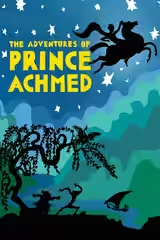
Fantastic Planet is the more unsettling choice beside The Adventures of Prince Achmed, whose silhouette fantasy is warmer and more inviting. Both make elaborate worlds feel alive through simple movement, while their storytelling is less absorbing. We favour Prince Achmed for expressive animation that earns our affection, and Fantastic Planet for disturbing creatures and music that makes their world approachable.
Is Fantastic Planet based on a true story or a book?
Fantastic Planet is based on a novel by Stefan Wul, adapted for the screen by René Laloux and Roland Topor, rather than on a true story. Familiarity with the book is not necessary: Terr’s narration keeps the story manageable, and the film makes its concern with coexistence clear.
What should I watch after Fantastic Planet?
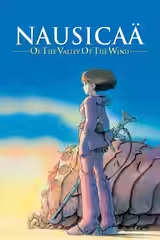
After Fantastic Planet, try The Adventures of Prince Achmed (1926, Fi1m 80): Simple movements make an elaborate fantasy world feel persuasively alive. Then Nausicaä of the Valley of the Wind (1984, Fi1m 85): A more emotionally direct encounter with dangerous creatures and the difficulty of coexistence.

Cast

If you liked this, try…

  1. Son of the White Mare (1981) · not on Fi1m yetFor another animated world whose creatures and landscapes demand close attention.

  2. Angel's Egg (1985) · not on Fi1m yetPatient, unsettling animation that lets strange surroundings explain almost nothing.

  3. The Adventures of Prince Achmed (1926, Fi1m 80)Simple movements make an elaborate fantasy world feel persuasively alive.

  4. Nausicaä of the Valley of the Wind (1984, Fi1m 85)A more emotionally direct encounter with dangerous creatures and the difficulty of coexistence.

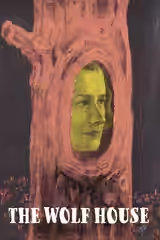
  5. The Wolf House (2018) · not on Fi1m yetFor those who find shifting surroundings more disturbing than a pursuing monster.