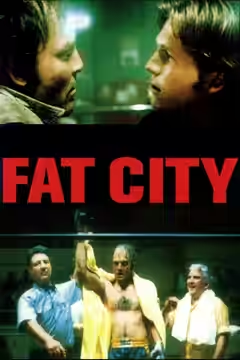
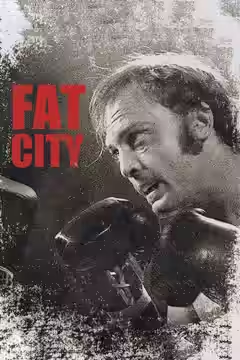
Fat City is a bruising, compassionate boxing drama that refuses to make suffering look useful. John Huston’s patience occasionally becomes drift, but Stacy Keach and Susan Tyrrell make its difficult company worth keeping.
John Huston’s Fat City is a fine boxing drama with little interest in making the sport consoling. It understands why desperate people imagine a different life, and how easily that imagining can become something they do instead of changing anything. The director is unsentimental about them without withdrawing his affection, which is harder than merely making everybody miserable. Leonard Gardner writes the screenplay from his own novel, and the film’s patience with its people gives their disappointments a weight that no stirring speech could supply.
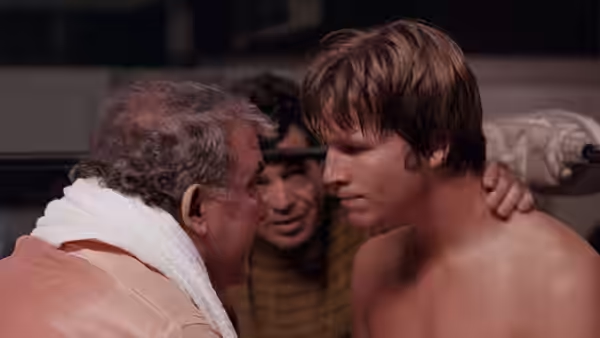
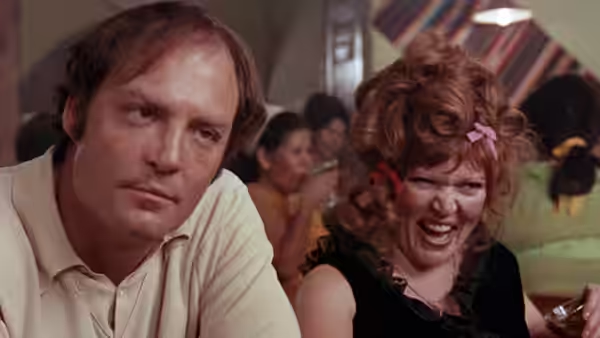
Stacy Keach gives Tully an uncomfortable mixture of need and stubbornness. We believe in his wish for something better, even when he makes it difficult to believe that he will manage it. Jeff Bridges gives Ernie room to exist without announcing what we should learn from him. Both performances keep the film from becoming an exercise in looking down on people whose troubles we can recognise from a comfortable distance.
Susan Tyrrell gives Oma the sharpest resistance to being pitied. Her defiant humour makes a difficult person funny without making her easier to live with, and the performance leaves that difficulty intact. There is no invitation to congratulate ourselves for finding her endearing. She makes the humour feel like something Oma needs, with none of the reassurance that a more charming performance would provide.
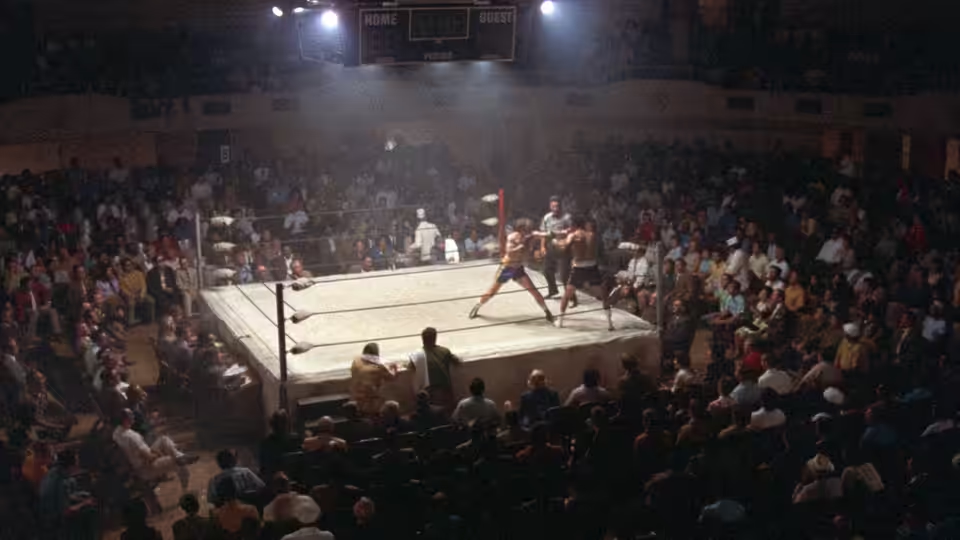
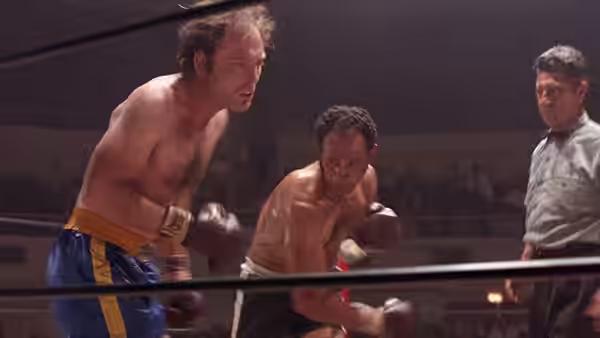
Conrad Hall’s photography lets the boxing look ugly. We winced because the blows feel like damage to bodies we have been asked to care about. The attention to faces makes the punishment difficult to enjoy simply as a sporting contest. Richard Sylbert’s production design helps by giving the people surroundings that seem as worn down as they are, without making those surroundings more interesting than the actors.
Walter Thompson’s editing gives the performances time, and the unhurried pace is usually right. There are stretches, though, when another disappointment adds little to what we already understand. Marvin Hamlisch’s music is sensitively judged, but it cannot give every quiet passage a fresh reason to hold our attention. At 97 minutes the film sometimes feels longer. We wanted a little more movement in the scenes, without wanting their difficulties tidied away.
A boxing drama can do without uplift and still make each scene feel necessary. Here, weariness occasionally has to do too much of the work, and the film asks us to sit with feelings it has already made clear. Yet the director stays interested in people after they have stopped being agreeable, and the actors repay that attention. They are allowed to be funny, selfish and deserving of concern without having to explain themselves in a speech.
We recommend it, with a little warning about the company. Its patience requires some of ours, and anyone hoping for the ring to put an untidy life in order should look elsewhere. Choose an evening when there is room for a film that does not hurry to cheer us up.