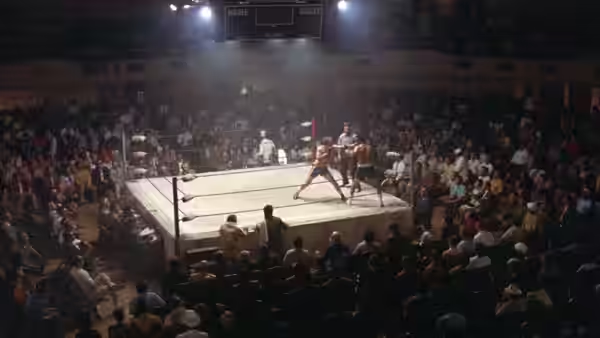
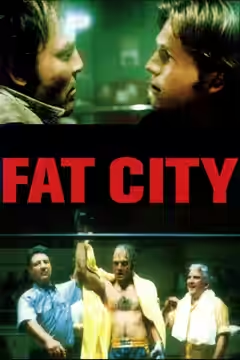
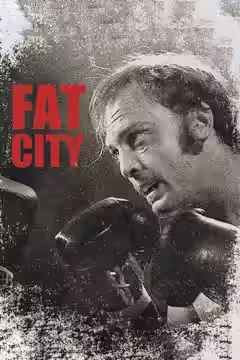
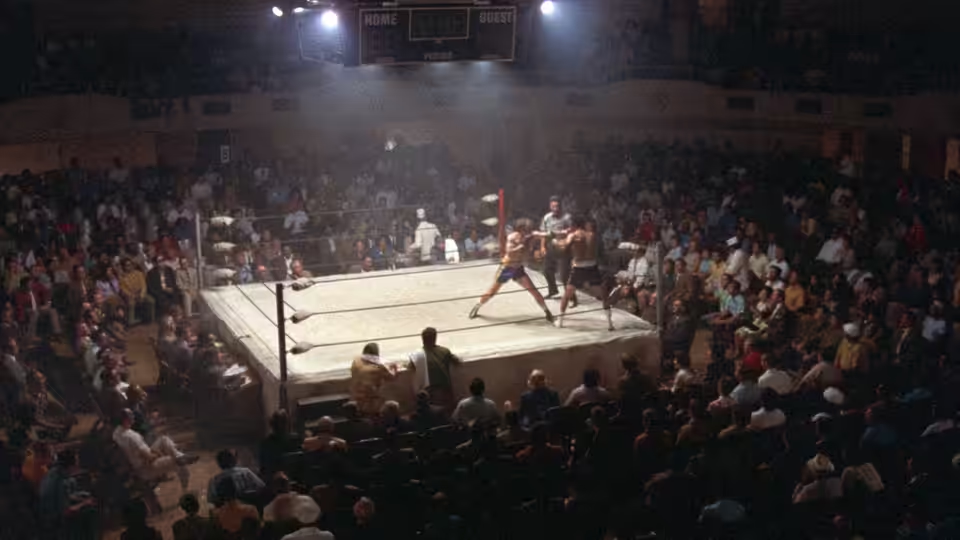
A boxer faces his opponent in a ring as spectators watch from the surrounding seats
Film review

Fat City

1972 · Directed by John Huston · 1h 37m

In a sentenceNobody in this boxing film looks as though winning would sort much out

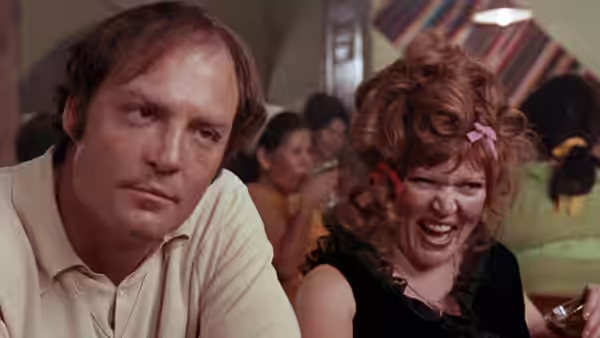
Tully (Stacy Keach), Ernie (Jeff Bridges) and Oma (Susan Tyrrell) live among people who imagine a way out of desperate circumstances. Boxing offers the prospect of change, but the bouts bring their own punishment. Oma answers her troubles with defiant humour. Faye (Candy Clark) and Ruben (Nicholas Colasanto) are also part of these lives, where disappointment does not quite extinguish the hope of something better. Their hopes depend on more than what happens in the ring, as the demands of daily life continue between bouts.

Plays from YouTube when you press play; nothing loads from them until then.

Fi1m review

Fat City is a bruising, compassionate boxing drama that refuses to make suffering look useful. John Huston’s patience occasionally becomes drift, but Stacy Keach and Susan Tyrrell make its difficult company worth keeping.

John Huston’s Fat City is a fine boxing drama with little interest in making the sport consoling. It understands why desperate people imagine a different life, and how easily that imagining can become something they do instead of changing anything. The director is unsentimental about them without withdrawing his affection, which is harder than merely making everybody miserable. Leonard Gardner writes the screenplay from his own novel, and the film’s patience with its people gives their disappointments a weight that no stirring speech could supply.

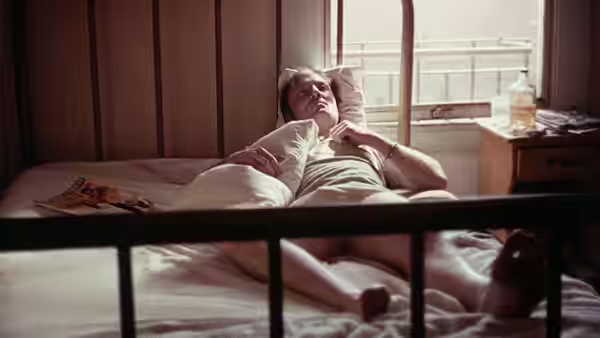
Stacy Keach gives Tully an uncomfortable mixture of need and stubbornness. We believe in his wish for something better, even when he makes it difficult to believe that he will manage it. Jeff Bridges gives Ernie room to exist without announcing what we should learn from him. Both performances keep the film from becoming an exercise in looking down on people whose troubles we can recognise from a comfortable distance.

Susan Tyrrell gives Oma the sharpest resistance to being pitied. Her defiant humour makes a difficult person funny without making her easier to live with, and the performance leaves that difficulty intact. There is no invitation to congratulate ourselves for finding her endearing. She makes the humour feel like something Oma needs, with none of the reassurance that a more charming performance would provide.

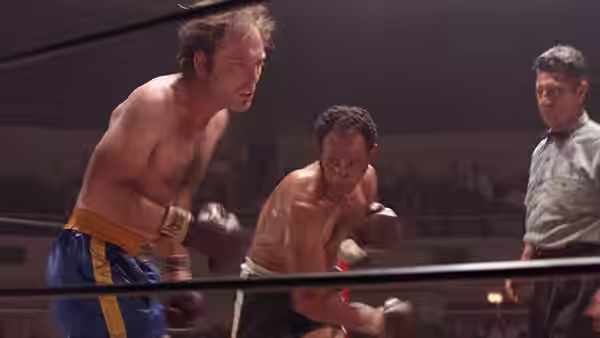
Conrad Hall’s photography lets the boxing look ugly. We winced because the blows feel like damage to bodies we have been asked to care about. The attention to faces makes the punishment difficult to enjoy simply as a sporting contest. Richard Sylbert’s production design helps by giving the people surroundings that seem as worn down as they are, without making those surroundings more interesting than the actors.

Walter Thompson’s editing gives the performances time, and the unhurried pace is usually right. There are stretches, though, when another disappointment adds little to what we already understand. Marvin Hamlisch’s music is sensitively judged, but it cannot give every quiet passage a fresh reason to hold our attention. At 97 minutes the film sometimes feels longer. We wanted a little more movement in the scenes, without wanting their difficulties tidied away.

A boxing drama can do without uplift and still make each scene feel necessary. Here, weariness occasionally has to do too much of the work, and the film asks us to sit with feelings it has already made clear. Yet the director stays interested in people after they have stopped being agreeable, and the actors repay that attention. They are allowed to be funny, selfish and deserving of concern without having to explain themselves in a speech.

We recommend it, with a little warning about the company. Its patience requires some of ours, and anyone hoping for the ring to put an untidy life in order should look elsewhere. Choose an evening when there is room for a film that does not hurry to cheer us up.
Critical consensus AI synthesised

75
Positive
2
Mixed
2
Negative
0
Time Out
· TM
80*

The review presents the film as a marvellous, grimly downbeat study of desperate lives and imagined escape. It singles out Conrad Hall’s cinematography for praise.

Read the full review →
Film Comment
· Alex Cox
64*

The page identifies a Film Comment piece about the 1972 film, but its review text is not available here. I can’t determine the critic’s verdict or what the piece singles out for praise or complaint.

Read the full review →
The New York Times
27 July 1972 · Vincent Canby
64*

The URL indicates a contemporary review of Fat City, but the article text is inaccessible. I can’t verify the critic’s verdict or what the review singled out for praise or complaint.

Read the full review →
The Skinny
29 March 2017 · ★★★★★ · Jamie Dunn
100

Dunn praises the film as a bruising, deeply felt masterpiece that finds affection amid its bleakness. He singles out Huston’s unsentimental depiction of boxing as brutal and ugly, while noting Oma’s defiant humor.

Read the full review →

Straight answers AI written, from our review

Is Fat City worth watching?
Fat City is worth watching for its compassionate performances and unsentimental treatment of boxing; we score it 73 out of 100. Stacy Keach and Susan Tyrrell make difficult people worth spending time with, though the slow pace sometimes drifts. We recommend it for an evening when encouragement is not a requirement.
How long is Fat City, and what is it rated?
Fat City runs 1h 37m. It is a drama film.
Where can I watch Fat City in Croatia?
Fat City is not on any streaming or rental service in Croatia at the moment. It is available in 16 other countries; change your country at the top of the page to see where. Availability is checked daily.
How does Fat City compare to Rosetta?
Fat City is the gentler choice beside Rosetta, which takes a harsher approach to work, exhaustion and the struggle to keep going. We favour Fat City for its patient attention to difficult people and their humour, though it sometimes drifts; Rosetta suits a taste for greater intensity, with its reluctance to explain circumstances a different source of frustration.
Is Fat City based on a true story or a book?
Fat City is adapted from Leonard Gardner’s novel, with Gardner writing the screenplay himself. We find the film’s patient attention to its characters more important than any promise of sporting uplift, and familiarity with the book is not needed to understand their hopes and disappointments.
What should I watch after Fat City?
After Fat City, try A Woman Under the Influence (1974, Fi1m 86): For the same refusal to make difficult people easy to dismiss. Then Rosetta (1999, Fi1m 82): A harsher companion about work, exhaustion and the effort required to keep going.

Cast

Awards

Academy Awards, 1973

Nominated
Best Supporting Actress

If you liked this, try…

  1. The Set-Up (1949) · not on Fi1m yetAnother boxing drama that takes the punishment seriously and keeps its scale human.

  2. This Sporting Life (1963) · not on Fi1m yetSport offers little shelter from anger, loneliness and the need to be loved.

  3. A Woman Under the Influence (1974, Fi1m 86)For the same refusal to make difficult people easy to dismiss.

  4. Rosetta (1999, Fi1m 82)A harsher companion about work, exhaustion and the effort required to keep going.

  5. Tokyo Fist (1995) · not on Fi1m yetBoxing becomes a more feverish means of examining damaged bodies and damaged pride.