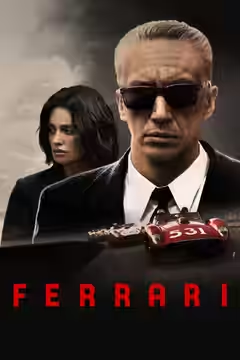
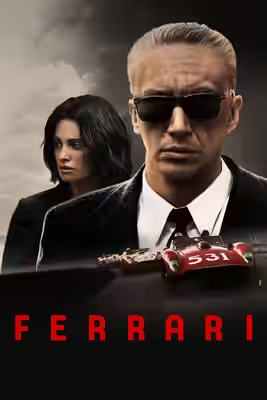
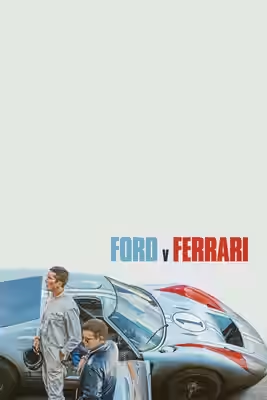
Michael Mann’s portrait of Enzo Ferrari in the summer of 1957 is stiff and talky in the house and thrilling on the road. Penélope Cruz and the Mille Miglia are the reasons to see it; the rest is handsome and slightly airless.
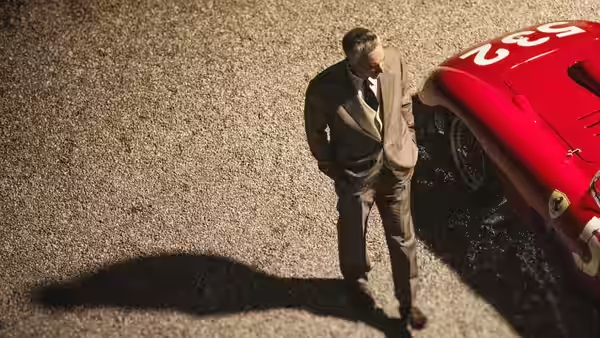
Michael Mann has taken three months of a life rather than the whole of it. It is 1957 and Enzo Ferrari builds racing cars in Modena for a few dozen rich men, which is not enough cars to keep the factory open. His wife Laura owns half the company and has not forgiven him for the death of their son the year before. Across town he keeps a second household, Lina Lardi and their boy Piero, and Laura does not know. The Mille Miglia, a thousand miles of open road out of Brescia and back, is coming round, and Enzo decides that a win will bring a buyer and a loss will finish him.
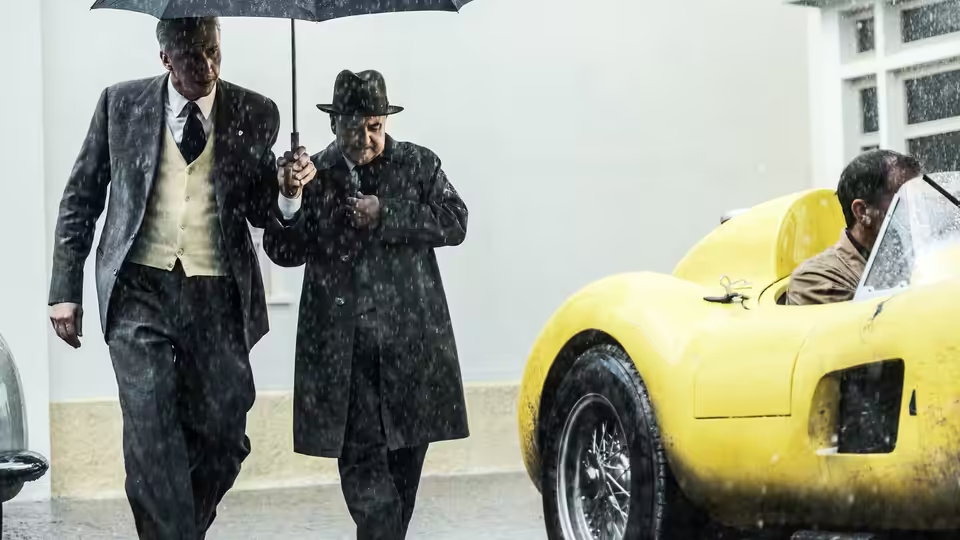
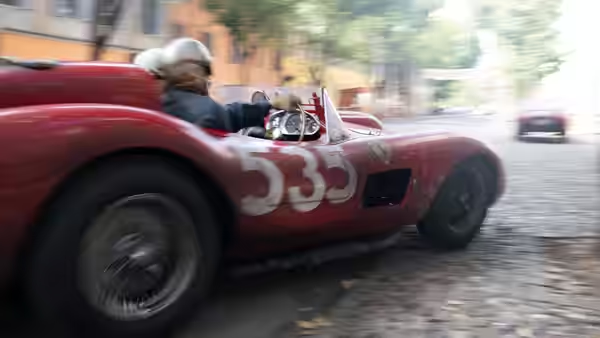
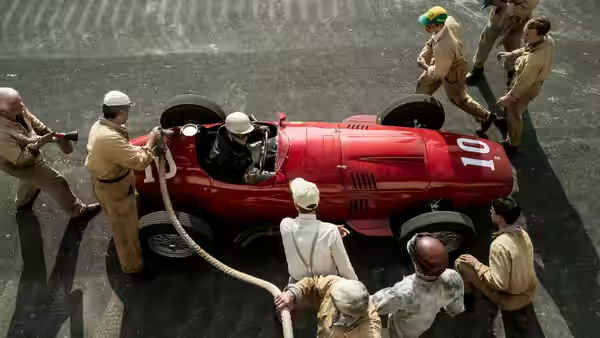
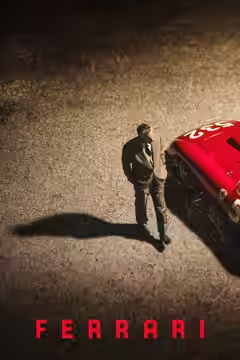
The road is where the film is sure of itself. Erik Messerschmidt shoots the race so that stone walls and hedges and the fronts of churches come at us faster than seems safe, and the drivers are seen through goggles and grit rather than in tidy close-up. Pietro Scalia cuts it so that we can follow each car through each corner. Daniel Pemberton’s score largely gives way to the engines while the racing is on. We always know which car is which, which is rarer than it should be.
Penélope Cruz is the other reason to stay. Her Laura goes about Modena in black and keeps a pistol in her handbag, and the film is on her side from the start. She plays grief as fury, snapping at bankers and priests and Enzo, and then, alone at the boy’s grave, as something much quieter. Every scene she is in has a pulse. The scenes she is not in are polite.
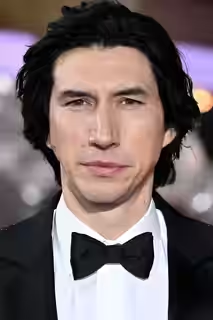
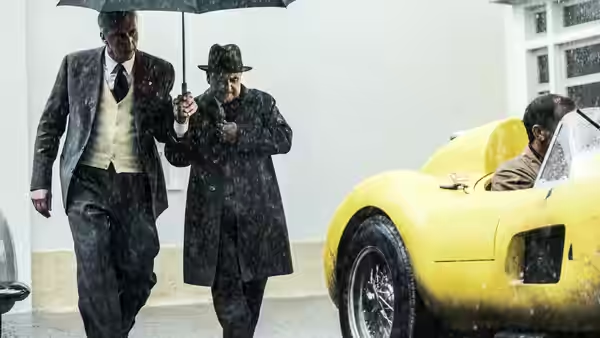
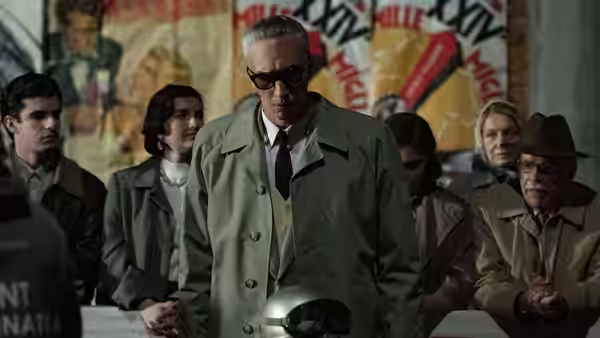
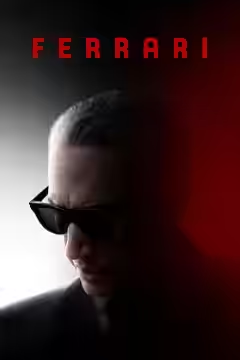
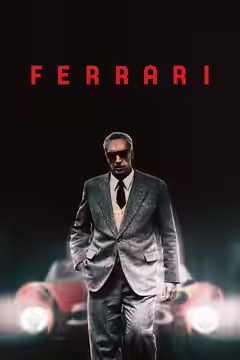
Adam Driver plays Enzo behind dark glasses and a grey suit, hair whitened, voice pitched somewhere between Emilia and New York. He has decided that the man showed nothing, and he shows nothing. Most critics have called the performance muted, and it is; we think muted is the choice rather than the failure, since the film is about a man who has decided grief is a private matter and racing is not. But a choice can still be tiring to sit with, and there are stretches when we wanted him to do anything at all.
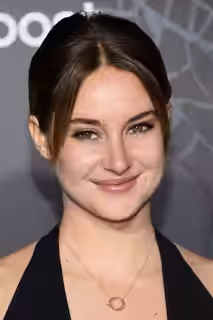
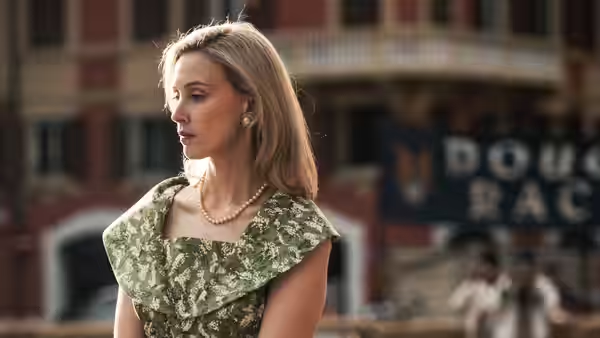
The middle hour is the trouble. Troy Kennedy Martin, who wrote The Italian Job (1969), has written a script in which men in wood-panelled offices explain Fiat, Maserati and the balance sheet to each other, and Gianni Agnelli (Tommaso Basili) turns up to be rich and unhelpful. Shailene Woodley, as Lina, is given a kitchen, a son and a single expression of patient hurt, and no way out of any of them. The drivers are sketched in a line each: Alfonso de Portago (Gabriel Leone) has a jawline and a film-star girlfriend in Linda Christian (Sarah Gadon), Peter Collins (Jack O’Connell) has a grin and Piero Taruffi (Patrick Dempsey) has silver hair. We were restless, and at one point we caught ourselves admiring Maria Djurkovic’s rooms instead of listening to what was being said in them.
Then the Mille Miglia arrives and something happens on the road that we will not describe. Mann shoots it flat: no music, no slow motion, a single wide shot he holds a beat longer than is comfortable. We were horrified, and the horror stayed with us on the way home, because it is the moment the film finally says out loud what Enzo has been saying quietly all along, which is that this is what the cars cost and he has known it for years. Nothing in the house scenes lands that hard. Perhaps nothing could.
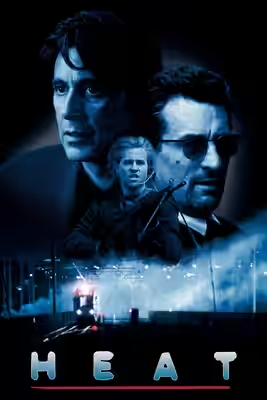
Against Mann’s own record this sits nearer The Insider (1999) than Heat (1995): a man at the top of his trade, a wife he lies to, a lot of talk in rooms. Those films moved. This one mostly watches, and watching a man refuse to feel is a long evening even when it is done this well. Massimo Cantini Parrini dresses everyone beautifully while we wait.
See it in the largest room you can find, with the sound turned up, for the road and for Cruz. At home the race still works and the house scenes feel longer. It runs 131 minutes and carries a 15 certificate, and the certificate is earned in about forty seconds.