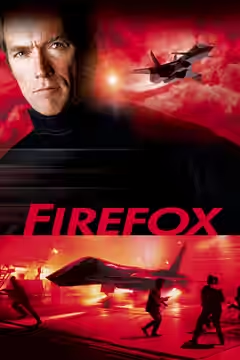
Clint Eastwood directs himself as a damaged pilot sent to steal a Soviet fighter, and the long walk to the hangar is the better part. The Moscow half has gloom, dread and good British actors; the flying half has a model and not much else.
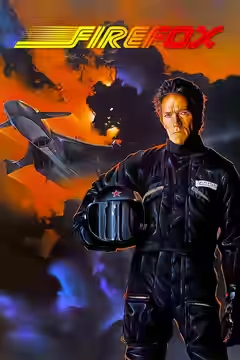
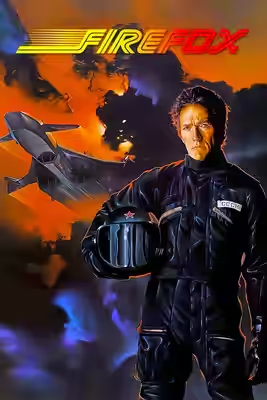
Clint Eastwood directs and produces and puts himself in the cockpit. Mitchell Gant is a retired American pilot living alone in Alaska, wanted for one job: get into the Soviet Union, reach the aircraft the West calls Firefox, and fly it home. The plane is faster than anything the Americans have and fires at a thought, so the recruiters need a man who flies well and speaks Russian, and will overlook that Gant goes back to Vietnam in his head at the worst moments. It is a good premise for a thriller. The film takes 136 minutes over it, and the better half is spent indoors.
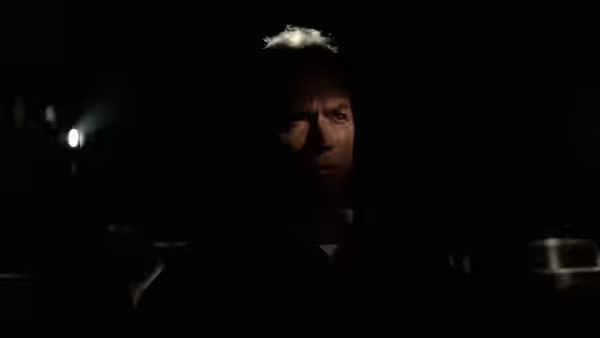
The first half is the infiltration. Gant is flown into Moscow under another man’s name, handed to Pavel Upenskoy (Warren Clarke), a dissident who does not expect to survive the week, and moved through flats, a station lavatory and the back of a lorry while Colonel Kontarsky (Kenneth Colley) of the KGB closes in. Alex Lasker and Wendell Wellman, adapting Craig Thomas’s novel, write this as a relay whose baton gets heavier at every handover. We were tense for most of it. Bruce Surtees lights the interiors with one lamp and a great deal of brown, and lets Eastwood’s face fall into shadow for whole scenes, so a man who must not be seen mostly is not.
The British supporting cast carries the first half. Freddie Jones, as the intelligence man Kenneth Aubrey, fusses over Gant like a schoolmaster who has entered a weak boy for a scholarship. Nigel Hawthorne, as Pyotr Baranovich, the scientist who built the plane and means to give it away, plays a man who has paid for the decision and is waiting for the receipt. Ronald Lacey and Warren Clarke are good as men with hours left. Klaus Löwitsch, as General Vladimirov, who takes over the hunt once the KGB fumbles it, is the one Soviet allowed to be clever. Some critics find them too broad; we found them the only people who seemed to be in any danger.
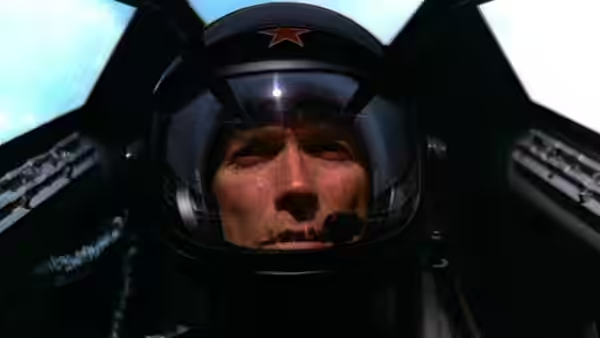
The trouble is the man in the middle. Eastwood plays Gant as a wreck, sweating, flinching, stopping dead in corridors when the memories arrive, an interesting idea for him: a hero who is the weakest link in his own operation. He does not do much with it. The attacks come, Surtees bleaches the screen, and then Gant is fine and the film moves on. Between attacks he has almost no lines and no visible thoughts, and while everyone around him is frightened of his being caught, he never seems much bothered.
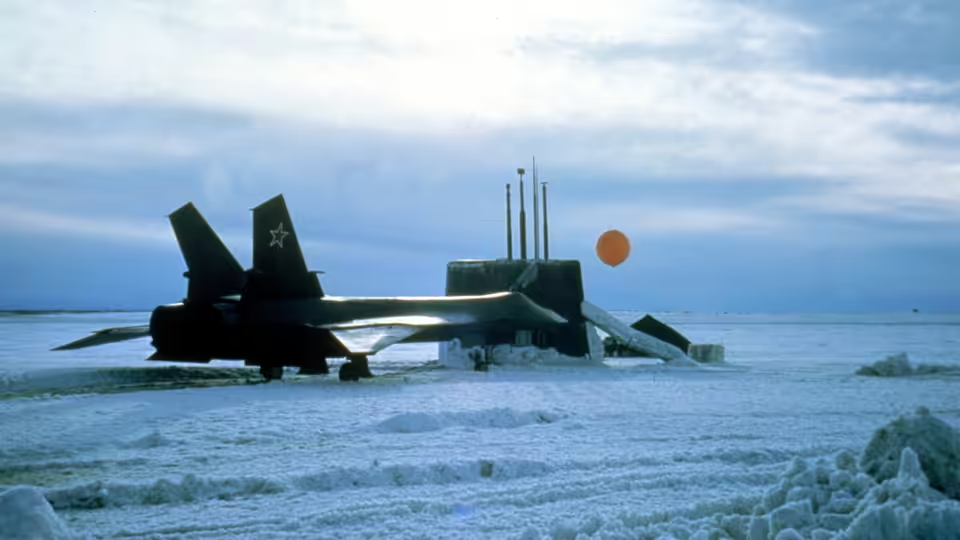
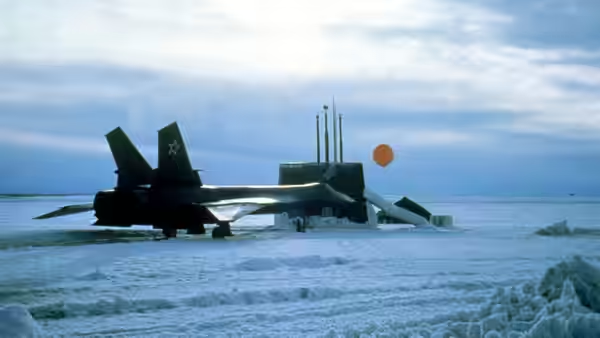
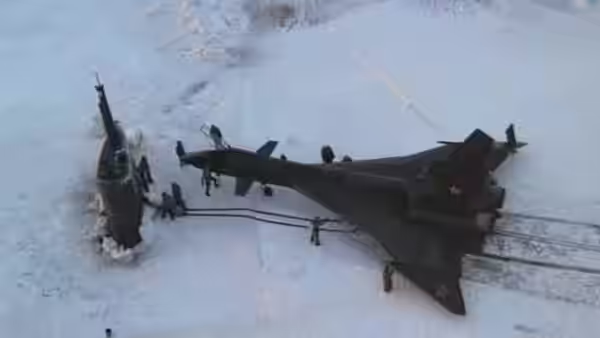
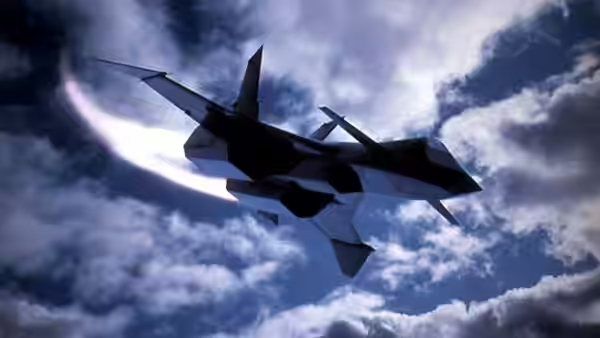
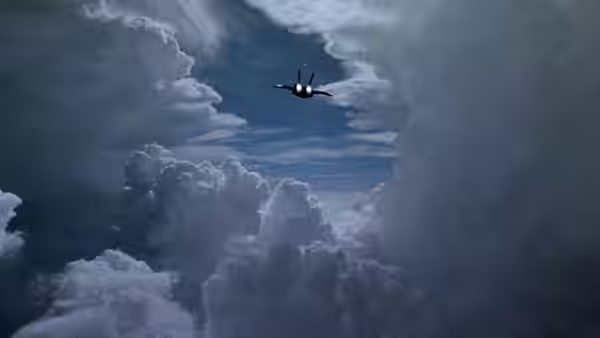
Then the plane. The second half, which we will keep vague, is the flying, and here the film comes apart. Firefox on the ground is a handsome black shape in a hangar. In the air it is a model against a sky it is plainly not in, hard-edged, with clouds behind it moving at a different speed. Ferris Webster and Ron Spang cut the air action as Gant’s face, then the plane, then the instruments, then the plane again, and the plane never changes size the way a real one would. Maurice Jarre’s score is held back for most of the film, which we liked in Moscow, where engine noise and breathing do the work, and missed over the ice, where music would have covered a great deal. We were bored during the climax, and had not expected to be. The dogfight the whole film has been saving for is long and mostly dials.
Eastwood had already shown, in Play Misty for Me (1971) and The Outlaw Josey Wales (1976), that he could run a film slowly and make the slowness pay. Here it pays in the wrong place. The Moscow sections could have stood another ten minutes; the flying could have lost twenty.
Most critics rate it lower than we do, and we can see why: the ending is the part people remember, and it is poor. Watch it at home, where the model work is kinder and the gloom easier to sit inside. It is a film about a plane, and the plane is the worst thing in it.