Film review

For Whom the Bell Tolls

1943 · Directed by Sam Wood · 2h 50m · MPA G

In a sentenceGary Cooper takes three days to blow up a bridge and the film takes nearly three hours to let him

WarRomanceHistoryDrama

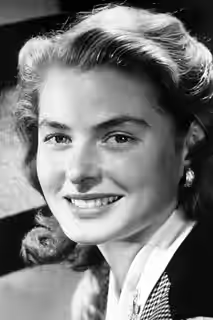
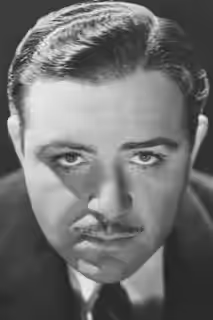
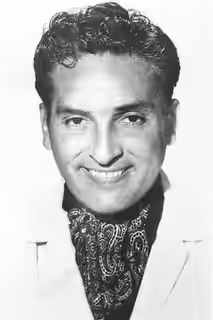
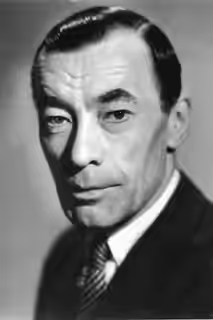
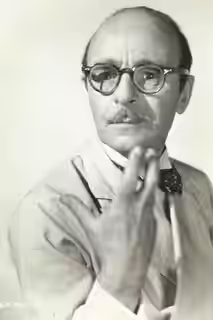
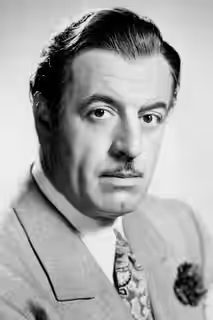
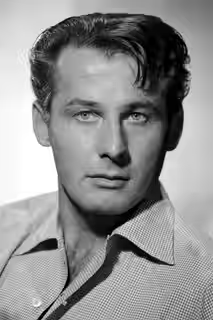
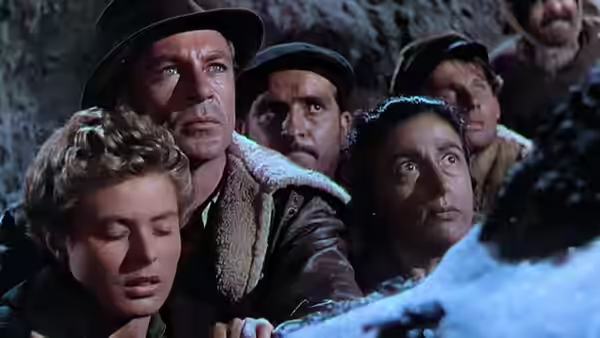
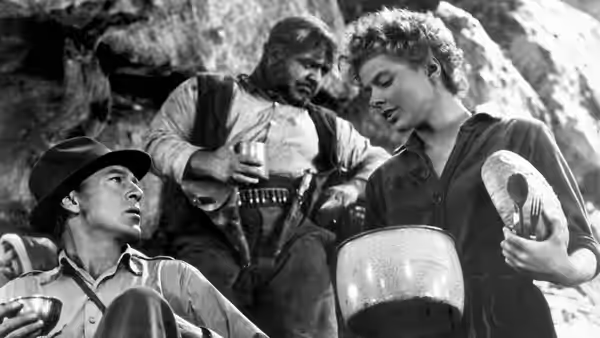
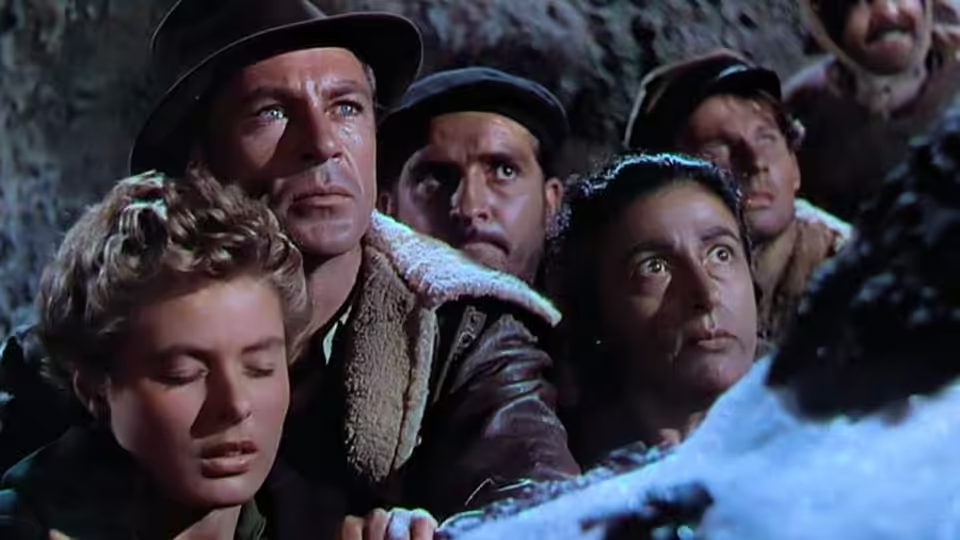
Spain, 1937, in the mountains behind the Fascist lines. Robert Jordan (Gary Cooper), an American fighting for the Republic and an expert with dynamite, is ordered to destroy a bridge in a gorge at the hour a Republican offensive begins. The old man Anselmo (Vladimir Sokoloff) leads him to a band of guerrillas living in a cave: their leader Pablo (Akim Tamiroff), grown fond of his horses and wary of dying; Pablo’s woman Pilar (Katina Paxinou), who is neither; and, with her hair cropped close, Maria (Ingrid Bergman), rescued from a Fascist train. Jordan has three days to study the bridge, count the sentries and persuade Pablo to help him, and Pablo does not want to.

Fi1m review

Sam Wood’s Hemingway is handsome, respectful and nearly three hours long. Katina Paxinou’s Pilar is the reason to sit through it; the love scenes between Gary Cooper and Ingrid Bergman are the reason sitting through it is work.

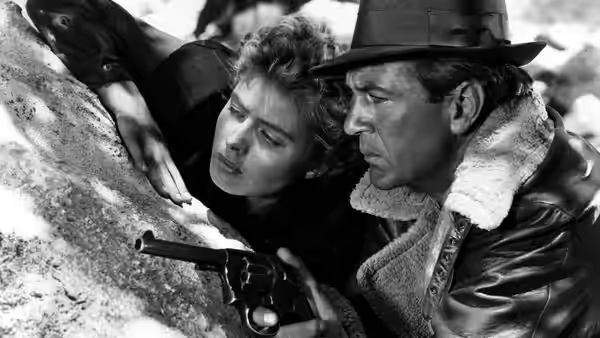
Sam Wood’s film of Ernest Hemingway’s 1940 novel runs 170 minutes, and what happens in them can be put in a sentence. An American with a rucksack of dynamite, Robert Jordan (Gary Cooper), is sent into the Spanish mountains to blow a bridge, and spends three days in a cave with the guerrillas who are supposed to help him. Hemingway made those three days feel like a whole life. Dudley Nichols’s screenplay makes them feel like three days, with a fourth thrown in.

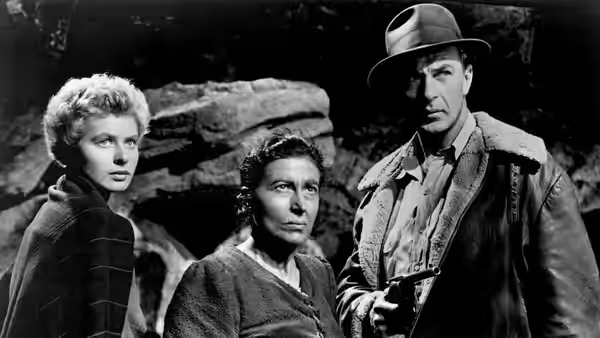
What is good here is good from the start, and most of it is Katina Paxinou. Her Pilar runs the band while Pablo (Akim Tamiroff) drinks and sulks, and Paxinou plays her big, coarse and unafraid, a woman who announces that she was born ugly and dares anyone to argue. Early on she reads Jordan’s palm, sees something, and closes her hand on it without a word. We were more disturbed by that than by anything the film later does with a rifle. Tamiroff is her match, sly and frightened, a man who has stopped believing in the war and knows exactly how that looks to the others. Whenever the two of them are quarrelling by the fire, the film is alive.

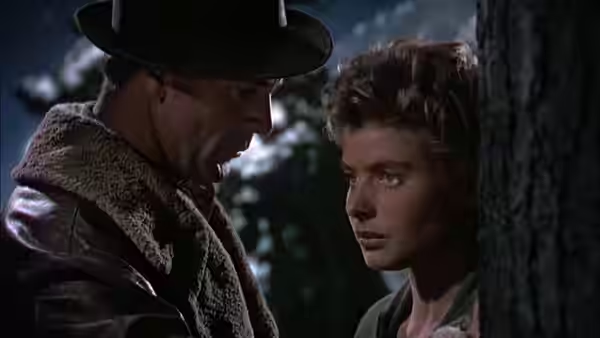
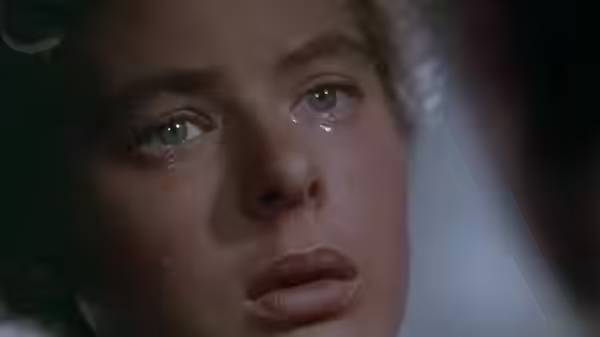
Cooper does what Cooper does. He says little, looks tired and handles a rifle as if he grew up with it, and that suits Jordan up to a point. The point is the love story. Ingrid Bergman plays Maria with her hair cropped short and a plainness the rest of the film could use; the scene in which she asks where the noses go when two people kiss is the one everybody remembers, and she earns it. But Nichols gives the lovers speech after speech about what they are to each other, Wood lays them in the heather with the light going gold, and Victor Young’s strings come up under every one. We were bored by the third of these scenes, and by the fifth we were irritated, because we could see the picture stopping to admire itself.

Ray Rennahan shoots the mountains in Technicolor and they look like a poster for a holiday in Spain, which is to say handsome and not at all like a place where people are being killed. William Cameron Menzies’s cave is broad, dry and well lit, and nobody in it ever looks cold or hungry. This is a war with the mud left out. John F. Link Sr. and Sherman Todd cut cleanly when there is something to cut, and a night reconnaissance and a fight on a bare hilltop in the second half show what the film might have been had it trusted movement over talk. Both are over quickly. The talk is not.

Nichols keeps the politics to a murmur. The men in the cave are fighting Fascists, and the word is used, but what the Republic was and why an American would cross an ocean for it is left to Cooper’s face to explain, and Cooper’s face was never much of a talker. Hemingway’s book is about a man weighing a cause he has begun to doubt against a woman he has just met. The film is about a man who would like to get back to his girl. That is a smaller story, and it is told at greater length.

The publicity of the day promised something thunderous, tender and touching. It manages tender, in Bergman, and thunderous at intervals, and Paxinou supplies the touching more or less on her own. Most critics have split down the middle over it, and we think the split is the honest response to a big, careful, expensive picture that runs an hour longer than its story needs.

See it for Pilar and Pablo, and for the hilltop. At home the mountains shrink and the speeches do not, so keep something to hand, and note that the film reaches a natural pause about halfway; take it.
Critical consensus AI synthesised

54
Positive
2
Mixed
2
Negative
2

The reviews split evenly, two positive, two mixed and two negative, but they agree on where the merit lies. Nearly every critic singles out Katina Paxinou’s supporting performance as the film’s strongest element, and most find Ingrid Bergman’s Maria natural and affecting, with Gary Cooper judged a solid if unremarkable Hemingway hero. The Technicolor mountain scenery is admired even by those who dislike everything else.

The reservations cluster around length and handling. The nearly three-hour running time is called exhausting and too faithful to the novel’s less cinematic passages, and several critics feel Sam Wood treats the material too gingerly, flattening its passion into melodrama and picture-postcard prettiness. The spread is wide and follows the calendar: the contemporary notices in The New York Times and Variety are the warmest, ranking it among the important pictures of its year, while later assessments cool sharply, with Eye for Film dismissing it as polished but boring.

The New York Times
15 July 1943 · Bosley Crowther
75*

The critic finds it the best film of the year, full of vitality with a standout climax, and praises the characterizations (especially Katina Paxinou) along with the script and direction's intimacy. However, it is criticized for excessive length that makes it exhausting and for over-fidelity to the novel's less cinematic elements.

Read the full review →
Variety
31 December 1942 · Variety Staff
70*

It is deemed one of the important pictures of all time on a beautiful Technicolor canvas with a compelling romance, and the supporting performances (especially Katina Paxinou) are highlighted as a triumph. The main complaint is that the nearly three-hour running time overdoes a good thing by focusing too much on one episode.

Read the full review →
Empire
1 January 2000 · David Parkinson
60*

The review recounts the film's production history and notes its mixed critical reception at the time, with complaints about excessive length and melodramatic love scenes. It praises Ingrid Bergman's naturalistic performance as Maria and the grit provided by supporting players like Katina Paxinou.

Read the full review →
Time Out
10 September 2012 · TCh
50*

One of Paramount's prestige pictures of 1943 with strong performances from Gary Cooper as a robust Hemingway hero and Ingrid Bergman, plus an Oscar-winning supporting turn by Katina Paxinou. However, it is dramatically messy, with Sam Wood handling the material too gingerly compared to Hemingway's raw style.

Read the full review →
Sight and Sound
40*

The film follows the Hemingway novel superficially but loses its depth and passion, turning it into picture-postcard flatness and melodrama. It praises the magnificent mountain scenery and standout performances by Ingrid Bergman and Katina Paxinou.

Read the full review →
Eye for Film
4 June 2008 · Themroc
20*

The critic finds the narrative clumsy and disjointed with inconsistent pacing and scenes that drag, failing to capture the novel's passion. They single out the Technicolor photography as looking nice but overall deem it a polished but boring film.

Read the full review →

Cast

Awards

Academy Awards, 1944

Nominated
Best Actor
Nominated
Best Actress
Nominated
Best Art Direction, Color
Nominated
Best Cinematography, Color
Nominated
Best Film Editing
Nominated
Best Original Dramatic or Comedy Score
Nominated
Best Picture
Nominated
Best Supporting Actor
Won
Best Supporting Actress

If you liked this, try…

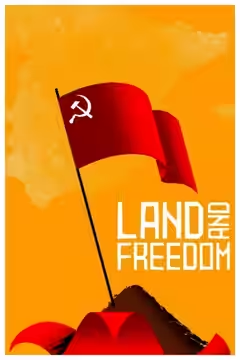
Land and Freedom poster83

Land and Freedom

1995 · Ken Loach’s Spanish Civil War, with the politics the 1943 film left out.

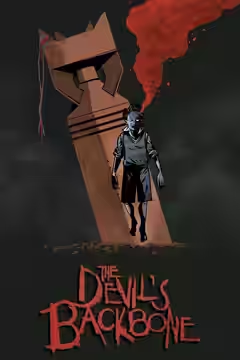
The Devil's Backbone poster

The Devil's Backbone

2001 · Guillermo del Toro’s orphanage ghost story, the same war seen from a child’s bed.

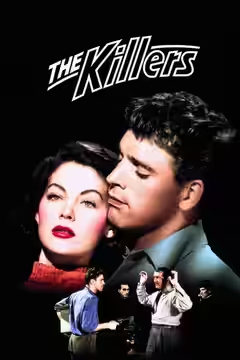
The Killers poster

The Killers

1946 · Hemingway on screen done short and sharp, which is how he wrote.

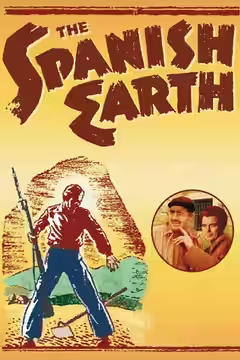
The Spanish Earth poster

The Spanish Earth

1937 · Joris Ivens’s documentary from the front, narrated by Hemingway, before the novel.

Butterfly's Tongue poster

Butterfly's Tongue

1999 · A Galician boy, his schoolmaster and the summer the war arrives; quiet and hard.