Jerry Zucker’s supernatural romance earns its tears, largely because Patrick Swayze and Demi Moore make the loss feel personal. Whoopi Goldberg keeps it funny, though a plot that repeatedly demands fresh disbelief tries our patience.
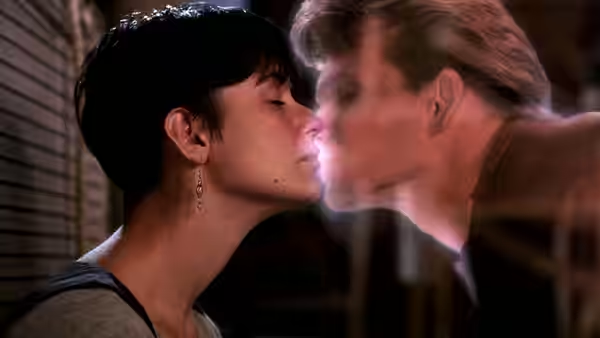
Ghost is a moving, funny romance with a thriller plot that needs more indulgence than it deserves. Director Jerry Zucker and writer Bruce Joel Rubin take a wish that needs little explanation – another chance with someone we have lost – and add the difficulty of making contact with the living. Sam Wheat is murdered, leaving Molly Jensen to grieve and Sam struggling to reach her. The supernatural business works because the longing is easy to understand.
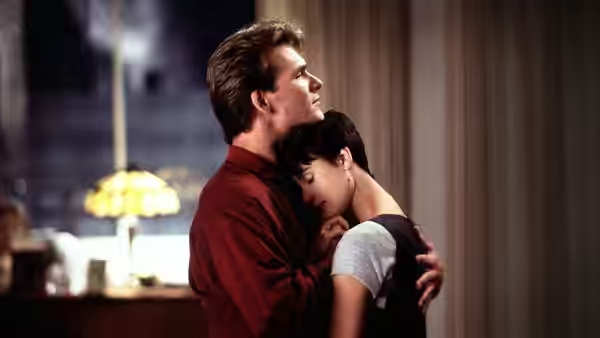
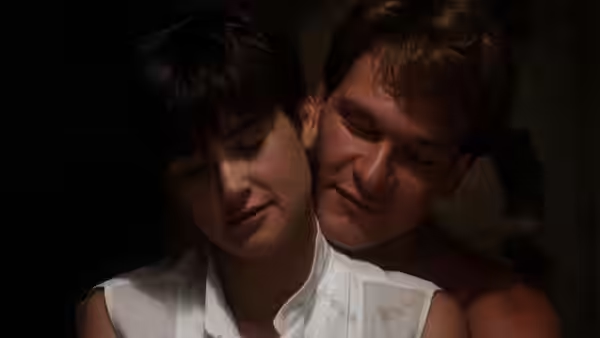
Patrick Swayze gives Sam an earnestness that could become tiresome without Demi Moore’s more immediate pain. Moore makes Molly’s grief feel like something happening to a person, rather than a cue for the audience to start crying. We were moved by her tears after Sam’s death, more than we expected to be. Swayze’s directness helps too: he does not seem embarrassed by how much Sam loves her, and that makes it easier to care about what she has lost.
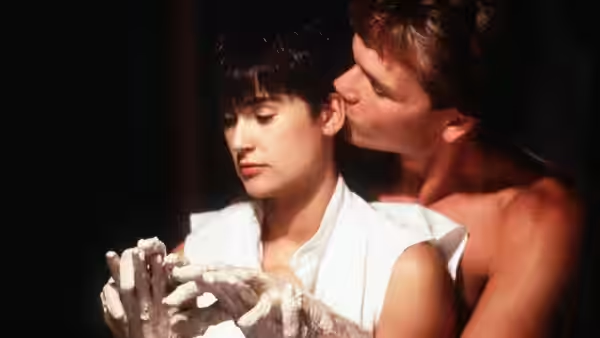
The pottery scene gives that loss something physical to refer back to: two people enjoying being close. Adam Greenberg’s photography works here because the contact between the lovers holds our attention without needing much explanation. Jane Musky’s production design is less persuasive when their surroundings look too carefully prettified. The clay is a welcome bit of mess. The scene establishes an ease between Swayze and Moore that the film can rely on once they are separated.
Whoopi Goldberg’s Oda Mae Brown makes the mixture of romance, scares and comedy work. A fraudulent medium faced with an inconveniently real dead man is a sound joke, and Goldberg gives the reluctance enough force to keep Sam from becoming solemn company. Her irritation is funny because she treats his supernatural predicament as a considerable nuisance to herself. Zucker lets her make a fuss without making the lovers’ feelings ridiculous, and her scenes supply the impatience the rest of the film sometimes lacks.
Rubin’s script is less convincing when it needs Molly to remain unconvinced. Her difficulty accepting Sam’s attempts at contact makes sense at first, but repeated disbelief begins to feel like a means of extending the running time. At 127 minutes, the film has room to test our patience as well as hers. The thriller needs those delays more than the romance does, and Zucker does not always disguise the effort involved.
Editor Walter Murch does much to keep the changes of tone moving, allowing the comedy to relieve the sadness without making either seem like an interruption. His pacing is more assured than the plotting. Maurice Jarre’s music can be insistent about the feelings we are supposed to have, especially when the actors have already made them clear. We accept that this is openly sentimental filmmaking, but some scenes would benefit from less musical encouragement to feel sad.
Against the usual demands of a supernatural romance, Ghost gets the difficult thing right: we care about the couple before we start worrying about the rules. The afterlife explanations are less satisfying than the human reactions to them. Swayze, Moore and Goldberg make an unlikely combination, but all three take the same improbable situation seriously enough to hold it together. Give it an evening if a love story is what we are choosing, with a little patience reserved for the unnecessary delays.