Yamazaki puts Godzilla back in the ruins of 1945 and makes him frightening again, with a boat chase and a night attack as good as anything in the series. The people around him say what they feel at full volume, and then say it again.
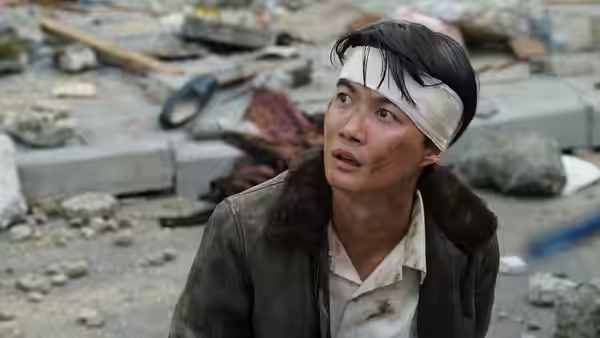
Takashi Yamazaki, who writes and directs, has put Godzilla back where he started and then a few years earlier. It is 1945. Koichi Shikishima (Ryunosuke Kamiki), a kamikaze pilot, lands on Odo Island claiming a fault with his plane that the mechanic, Tachibana (Munetaka Aoki), cannot find. That night something walks out of the sea. Shikishima is handed a machine gun and does not fire it. He goes home to a Tokyo that has been burned flat, and Godzilla Minus One is about what he owes and to whom. It is a war film with a monster in it, and it is the best-made film about this monster we have seen in a long while. It is also louder about its feelings than it needs to be.
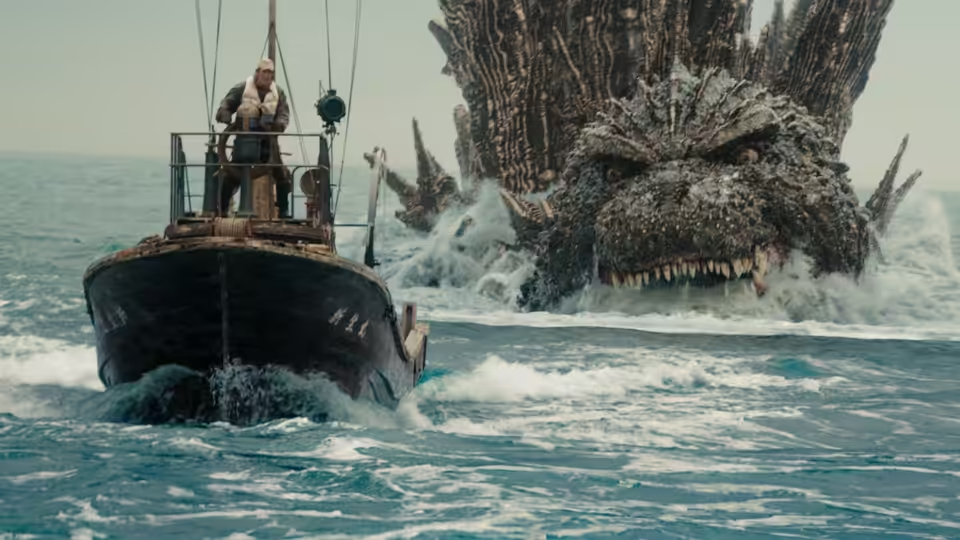
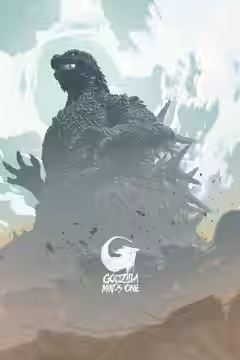
Start with the animal. This Godzilla has small eyes, a heavy jaw and fins down his back like broken bone. Kōzō Shibazaki shoots him almost always from the ground, at the height of a running man, so that what we see is a foot coming down, a jaw opening above the roofline, a tail passing a window. The night on Odo Island is lit by flares and gun flashes and nothing else, and the thing comes through the huts like a crocodile through reeds. We were frightened, properly, in a way these films have not managed in years, and the reason is that he moves like something hunting.
The set piece we keep returning to is on the water in daylight. Shikishima’s minesweeper, a wooden boat with a crew of four, is asked to slow the creature down with what it has on board, which is a mine and a length of rope. Ryuji Miyajima cuts it like a chase in a road film: the wake, the faces, the winch, the wake again. There is no music for long stretches, only the engine and the water. We held our breath for most of it, and Kuranosuke Sasaki’s captain, Akitsu, swearing at his own boat, is the only relief the scene allows.
Kamiki plays Shikishima as a man who has decided he is already dead and is annoyed to keep finding himself alive. It is a performance built from a clenched jaw and a stare, and it works until the script asks him to shout, which it does more than once. Minami Hamabe gives Noriko a stubbornness that stops her being a saint. Sakura Ando, as the neighbour Sumiko, has the best scenes among the people: she spits at Shikishima for coming home when her children did not, and then feeds the baby anyway, without softening her face.
The trouble is volume. Naoki Sato’s score swells under every declaration, and there are many declarations. Characters tell each other what the film is about, that the country treated life too cheaply, that this time nobody will be asked to die, and then another character says it in the next scene. The dialogue puts the meaning on the surface and leaves it there. We do not mind melodrama played straight; we minded being told the same thing four times. Then Akira Ifukube’s themes from the original films arrive as a march when the fighting starts, and the hair on our arms stood up. That is the one place the noise pays for itself.
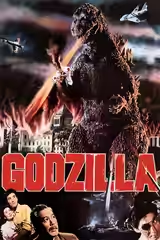
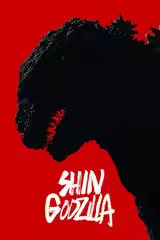
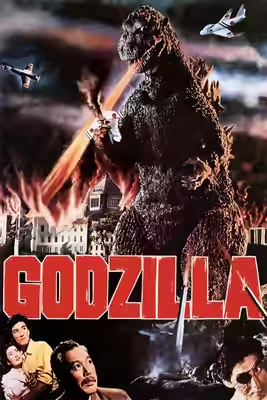
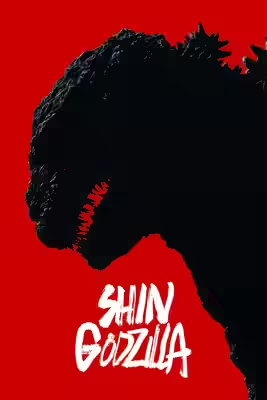
Anri Jojo’s Tokyo is a plain of ash with shanties on it, and Aiko Mizushima dresses everyone in the same brown demob cloth, so the whole city looks like one family that has lost everything. This is a poorer, more domestic place than the one Ishirō Honda flattened in the 1954 Godzilla, and Yamazaki’s film is a companion to that one rather than a rival: Honda’s monster was the bomb, and this one is closer to the war itself, the part the survivors carried home. Set against Shin Godzilla (2016), which was about committees, this is about a kitchen table. This one is easier to feel and harder to think about.
The last half hour is a plan, and we will not describe the plan or how it goes. We will say that it moved us more than we expected a film with a giant lizard in it to manage, and that the reason was not the lizard. It was Munetaka Aoki’s Tachibana, who has carried a grievance since the first ten minutes, and the way his face changes when he is finally asked for something. See it in a cinema if you can, subtitled, with the sound up. At 125 minutes it earns almost all of them.