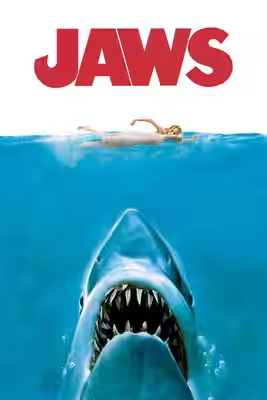
Steven Spielberg’s Jaws is a superb thriller because its people matter as much as its shark. The writing occasionally pushes its point too hard, but the suspense is patient, clear and still frightening.
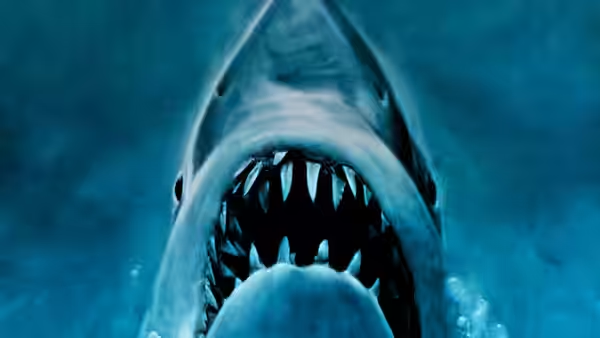
Jaws works because Steven Spielberg takes the people seriously before asking us to fear for them. The shark supplies the danger, but human vanity and self-interest let that danger grow. We think it is a superb thriller, with excitement that depends on following what is happening and caring who is caught up in it. Peter Benchley and Carl Gottlieb’s screenplay, adapted from Benchley’s novel, gives the characters enough life to hold our attention even when there is nothing threatening in view.
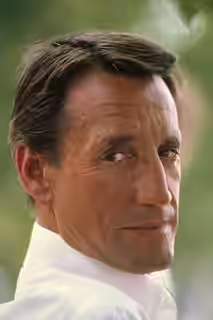
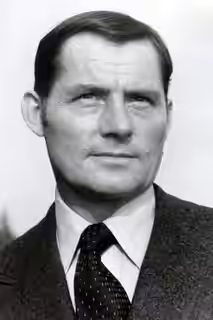
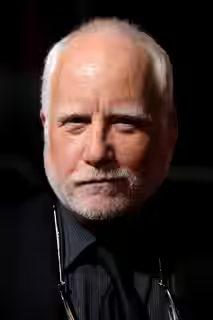
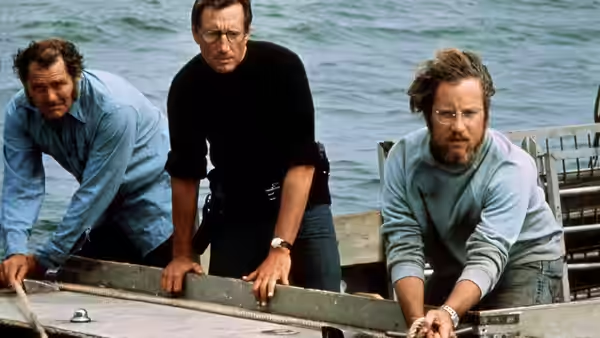
Roy Scheider gives Brody a practical sort of fear: he seems determined to remain useful while frightened. That is more engaging than a hero who never looks worried. Richard Dreyfuss makes Hooper’s confidence lively and occasionally irritating, just enough to stop competence becoming dull. Robert Shaw gives Quint a heavier presence, and his relish for the part makes the differences between the three men entertaining before they become sources of tension. The acting supplies much of the film’s humour without making the danger seem less serious.
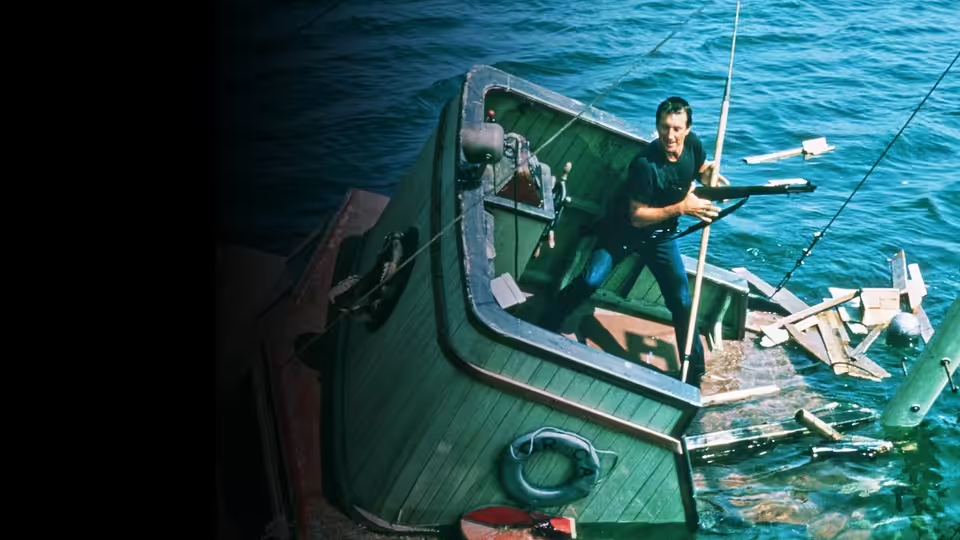
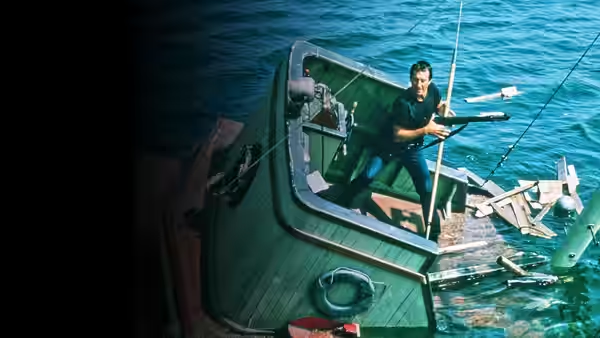
Bill Butler’s cinematography keeps the images readable even when the threat stays hidden. Spielberg encourages us to search the frame, then uses the reverse zoom to make a shock physically disorientating. The effect is conspicuous, but it earns the attention it draws. Joe Alves’s production design makes the boat feel cramped and usable, giving the men little room to avoid one another. Those close quarters help the actors make disagreement uncomfortable without having to raise their voices.
Verna Fields’s editing allows apprehension to develop before making the interruption count. She gives the audience time to anticipate trouble without letting that anticipation become idle waiting. We were frightened by the stretches with no shark in sight, because John Williams’s score made us expect movement in water that offered no reassurance. The music keeps directing our attention towards what might happen next. Knowing the music does not tell us when the shark will appear.
The writing is less subtle about authority and greed. Benchley and Gottlieb occasionally make the human arguments too easy to settle, leaving little for us to consider beyond how foolishly somebody is behaving. Shaw also pushes Quint towards theatricality at times, especially beside Scheider’s quieter work. Neither fault seriously damages the suspense, though the simpler character moments are more convincing than the insistence on making a point.
As a creature thriller, it has the confidence to let conversation occupy time that could have been filled with another scare. That is a useful distinction in a genre where people can become little more than an orderly queue of prospective victims. Spielberg makes their company part of the attraction, then keeps the action clear enough for their predicament to remain understandable. The suspense survives because the film remains interesting between attacks.
At 124 minutes, it allows the audience to get properly acquainted with the people who are afraid. That patience is worth more than another glimpse of the shark would be. Watch it with someone who insists that a familiar film cannot frighten them.