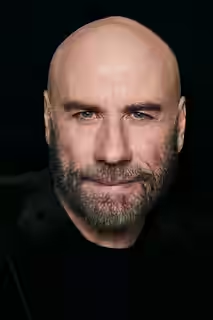
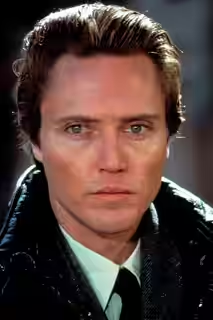
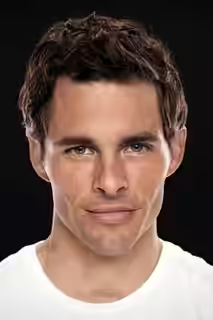
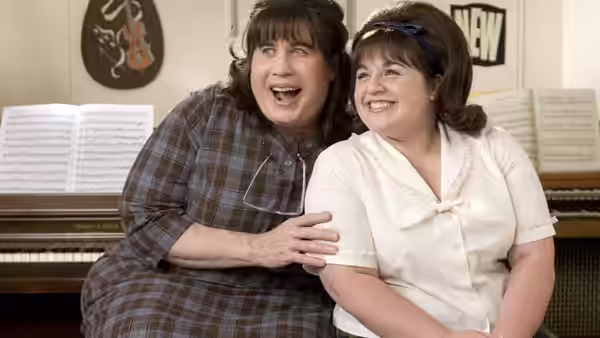
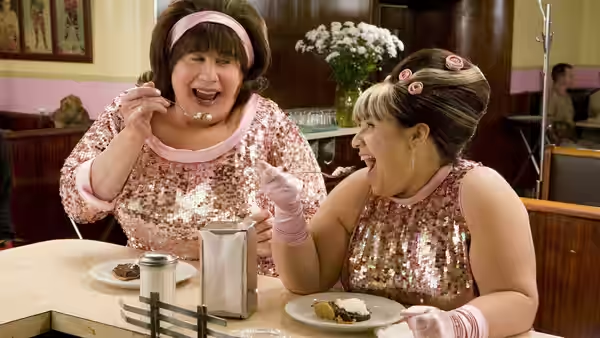
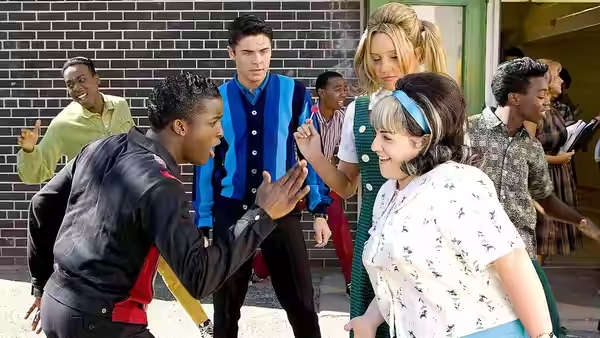
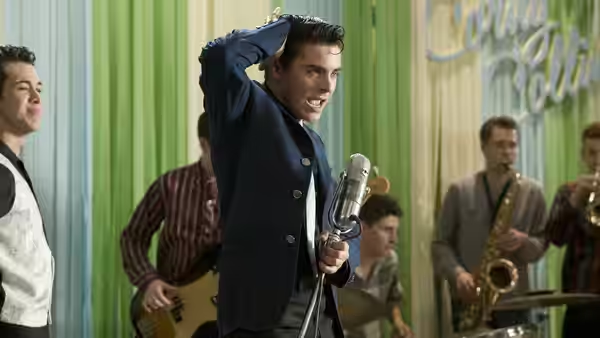
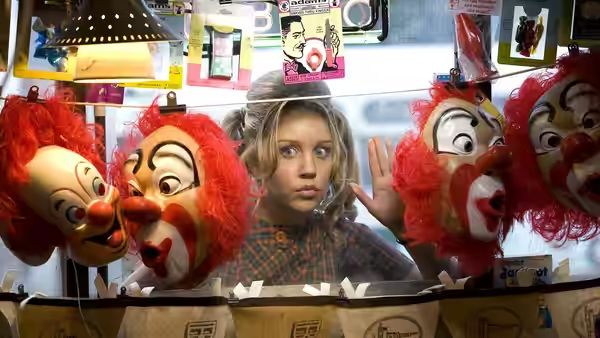
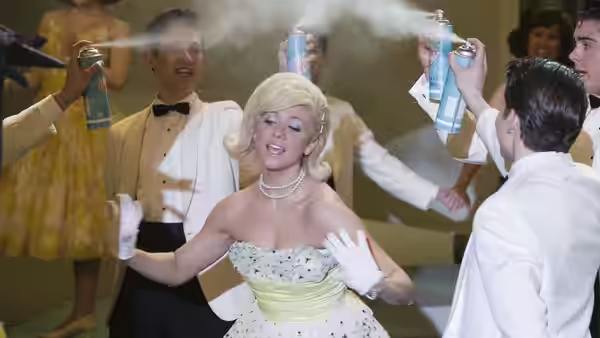
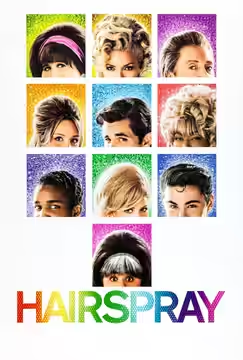
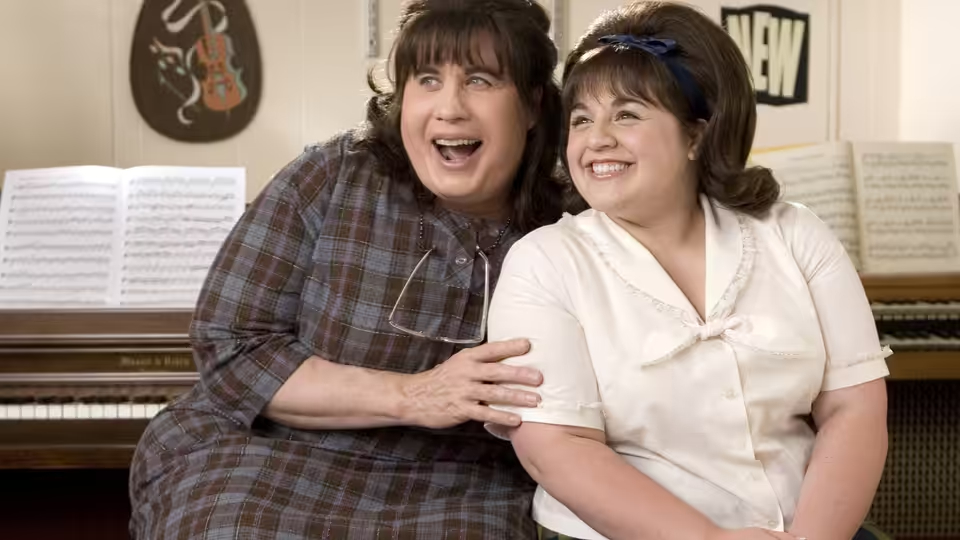
Edna Turnblad (John Travolta) and Tracy Turnblad (Nikki Blonsky) singing at the piano
Film review

Hairspray

2007 · Directed by Adam Shankman · 1h 56m

In a sentenceBaltimore’s race problem is taken on with a dance routine, and for about four minutes we believed it

Baltimore, 1962. Tracy Turnblad (Nikki Blonsky), wide, cheerful and heavily lacquered, hurries home each afternoon with her friend Penny Pingleton (Amanda Bynes) to watch The Corny Collins Show, a local television dance programme hosted by Corny (James Marsden). When a place opens among the dancers, Tracy wants it. Her mother Edna (John Travolta), who has not left the flat above the family joke shop in years, says girls like them do not go on television; her father Wilbur (Christopher Walken) says try. Station manager Velma Von Tussle (Michelle Pfeiffer) intends the show to stay thin, white and fronted by her daughter Amber (Brittany Snow). In detention Tracy meets Seaweed (Elijah Kelley), whose steps get her noticed and whose mother Motormouth Maybelle (Queen Latifah) hosts the programme’s black dancers on their one day a month.

Plays from YouTube when you press play; nothing loads from them until then.

Fi1m review

Adam Shankman’s film of the stage musical is bright, tuneful and danced by people who can dance, with Nikki Blonsky a real find. It is also a good deal nicer than the John Waters film it descends from, and it has lost some bite along the way.

John Waters made Hairspray in 1988 as a cheap, cheerful film about a fat girl who wanted to dance on television in the Baltimore he grew up in. It became a Broadway musical, and Adam Shankman’s film is a film of that musical, with a screenplay by Leslie Dixon and songs by Marc Shaiman. The result is bright, tuneful and danced by people who can dance. It is also a good deal nicer than Waters was, and the niceness has cost it something we will come to.

Nikki Blonsky had not made a film before this one, and you would not know it. She wakes up in the first scene, sings to the city out of her bedroom window and on to the back of a dustcart, and by the end of the number we were on her side and grinning. She is short and wide and the film never once treats that as the joke; Tracy is the person in every room who has already decided things will work out, and Blonsky plays it as a kind of stubbornness. James Marsden’s Corny Collins has a grin you could open tins with. Zac Efron’s Link Larkin does a decent Elvis lip.

The look is a sweet shop. Bojan Bazelli lights Baltimore so the row houses seem freshly painted and the studio floor glows pink and mint. David Gropman builds the Turnblads’ flat above the joke shop as brown, cramped and full of ironing, and the Corny Collins set as tiers of pastel risers. Rita Ryack puts Tracy in checks and polka dots and Amber Von Tussle in the pale, expensive pastels of a girl who has never been told no. The numbers are staged so we can see feet, and Michael Tronick cuts on the beat rather than across it, holding wide shots for whole phrases. Shaiman’s songs pastiche early-sixties girl groups and Motown, and the cast sing them themselves.

Michelle Pfeiffer is the best thing in it. Her Velma Von Tussle is a former beauty queen running a television station out of spite, and Pfeiffer plays her at screwball speed, all narrowed eyes and vanity. Christopher Walken’s Wilbur runs a joke shop and thinks it is a serious business, and his duet with John Travolta’s Edna, a soft-shoe among the whoopee cushions, is the one stretch where the Turnblad marriage feels lived in. Queen Latifah, as Motormouth Maybelle, gets “I Know Where I’ve Been” and sings it slowly, to a crowd that has stopped moving. It moved us more than we thought a film that had spent an hour on hair could manage. It also left us uneasy, because the film needs her grief chiefly so that the white girl’s story can matter, and it does not seem to have noticed.

Then there is Travolta. Divine played Edna in 1988 as a woman who was plainly a man. Travolta plays her as a woman, under padding and a rubber face that will not move, with an accent that wanders in from nowhere in particular. The idea, a shy mother who has hidden indoors for years, is the right one. The execution is a special effect. Every time the film cut to Edna we found ourselves looking at the prosthetics rather than the person, and when she finally dances, late on, the padding wobbles and the joke stops being the one intended.

The bigger loss is the bite. Waters treated segregation as a fact of the city his kids simply barged past. Here it is a lesson, delivered in a speech and a hymn, and Velma’s racism is made cartoonish enough that nobody watching could mistake themselves for her. Elijah Kelley’s Seaweed is the best dancer on screen and gets the sharpest number, and the film keeps forgetting he is a character rather than a dance break. At 116 minutes there is a slack half hour in the middle, once Tracy is on the show and before anything is at stake, where the songs keep coming and the story does not.

It carries a PG and it is a family film in the proper sense: the children will want the songs again and the adults will get Pfeiffer. Watch it with the volume up. Someone on the sofa will complain about Travolta and they will be right, and then the next number will start and nobody will mind for three minutes.
Critical consensus AI synthesised

72
Positive
13
Mixed
4
Negative
0
Los Angeles Times
20 July 2007 · Carina Chocano
85*

Chocano finds the film joyful and exuberant, with a sharp edge beneath its sweetness. She especially praises the romantic performances of Christopher Walken and John Travolta as Edna and Wilbur.

Read the full review →
Radio Times
★★★★ · Alan Jones
80

Jones says this adaptation could challenge the standing of Grease as a retro musical favorite. He singles out Nikki Blonsky’s debut performance as stunning.

Read the full review →
Variety
7 July 2007 · Dennis Harvey
78*

Harvey finds the adaptation a buoyant, crowd-pleasing musical, though it softens the original’s approach to desegregation and has uneven adult performances. He especially praises the original storyline, the songs, and the energetic performance of Elijah Kelley.

Read the full review →
The AV Club
20 July 2007 · B · Nathan Rabin
77

Rabin finds the film slick and heavy-handed, but ultimately an infectious, high-spirited sugar rush. He singles out Christopher Walken’s comic obliviousness and the supporting cast for praise, while criticizing John Travolta’s misjudged performance.

Read the full review →
Empire
13 July 2007 · Will Lawrence
75*

The critic finds it a memorable, crowd-pleasing musical, though its treatment of racial segregation lacks the original’s integrity. The youthful cast and Blonsky’s exuberant performance stand out, alongside the show-stopping songs.

Read the full review →
Slant Magazine
7 July 2007 · ★★★/4 · Jason Clark
75

Clark finds the film an unusually lively and effective musical, praising its showmanship and thoughtful handling of race. He particularly singles out Michelle Pfeiffer’s alert, screwball performance, while noting that the finale falls flat.

Read the full review →

Straight answers AI written, from our review

Is Hairspray worth watching?
Hairspray is worth watching for anyone who wants a bright, tuneful family musical, and we scored it 72. Nikki Blonsky is a real find and Michelle Pfeiffer the best thing in it, but John Travolta's rubber-faced Edna is a special effect rather than a person, and there is a slack half hour in the middle where the songs keep coming and the story does not.
How long is Hairspray, and what is it rated?
Hairspray runs 1h 56m. It is a comedy and romance film.
Where can I watch Hairspray in Ecuador?
Hairspray is streaming on Netflix in Ecuador. It leaves Netflix on 27 September. Availability is checked daily; the links above go straight to each service.
How does Hairspray compare to Grease?
Hairspray is the kinder and more colourful of the two, Grease the sharper. Both are high-school musicals built on early rock and roll, but Hairspray takes on Baltimore's segregation with a dance routine and softens the bite of the John Waters film it descends from, while Grease is meaner about girls and carried by Travolta's dancing and Stockard Channing. Families will do better with Hairspray; anyone after edge should take Grease.
What should I watch after Hairspray?
After Hairspray, try Grease (1978, Fi1m 76): The other high-school musical everyone knows; meaner about girls, better at cars. Then Little Shop of Horrors (1986, Fi1m 76): Sixties pastiche songs, a Skid Row set and a plant with a Motown voice.

Cast

Awards

Broadcast Film Critics Association Award for Best Family Film, 2007

Nominated
Broadcast Film Critics Association Award for Best Family Film

If you liked this, try…

  1. Hairspray (1988) · not on Fi1m yetJohn Waters’s original: cheaper, ruder, and with Divine in the dress.

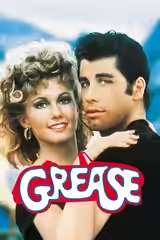
  2. Grease (1978, Fi1m 76)The other high-school musical everyone knows; meaner about girls, better at cars.

  3. The Young Girls of Rochefort (1967) · not on Fi1m yetJacques Demy’s pastel French town where everyone dances in the square and nobody minds.

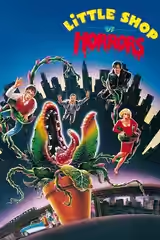
  4. Little Shop of Horrors (1986, Fi1m 76)Sixties pastiche songs, a Skid Row set and a plant with a Motown voice.

  5. Sing Street (2016) · not on Fi1m yetDublin, 1985: a boy starts a band to impress a girl, and the songs are good.