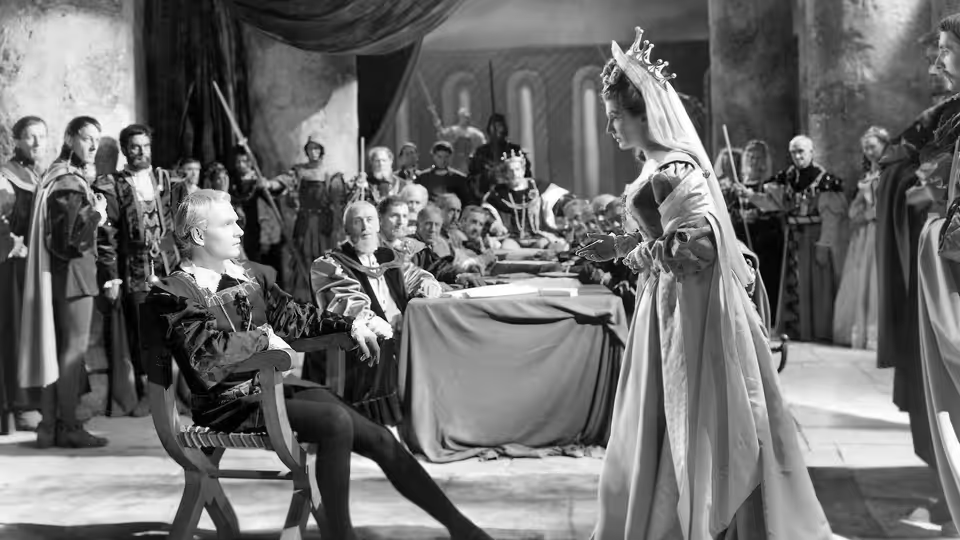
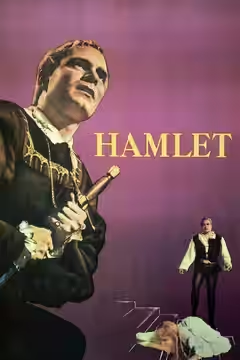
Olivier’s black-and-white Hamlet strips the play to a family in a castle and sends Desmond Dickinson’s camera prowling through it. It is handsome, chilling and superbly spoken; it is a prince of forty in a film that insists he cannot make up his mind.
Four years after Henry V, which he had made in colour, Laurence Olivier went back to Shakespeare and did the opposite. Hamlet is in black and white. Its Elsinore is bare stone, long stairs and empty halls, and its people stand a long way from one another. Before the play begins a voice tells us that this is the tragedy of a man who could not make up his mind, so that we know what to watch for. Olivier produced, directed and adapted it as well as starring, and he has cut the play to 153 minutes, losing Rosencrantz, Guildenstern and Fortinbras along the way. What is left is a fine film and a smaller play, and we think the first outweighs the second.
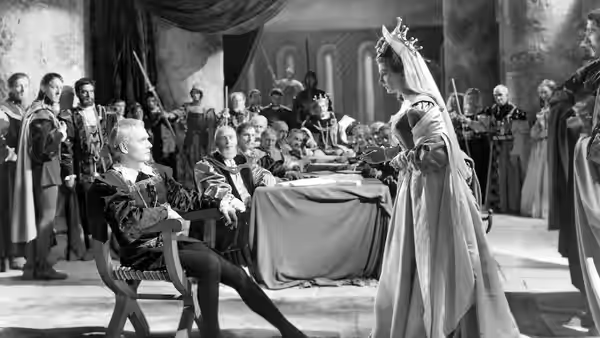
Desmond Dickinson’s camera is the first reason to see it. It climbs the staircases ahead of the actors, slides along the battlements, looks down into the courtyard from a great height and then draws back through an arch to find someone listening. Everything is in focus at once, a face in the foreground and a door at the far end of the hall, so we always know who is behind whom. The Ghost is the best thing Dickinson does. It comes out of the fog on the walls as a shape under a helmet, the soundtrack fills with a slowed heartbeat, and the picture throbs in and out of focus in time with it. Olivier speaks the Ghost’s lines himself, in a hollow whisper. We were cold for the whole scene, and we had thought ourselves past being frightened by a man in armour.
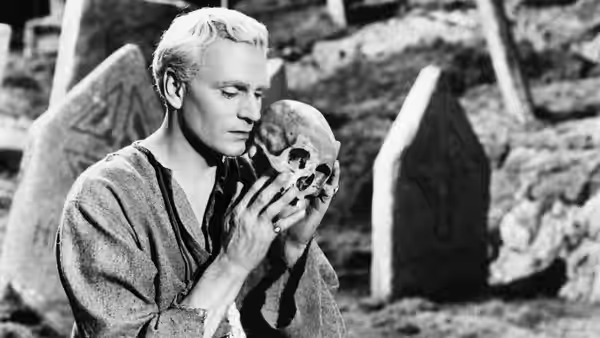
William Walton’s score is the second reason. Brass for the court, drums for the walls, and a funeral march that runs through the whole film. He also writes something quieter under the soliloquies, several of which Olivier plays as thought, lips still while his voice runs on. It works in “To be or not to be”, spoken on a tower above a churning sea with the camera settling behind his head; the height and the strings made us slightly sick, which we take to be the intention. It works less well indoors, where a man staring at nothing with his mouth shut looks like an actor waiting for a cue.
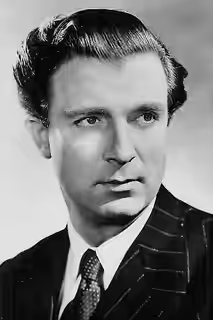
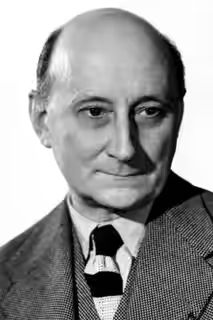
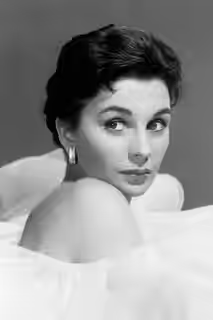
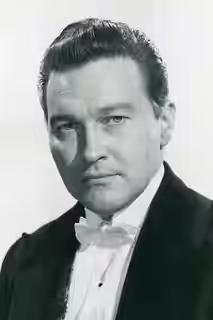
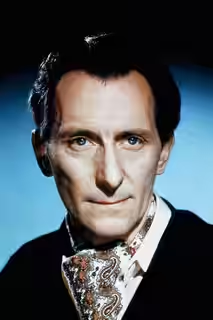
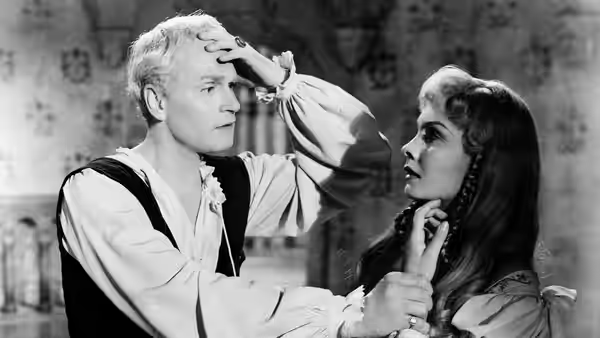
The cast is well chosen. Basil Sydney’s Claudius is a heavy, sweating man who has done the thing and knows it. Felix Aylmer’s Polonius is quicker and funnier than the part usually gets. Jean Simmons’s Ophelia is a girl rather than a soprano, and Simmons is best in her later scenes, which we will not describe. Peter Cushing turns up late as Osric with a hat and a bow, and Stanley Holloway’s Gravedigger arrives later still with a London voice, at which point a film that has been holding its breath for two hours finally laughs.
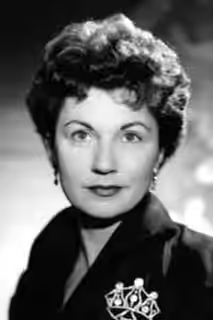
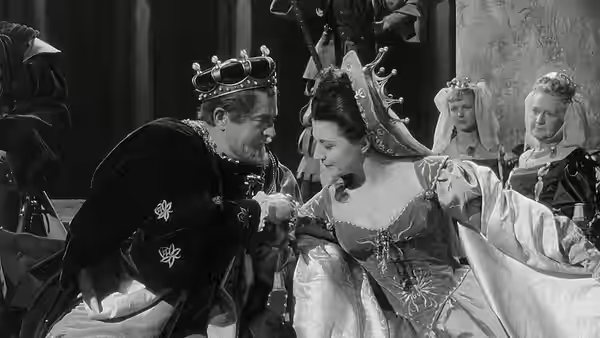
The one odd choice is Eileen Herlie as Gertrude, who is plainly younger than the man playing her son. Olivier wants us to notice. The Queen’s bed, huge and curtained, sits at the centre of the court that Roger Furse and Elizabeth Hennings have dressed in stone and velvet, and the camera keeps going back to it. The scene in Gertrude’s closet is played close, hot and long. It is a famous reading and it is not a subtle one.
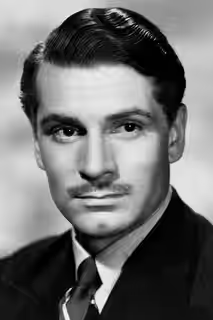
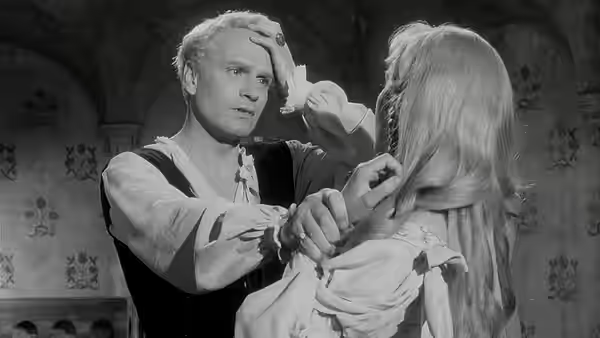
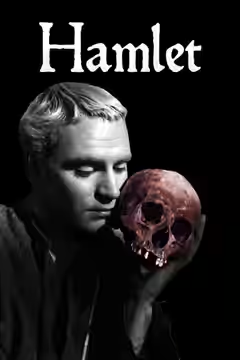
Olivier himself is the difficulty. He was forty when he made it, his hair dyed almost white, and he looks forty. Every line is clear. But his Hamlet is brisk, athletic and sardonic, a man who takes stairs three at a time and enjoys baiting Polonius, and he does not look like someone who cannot make up his mind. The prologue and the performance disagree, and the performance wins.
The cuts cost more than they save. Without Rosencrantz and Guildenstern Hamlet has nobody his own age to talk to, and without Fortinbras Denmark has no neighbours and the play has no politics. What remains is a family in a castle. For the middle hour we felt the length, as Helga Cranston dissolves from one grey corridor to another and the camera prowls stairs it prowled twenty minutes before. We were restless, and then we saw that the restlessness was meant, and knowing that did not help.
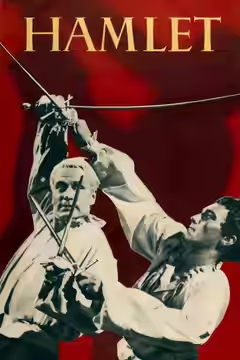
The poster called it the motion picture of all time, for all time. It is not that. It is a handsome, chilly, intelligent film of a play that is bigger than any one reading of it, and it has a ghost we will not forget. Watch it late, with the sound up, and let Walton and Dickinson do the persuading.