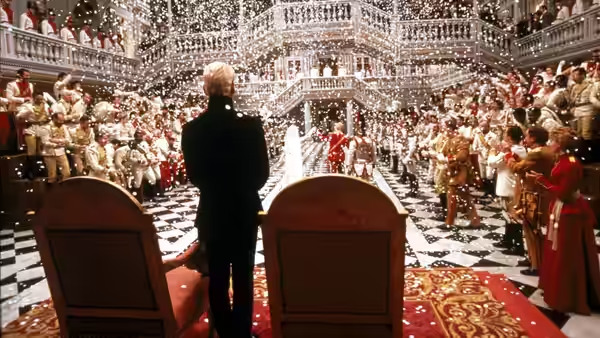
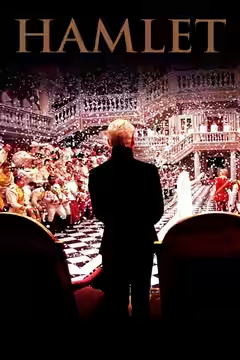
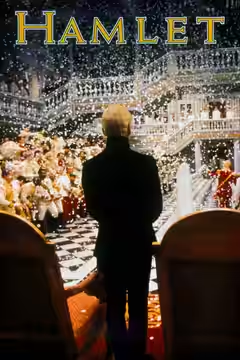
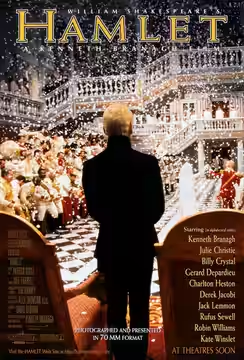
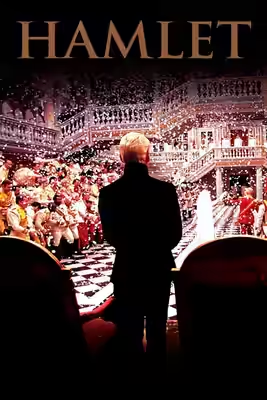
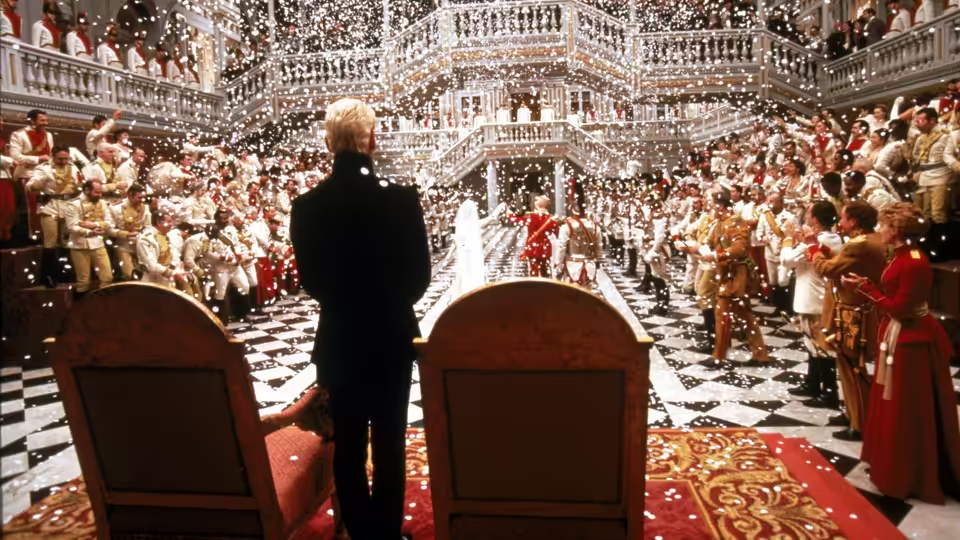
a man in black stands facing a crowded hall with falling confetti
Film review

Hamlet

1996 · Directed by Kenneth Branagh · 4h 02m

In a sentenceFour hours of Shakespeare, and we wanted the music turned down before we wanted a speech cut

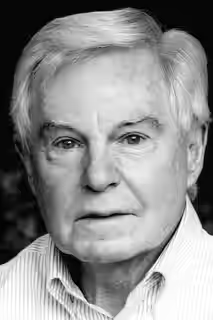
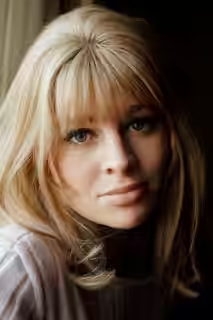
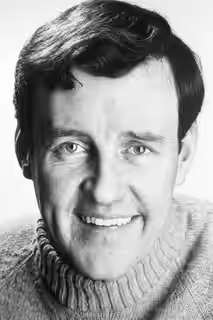
Prince Hamlet (Kenneth Branagh) mourns his father at the Danish court, where his mother, Gertrude (Julie Christie), has married his uncle, Claudius (Derek Jacobi). Claudius now wears the crown. When a ghost claiming to be Hamlet’s father accuses the new king of murder, the prince faces a demand for revenge he does not know how to fulfil. Around him are his friend Horatio (Nicholas Farrell), Ophelia (Kate Winslet) and her father, the court adviser Polonius (Richard Briers). Branagh directs this adaptation of Shakespeare’s play, retaining the full text and placing the court in the nineteenth century.

Fi1m review

Kenneth Branagh’s Hamlet earns its 242 minutes through clear speech, strong supporting performances and a proper sense of the kingdom beyond the prince. We recommend it, though the music and decoration sometimes insist on being noticed.

Kenneth Branagh’s Hamlet is worth the substantial evening it asks for, provided we can tolerate a production that occasionally gets carried away with its own finery. Retaining the full text gives the court’s business time to matter, as well as the prince’s grief and suspicion. The wider political story is allowed to develop without making the central performance feel smaller. At 242 minutes, this is a commitment, but Branagh makes the language clear enough that keeping up seldom feels like work.

Branagh’s Hamlet is forceful, eager to make every thought reach us, and sometimes too ready to finish it with an extra push. His long speeches sound like urgent attempts to decide what to do, and their clarity allows us to follow the effort. We felt his frustration: all that energy in the speaking, so much difficulty in reaching a decision. The performance can be emphatic, but its restlessness gives the film much of its life.

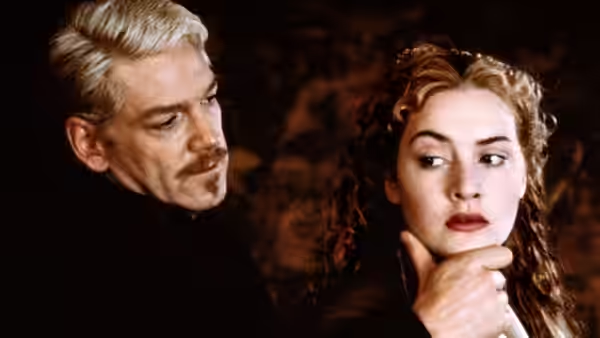
Derek Jacobi’s Claudius and Richard Briers’s Polonius provide the strongest reasons for giving the supporting parts their space. Jacobi makes authority sound practised; Briers makes Polonius’s confidence in his own advice understandable without making it attractive. Their ease is welcome in a production that can seem anxious to make sure we appreciate everything. Kate Winslet’s Ophelia and Julie Christie’s Gertrude also benefit from an adaptation that has not hurried past the relationships to get to the familiar speeches.

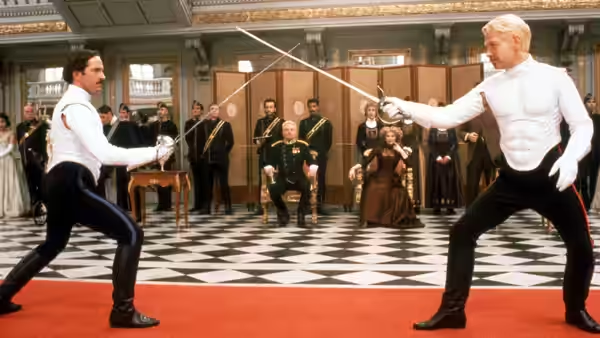
Alex Thomson’s 70mm photography gives Tim Harvey’s elaborate Elsinore the space it demands, and the court has a grandeur that makes its public business worth attending to. This is useful in a version that allows the wider politics to develop. Yet Harvey’s decoration can distract us from the person speaking, particularly when Branagh seems reluctant to let the surroundings go unnoticed. The nineteenth-century setting brings a great deal of finery with it.

Editor Neil Farrell deserves some credit for making this much spoken material remain comprehensible. The pace gives us time to hear an exchange and understand what each person wants from it; the length rarely feels like an inability to choose. Patrick Doyle’s music is less helpful, insisting on emotions the actors have already made clear. We wanted it to leave them alone, especially when the words were doing the work without assistance.

As screen Shakespeare, this succeeds at the difficult practical business of keeping complicated speech clear without making it sound laboured. Branagh’s full-text approach also trusts us to stay interested in people outside the central crisis. The conspicuous guest casting occasionally interrupts that concentration: Robin Williams as Osric and Gérard Depardieu as Reynaldo can pull attention towards the guest list. These distractions are irritating because the film has already proved how well it can hold us with actors speaking plainly.

Do not approach it as a test of how much Shakespeare can be endured in one sitting. There is pleasure in hearing the less familiar exchanges given this much care. Give it an evening when nobody needs to be anywhere else.

Critical consensus AI synthesised

78
Positive
5
Mixed
1
Negative
0

Most critics welcome Branagh’s full-text Hamlet as a clear, engaging adaptation whose four-hour length is less daunting in practice than it sounds. Praise centres on the performances, elaborate production design and the confidence with which the film makes Shakespeare’s language accessible without cutting it down. The reviews also value its outward-looking approach, giving the political circumstances space alongside Hamlet’s private turmoil, with Branagh’s robust performance setting the tone.

The reservations concern how much embellishment the text needs, and the spread runs from wholehearted enthusiasm to a mixed assessment. Variety admires the staging and cast but finds some flourishes literal-minded. The Independent is the clearest dissenter, arguing that the nineteenth-century setting, elaborate designs and cameos distract, while the camerawork and exaggerated action undermine the production. Even that review finds value in Branagh’s trust in the complete text.

RogerEbert.com
24 January 1997 · ★★★★/4 · Roger Ebert
100

The critic praises Branagh's full-text adaptation as long but engaging, with breathtaking 70mm visuals and strong performances that place Hamlet in a broader political context rather than focusing solely on introspection.

Read the full review →
Los Angeles Times
25 December 1996 · Kevin Thomas
85*

The critic commends Branagh for presenting the full text with remarkable clarity and meaning in a handsome, compelling production that immerses viewers in the tragedy without feeling overly long.

Read the full review →
Empire
1 January 1996 · Mike Jeffries
80*

Branagh's grand cinematic Hamlet is the clear choice over other versions, delivering quality, scale and an interval. Performances are uniformly awesome, with stunning support turns and splendid art direction.

Read the full review →
The New York Times
25 December 1996 · Janet Maslin
80*

The critic highlights Branagh's robust performance as the centerpiece of a lavish, four-hour production that remains engaging despite its length, noting the stellar cast and preference for bold strokes over gloomy introspection.

Read the full review →
Variety
5 December 1996 · Todd McCarthy
75*

The critic finds the full-text version rewarding for its clarity, richness, and accessibility, praising the staging, performances (especially Jacobi and Briers), and visual splendor while noting some literal-minded flourishes.

Read the full review →
The Independent
13 February 1997
50*

Branagh's four-hour film is a greatly flawed project with good and bad ideas scrambled together, redeemed by its faith in trusting the full Shakespeare text. The 19th-century setting, elaborate designs and cameos are often distracting, with tentative camerawork and hyperbolic action in places.

Read the full review →

Straight answers AI written, from our review

Is Hamlet worth watching?
Hamlet is worth watching for anyone prepared to give four hours to Shakespeare spoken clearly, and we scored it 81. Branagh keeps the full text, so the court's politics and the supporting parts, Derek Jacobi and Richard Briers especially, get room to matter. Patrick Doyle's music and the decorated Elsinore sometimes insist on being noticed when the actors have already done the work.
How long is Hamlet, and what is it rated?
Hamlet runs 4h 02m. It is a drama film.
Where can I watch Hamlet in the UAE?
Hamlet is not on any streaming or rental service in the UAE at the moment. It is available in 29 other countries; change your country at the top of the page to see where. Availability is checked daily.
How does Hamlet compare to Fanny and Alexander?
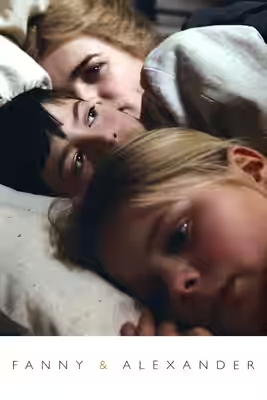
Hamlet and Fanny and Alexander both put family grief inside theatrical splendour, but Bergman's film is the warmer and the better of the two. Branagh gives you the whole play, spoken clearly, with strong support and an occasionally overdressed court. Bergman gives you a household seen through a watchful child, with more room for domestic warmth, humour and fear; we would send a stranger to that one first.
What should I watch after Hamlet?
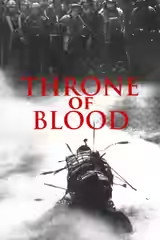
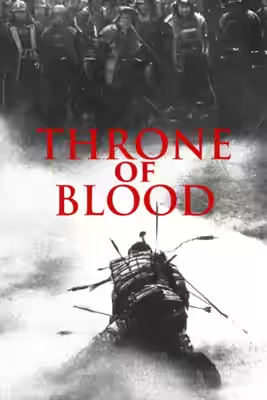
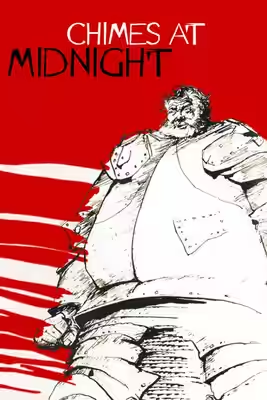
After Hamlet, try Throne of Blood (1957, Fi1m 88): Shakespearean ambition stripped down to fear, weather and a ruler’s growing panic. Then Chimes at Midnight (1965, Fi1m 88): Another Shakespeare adaptation with room for affection, folly and the costs of power; and Fanny and Alexander (1982, Fi1m 92): Family grief and theatrical splendour, with more room for domestic warmth.

Cast

Awards

Academy Awards, 1997

Nominated
Best Costume Design
Nominated
Best Original Dramatic Score
Nominated
Best Production Design
Nominated
Best Writing, Adapted Screenplay

If you liked this, try…

  1. Throne of Blood (1957, Fi1m 88)Shakespearean ambition stripped down to fear, weather and a ruler’s growing panic.

  2. Chimes at Midnight (1965, Fi1m 88)Another Shakespeare adaptation with room for affection, folly and the costs of power.

  3. Fanny and Alexander (1982, Fi1m 92)Family grief and theatrical splendour, with more room for domestic warmth.

  4. The Lion in Winter (1968, Fi1m 81)A royal family treats succession as permission to say the unforgivable.

  5. Haider (2014) · not reviewed yetHamlet’s suspicions acquire a different political urgency in a Kashmiri setting.

Free account

Know what to watch tonight

Two lists that know where things are streaming, collections you can share, your own score beside ours, and Discover that remembers what you have seen.

  • Want to see, sorted by what is streaming now
  • Seen, with your score out of ten
  • No adverts, ever