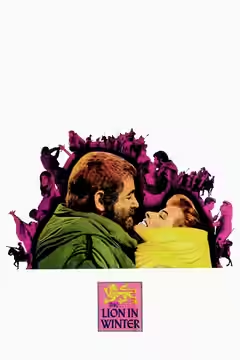
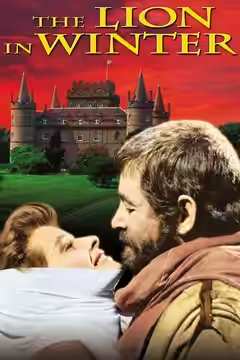
Anthony Harvey’s film of James Goldman’s play is a family quarrel in a cold castle, and O’Toole and Hepburn talk it into something close to blood sport. The plotting circles in the last hour; the two of them never do.
James Goldman wrote the play and then the screenplay, and he has not tried to hide where it came from. The Lion in Winter is a handful of people in a handful of rooms, talking. Henry II has summoned his family to Chinon for Christmas to name an heir, and by the end of the first scene everyone in the castle has a candidate and a plan. Anthony Harvey’s job is to stop this looking like a play that has wandered outdoors, and he mostly manages it, chiefly by refusing to make anything pretty.
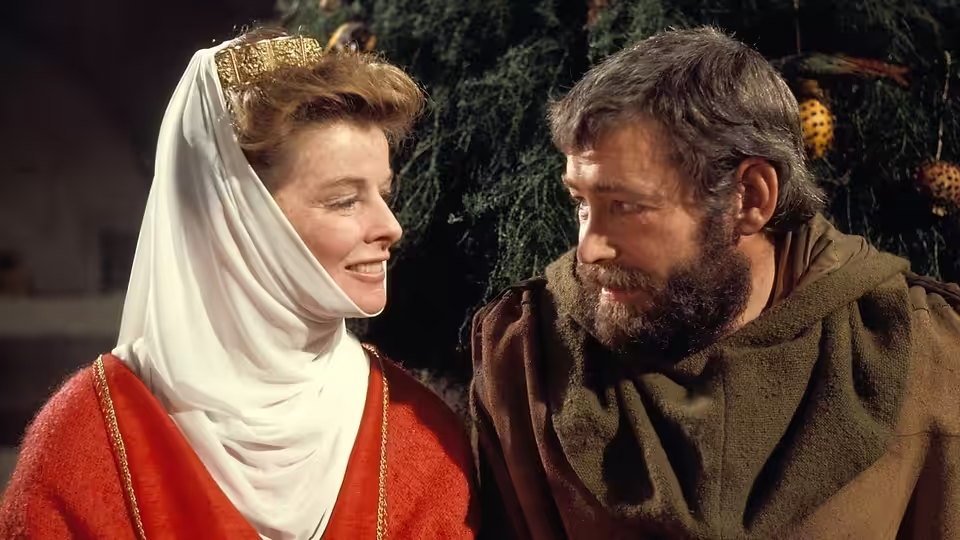
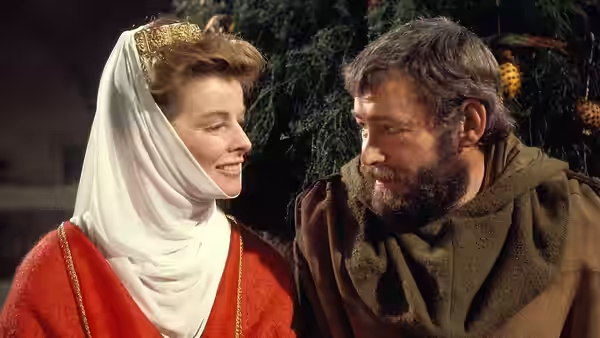
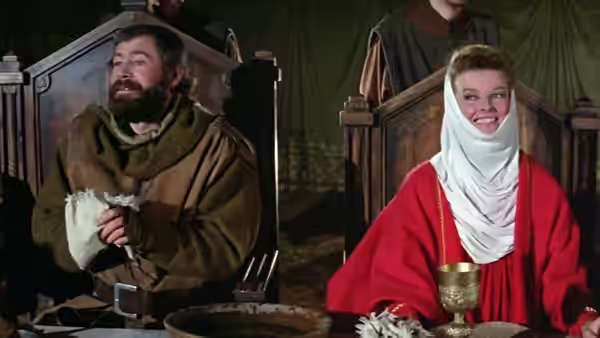
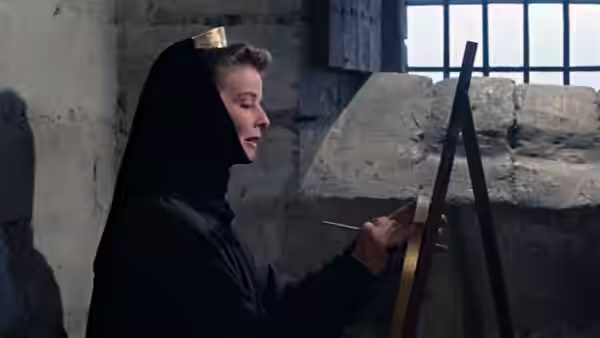
Douglas Slocombe shoots the castle as a working building in December. The light is grey, the stone is wet, there are dogs and geese in the yards and the fires give off smoke you can see. Margaret Furse and Lee Poll put the royal family in heavy wool and fur that has plainly been worn before, and the crowns look as if they weigh something. When Eleanor arrives by river barge, sat upright in the cold, it is the film’s one grand entrance, and Slocombe holds it wide and lets the water do the work. John Barry’s score opens with a choir singing Latin over brass and then, sensibly, stays out of the way of the dialogue for long stretches.
The dialogue is the point. Goldman writes the Plantagenets as people who know they are witty and cannot stop, and O’Toole and Hepburn take it at a gallop. O’Toole’s Henry is loud, physical, delighted with himself, a man who bellows at his sons across a banqueting hall and means about half of it. Hepburn’s Eleanor is still and watchful, waiting for the gap. Their first scene together, walking the castle trading insults about their ages, told us inside a minute that these two had been married a long time and had enjoyed a good deal of it. We laughed more than we expected to at a film about a twelfth-century succession. The tagline says every family has its ups and downs, and for once the tagline is right.
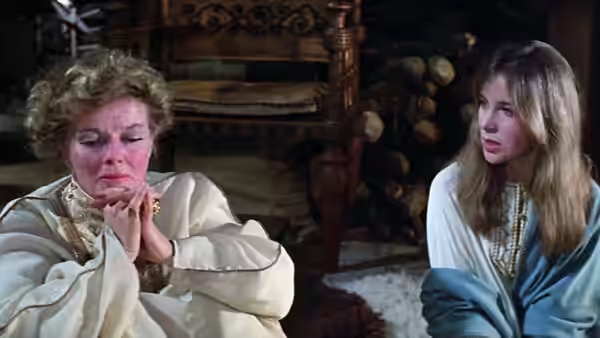
What got at us was quieter. About halfway through, Eleanor spends several minutes taking Henry apart, and when the door shuts behind him she sits down and simply stops. Harvey and his editor John Bloom hold on Hepburn’s face with nothing on the soundtrack, and it moved us more than any of the speeches, because it is the first time the film shows the wit costing something.
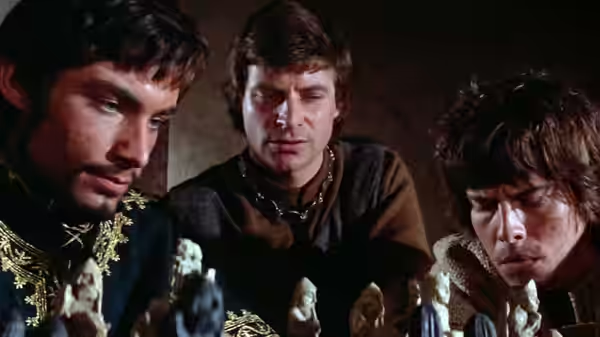
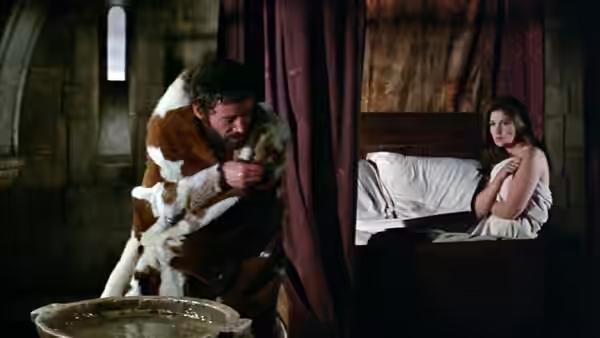
The sons are well cast, with one exception. Hopkins plays Richard with a clenched jaw, a soldier who cannot bear his mother’s affection and cannot do without it. John Castle’s Geoffrey is the best-written and least-noticed of the three, the middle boy who has worked out that being cleverest earns nothing. Nigel Terry plays John as a sulking, spotty child, which is what Goldman wrote, and it is a problem, because nobody watching could believe Henry wants him crowned and the plot needs us to. Timothy Dalton, young and cold, plays Philip as the only adult in the building, and a sequence in his chamber staged like a bedroom farce, with princes arriving one after another and nowhere to put them, is the funniest and the nastiest thing in the film. Jane Merrow’s Alais is bargained over by everyone and gets to say, plainly, what she wants, which makes her rarer here than she sounds.
The trouble is the plotting. Goldman’s structure is a run of reversals: an alliance is made, betrayed and remade, sometimes within one scene. For the first hour this is exhilarating. In the second we noticed we had stopped keeping score, because nothing anyone agrees to survives to the next room, and if the deals do not matter to the film they stop mattering to us. At 134 minutes it feels its length in the final stretch, and the big confrontations the story has been building to are less sharp than the small ones that came before. Some critics have found the whole thing ponderous; we did not, but we can see the film they were watching.
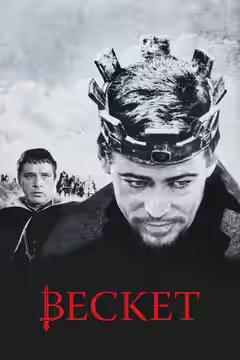
O’Toole had played this king before, in Becket, and he is more fun here because he has an equal to fight. That is the reason to see it. As a film of a play it does better than most, because Harvey trusts two actors to hold a room and they do.
It is a 15 certificate, for the language and the cruelty. Watch it over Christmas, after the family has gone to bed. You will recognise more of it than you would like.