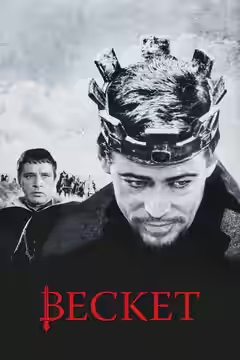
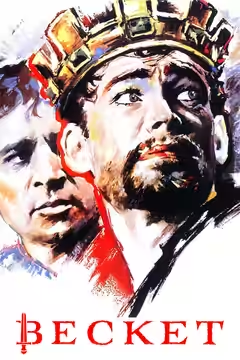
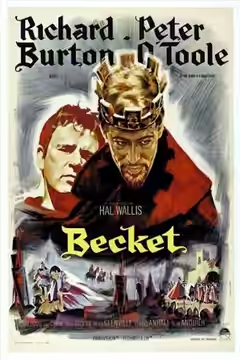
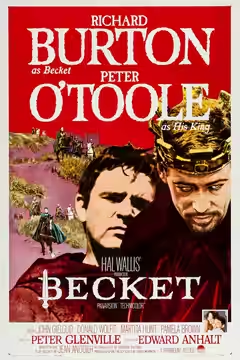
Peter O’Toole’s Henry II, loud, clever and desperate for a friend, is the reason to watch Peter Glenville’s handsome, talky version of Anouilh’s play. Richard Burton’s Becket is a cooler thing, and the second half feels it.
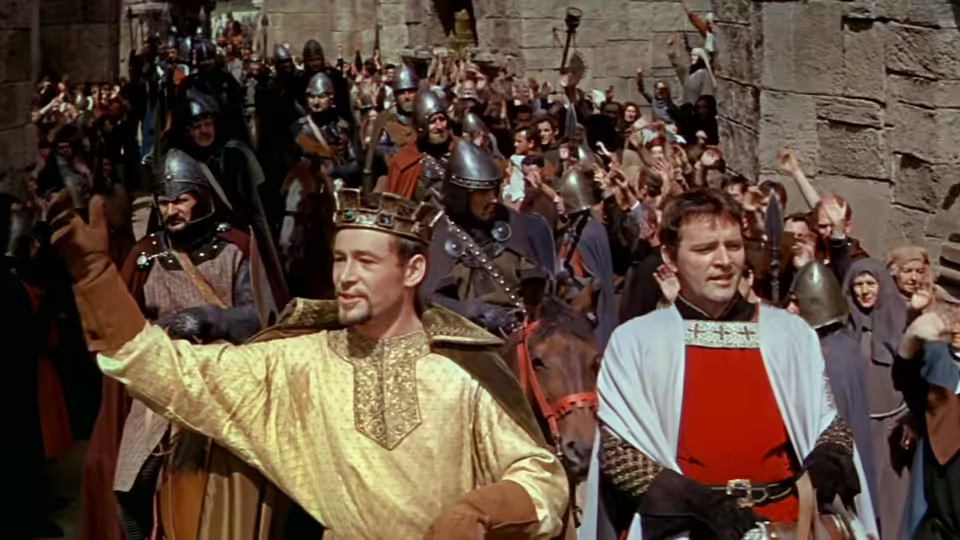
Peter Glenville’s film of Jean Anouilh’s play opens with a king on his knees. Henry II (Peter O’Toole) rides to Canterbury, strips to the waist at the tomb of his old friend Thomas Becket (Richard Burton) and waits for the monks to whip him. So we know in the first minute how the friendship ends, and the 148 minutes that follow are about how it got there. It is a good film, and its reason for existing is O’Toole.
Henry, a Norman king with a Saxon chancellor, has nobody else he can talk to. Edward Anhalt’s screenplay keeps Anouilh’s decision to make Becket a Saxon, which the real man was not, because the play needs a servant who has chosen to serve. The first hour is the two of them together: hunting, drinking, sheltering in a peasant hut, quarrelling over a Welsh mistress, Gwendolen (Siân Phillips), whom Henry wants because Becket has her. When the Archbishop of Canterbury dies, Henry decides the job should go to his friend, so that the church will be run by a man who does what he is told. Becket warns him against it. Henry does it anyway.
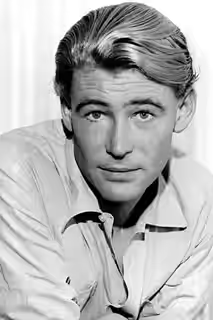
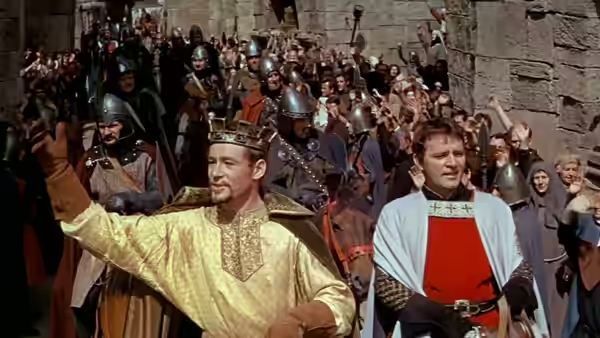
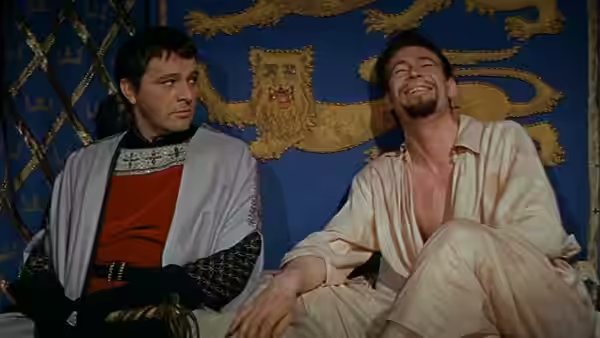
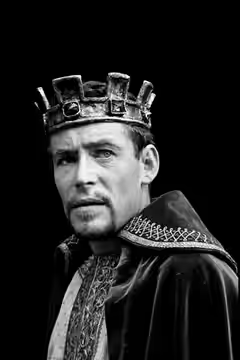
O’Toole plays Henry as a large, clever, needy boy who has never been refused anything and has no one to love. He hangs his legs over the arms of thrones, spits out food, bellows at his mother, the Empress Matilda (Martita Hunt), and his wife, Eleanor (Pamela Brown), and then goes quiet and looks to Becket for approval. It is a huge performance and it is under control. The scene that got us has Henry alone in a hall after Becket has sent back the chancellor’s seal, shouting at the walls about the one man he cannot have. We expected to be entertained and were moved instead; it was the silence after the shouting that did it, a king with nothing left to throw.
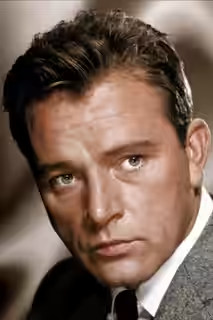
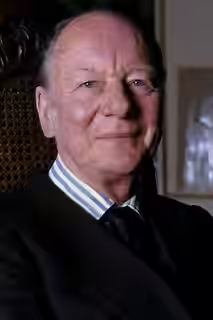
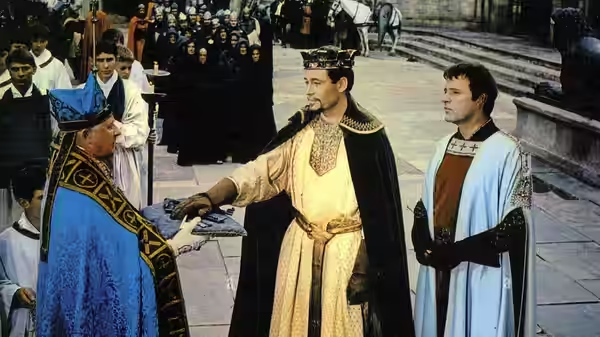
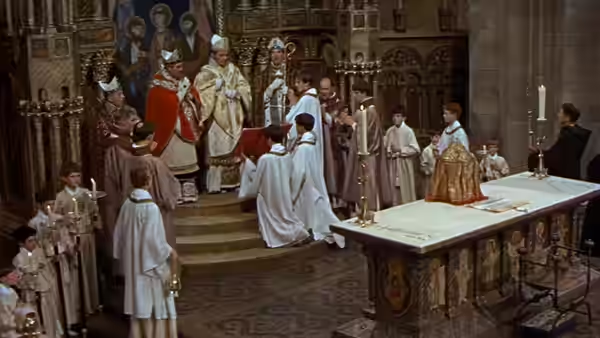
Burton is the problem, and we think the film half intends him to be. Anouilh’s Becket does not know what he believes until the mitre is on his head. Burton plays him low and slow, the famous voice held down, the face shut. In the consecration, handing his plate and furs to the poor, he is at his best; the stillness is a decision and you can watch it being taken. But the second half takes Becket away from Henry, to the court of Louis VII of France (John Gielgud, dry and delighted) and on to Pope Alexander III (Paolo Stoppa) and Cardinal Zambelli (Gino Cervi), and Burton gives us little to hold on to. We admired him without wanting to sit with him, and for a long stretch the film asks us to.
Glenville came from the theatre and it shows. John Bryan’s sets are big rooms of bare stone with a bed or a throne, and Glenville puts the actors in the middle. Geoffrey Unsworth lights from windows and candles, so faces come out of the dark and Henry’s red hair and Becket’s white surplice carry most of the colour. It is stagebound; scenes begin with an entrance and finish with an exit. Anne V. Coates cuts the dialogue cleanly and can do nothing about the fact that it is dialogue. Laurence Rosenthal’s score is brass and chant, at its best when it stops and lets the monks sing.
Twice the film gets up and moves. The papal court, with Cervi and Stoppa haggling over Becket like traders over a catch, is played for comedy and got a proper laugh out of us. And one late meeting on a beach, two men on horseback in a wind with the tide behind them, is the only time the outdoors matters and the best-shot scene.
The 1960s produced a run of these talky historical dramas, A Man for All Seasons and The Lion in Winter among them, the second with O’Toole playing Henry again. Becket has less argument than those and more wit, and Anhalt keeps enough of Anouilh’s lines that it is never dull for long.
Watch it for O’Toole and put up with Burton, which is roughly Henry’s position too.