Film review

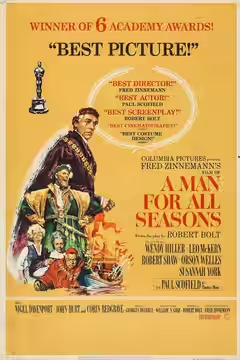
A Man for All Seasons

1966 · Directed by Fred Zinnemann · 2h 00m · MPA G

In a sentenceTwo hours of the most powerful men in England failing to get a lawyer to sign something

DramaHistory

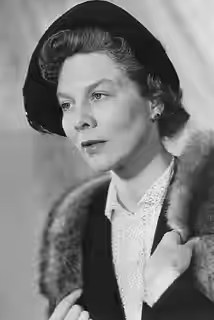
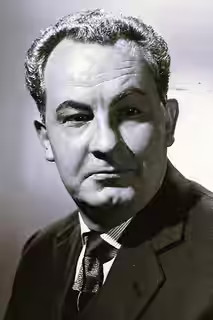
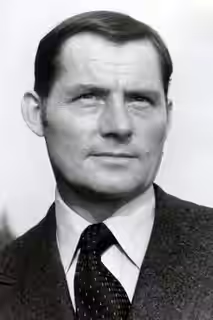
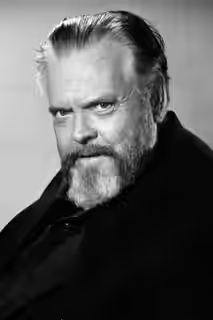
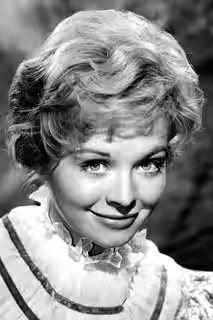
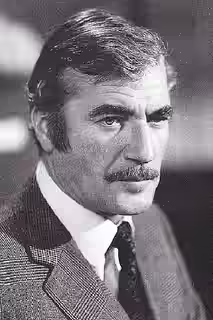
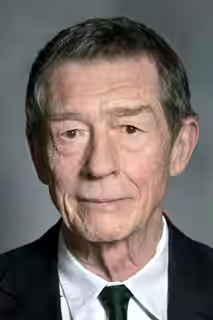
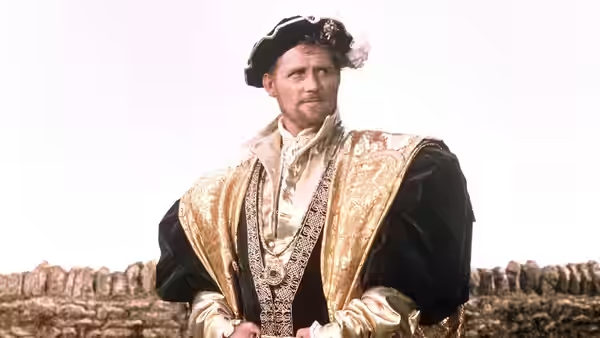
Tudor England. Thomas More (Paul Scofield), a lawyer and King’s councillor, is rowed by night to Hampton Court, where Cardinal Wolsey (Orson Welles) wants his help persuading Rome to grant King Henry VIII (Robert Shaw) a divorce. More will not give it. At home in Chelsea his wife Alice (Wendy Hiller) worries about money and rank, his daughter Margaret (Susannah York) wants to marry William Roper (Corin Redgrave), a Lutheran More refuses her, and a hungry young man called Richard Rich (John Hurt) asks for a post at court and is told to become a teacher instead. Then the King himself comes up the Thames by barge to Chelsea to ask More, as a friend, for the one thing he cannot give. Thomas Cromwell (Leo McKern) watches from the doorway.

Plays from YouTube when you press play; nothing loads from them until then.

Fi1m review

Fred Zinnemann’s film of Robert Bolt’s play about Thomas More and the oath he would not swear is handsome, stately and a little too sure that its hero is right. Paul Scofield keeps it honest with a performance so quiet you lean forward.

Robert Bolt wrote A Man for All Seasons for the stage and then wrote it again for Fred Zinnemann, who directed and produced. The story is Thomas More’s: a lawyer who rose to be the King’s Lord Chancellor and would not say the one sentence the King needed from him, about the divorce from Catherine and the marriage to Anne Boleyn. Nearly every scene is somebody asking and More declining. It is a good film, better than good in places, and it is a little too sure that its hero is right.

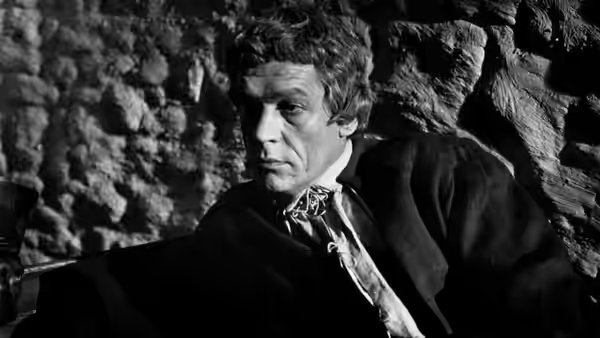
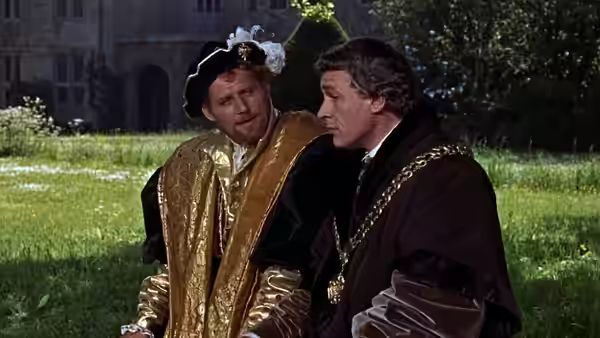
Paul Scofield played More on the stage before he played him here, and it shows in the best way. Nothing is rushed and nothing is underlined. He speaks quietly, half a beat later than you expect, and when Cromwell or Norfolk puts the question to him directly his eyes go somewhere else for a moment before he answers, as if checking the law one more time. The speech that got to us is an early one, in the garden at Chelsea, when Corin Redgrave’s William Roper wants a man arrested for being bad and More explains that the law is a forest, and if you cut it down to get at the Devil you have nowhere to stand when the wind comes. We did not expect a lecture on statute to tighten our throat. Scofield does it without raising his voice.

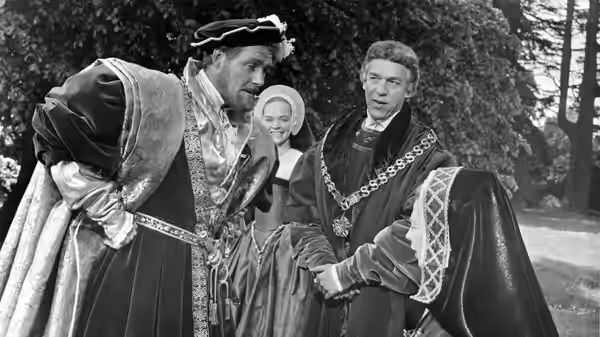
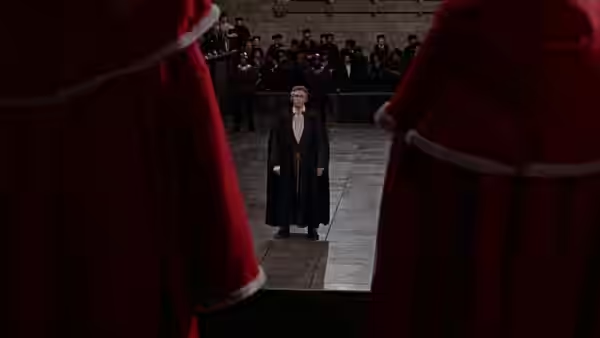
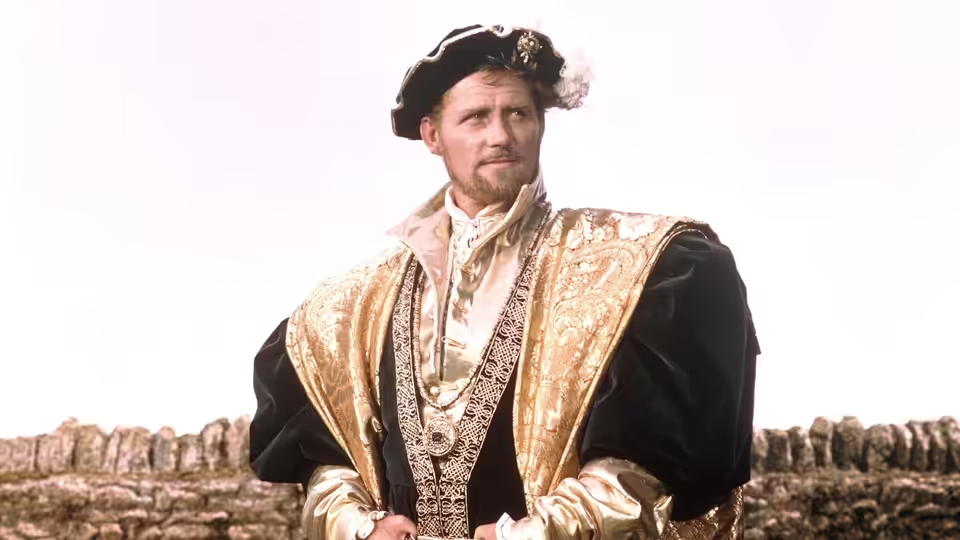
Around him Zinnemann has put two performers who do raise theirs. Orson Welles has one scene as Cardinal Wolsey, in a room lit entirely in scarlet, and plays him as an ill, enormous man who knows More is the only honest one in the building. Robert Shaw’s Henry arrives at Chelsea by barge, leaps off it into the mud, laughs, and then turns on More inside a single sentence. That half hour is the liveliest thing in the film and we would not have minded more of it.

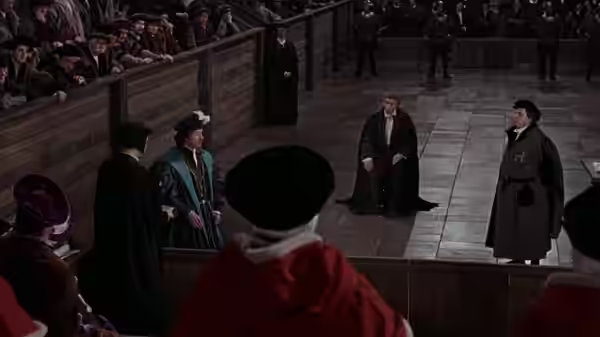
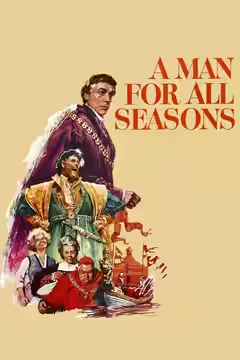
Ted Moore shoots England as if the weather had been booked. The Thames carries people between scenes, the water bright and the banks green, and the country around More’s house is all soft light and long grass. John Box keeps the rooms low and dark by contrast, so the court is a place you step into out of the daylight. Elizabeth Haffenden and Joan Bridge dress More in black and grey, Wolsey in red and Henry in gold, and you could follow the argument from the clothes alone. Georges Delerue writes a sparse, brass-led score that mostly stays outside, on the river. Ralph Kemplen cuts at a walking pace, which suits the talk and does the middle of the film no favours.

That middle is where the flaws sit. Bolt gives More every good line and everyone else the worse half of the argument. Leo McKern’s Cromwell is a clever man written as a villain, in black, with a sneer, and McKern plays what is on the page. Nigel Davenport’s Norfolk is better served, a friend who loves More and cannot follow him, and their quarrel is the one scene in which More seems capable of cruelty. The play had a narrator, the Common Man, who kept the audience in on the joke; the film drops him, keeps Colin Blakely’s steward Matthew as a remnant, and is the more respectable for it and the less alive. Around the hour mark we were bored for a stretch, and then a little cross at being bored by a film this well made.

Two performances pulled us back. Wendy Hiller’s Alice More does not understand a word of what her husband is doing and loves him anyway, and Hiller plays the not understanding as anger, which is truer than tears would have been. Her last scene with him, which we will not place, moved us more than anything Scofield says. John Hurt’s Richard Rich, young and hungry and told by More to go and teach, is the film’s other story, running underneath the main one, and we will leave where it lands.

It is a U certificate and a film of talk, two hours of it, with little in the way of action beyond a man getting in and out of boats. Watch it at home with the volume up; the words are the point and Scofield does not shout them. If you like your history argued, this is the one to start with.
Critical consensus AI synthesised

76
Positive
7
Mixed
0
Negative
1

Most critics admire it, and the praise gathers around two things: Paul Scofield’s Thomas More and Robert Bolt’s screenplay. The reviews from 1966 call it handsome, stirring and a faithful rendering of the play’s substance, with the English countryside doing a good deal of the work. Later critics find it wittier and quicker than its reputation suggests, with enough intrigue to keep it from becoming a history lesson. Scofield is singled out almost everywhere, and Robert Shaw’s Henry and Orson Welles’s Wolsey are noted as the livelier turns around him.

The reservations are about pace and piety. The Guardian wants a less regal rhythm and a less saintly More, and the one outright dissent, from Time Out, finds the film respectable to the point of tedium, with only Welles’s cameo to relieve it. The spread is otherwise narrow, seven of eight positive, and the argument among critics is less about whether it is well made than about whether stateliness is a virtue.

The New Yorker
10 December 1966 · Brendan Gill
90*

The film is a very good movie indeed and among the most beautiful ever made thanks to its use of the English countryside. Scofield delivers a performance of strength and delicacy that surpasses his stage work, supported by an excellent cast including Shaw as Henry.

Read the full review →
The New York Times
13 December 1966 · Bosley Crowther
90*

The film succeeds in rendering the play's solid substance on screen as an inspiring view of moral conviction and steadfastness. Zinnemann and Scofield crystallize the drama's essence with pictorial vitality and excellence in a strong cast.

Read the full review →
Variety
13 December 1966 · A.D. Murphy
90*

Zinnemann has blended all filmmaking elements into an excellent, handsome and stirring film version of the play. Bolt's adaptation and the performances, led by Scofield, capture the timeless personal conflict with outstanding production values.

Read the full review →
Empire
1 January 2013 · Kim Newman
80*

The critic praises this prestigious, well-turned-out British historical drama for its quality script and genuine intrigue and wit, which keep it from feeling like a mere history lesson. Adapted by Robert Bolt from his own play, it benefits from strong performances and avoids the clichés typical of the genre.

Read the full review →
The Guardian
19 November 2009 · B / A–
70*

The 1966 film is a top-quality historical drama that entertains and educates effectively. The critic singles out the elegant, witty screenplay for praise but complains that the film would benefit from a less regal pace and a less pious portrayal of More.

Read the full review →
Time Out
· TCh
30*

The film is an agonisingly respectable, sincere adaptation of Robert Bolt's literate play. The cast is fine overall, but only Orson Welles' cameo as Cardinal Wolsey relieves the boredom.

Read the full review →

Cast

Awards

Academy Awards, 1967

Nominated
Best Supporting Actor
Nominated
Best Supporting Actress
Won
Best Actor
Won
Best Cinematography, Color
Won
Best Costume Design, Color
Won
Best Director
Won
Best Picture
Won
Best Writing, Adapted Screenplay

If you liked this, try…

Wolf Hall poster

Wolf Hall

2015 · The same years told from Cromwell’s side, and More is nobody’s saint here

Becket poster79

Becket

1964 · Another English king, another friend who will not bend; louder, and Burton is superb

The Passion of Joan of Arc poster94

The Passion of Joan of Arc

1928 · A trial filmed almost entirely in faces; the purest version of this story

12 Angry Men poster91

12 Angry Men

1957 · One juror declining to agree, and eleven others slowly coming round

Sophie Scholl: The Final Days poster

Sophie Scholl: The Final Days

2005 · A young woman interrogated in Munich in 1943; refusal as a conversation, not a speech