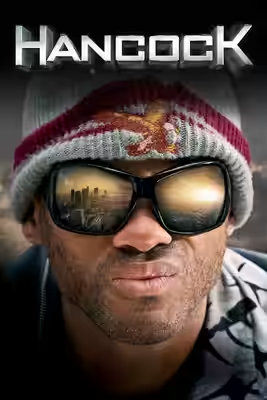
Will Smith gives Hancock a funny, disagreeable hero and Peter Berg gets an entertaining opening out of him. Then murky explanations crowd out the comedy, leaving a good cast struggling with a poorly joined-up story.
For its opening stretch, Hancock is a funny, agreeably rude superhero comedy; taken as a whole, it is a promising idea poorly followed through. Peter Berg understands the appeal of a hero whose drunken behaviour makes him unsuitable for the usual duties of reassurance and good example. The trouble comes when the film loses confidence in that simple attraction. At 92 minutes, it has little room to recover from its changes of direction.
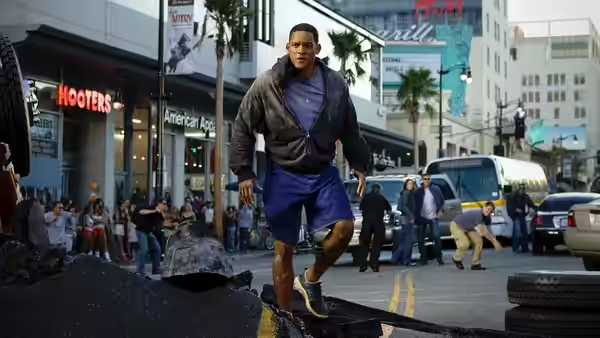
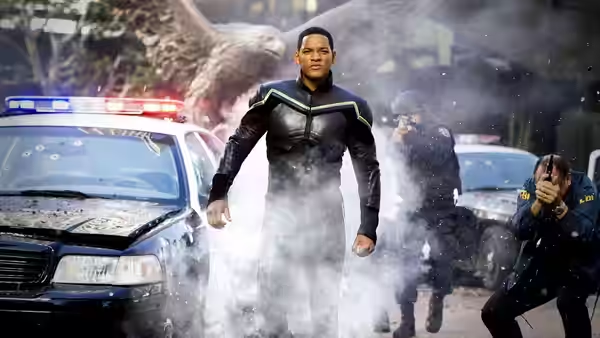
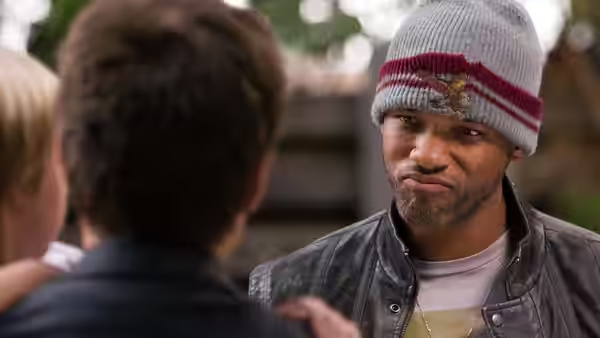
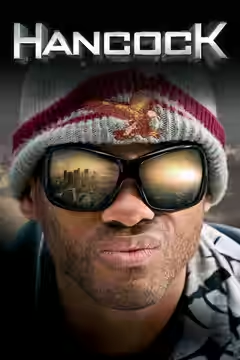
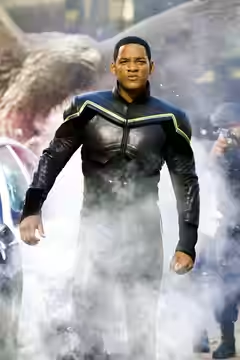
Will Smith is the chief reason to stay. His John Hancock has enough charm to make the nastiness entertaining, without sanding away every disagreeable edge. We laughed at the drunken antics because Will Smith makes the hero’s lack of dignity look so unforced; the powers do not make their owner any less embarrassing. There is a small amount of sadness in the performance too, and the opening comedy gives it room without insisting that we notice.
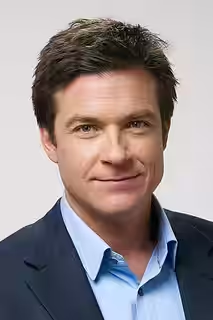
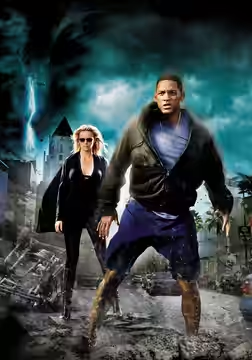
Jason Bateman’s Ray is an important part of that balance, earnest and sweet without seeming entirely foolish. He gives the comedy someone who does not need to compete for the rudest line. Charlize Theron makes Mary worth watching even when the writing becomes less convincing, and her scenes with Will Smith carry feeling that the plot does not always deserve. The cast can suggest complicated lives with less effort than the screenplay takes to explain them.
The action has pleasures too, chiefly in effects that suit the early irreverence. Tobias A. Schliessler’s shaky photography is harder to defend: it supplies extra agitation where the action is busy enough already. Neil Spisak’s production design gets little help from a camera that seems reluctant to let us look around. Peter Berg keeps things lively, but a steadier view would let more of the visual jokes do their own work.
The cutting by Paul Rubell and Colby Parker, Jr. keeps the film moving, although moving quickly becomes a poor substitute for making sense. As the tone changes, there is too little time to settle into what the characters are now supposed to feel. John Powell’s score has to support that move towards seriousness, and it cannot make the transition convincing on its own. A little more time with the characters might have helped.
Vincent Ngo and Vince Gilligan’s screenplay asks us to accept a substantial change of direction, which we will not describe. The problem is how much explanation follows, and how little that explanation helps. The murky mythology takes attention away from a central character who was interesting enough before the film began accounting for him. We became impatient with the solemnity because it kept displacing the comedy that Will Smith and Jason Bateman had made work.
Within the superhero genre, this is an appealingly awkward starting point, and we would not demand that it remain a comedy throughout. We would ask it to make the serious passages as convincing as the jokes, which it does not. The performances give the curious something to enjoy, but we cannot recommend the film on their strength alone. For Will Smith completists, there is plenty to enjoy before the explanations begin.