Justin Simien has a fine cast, a handsome house and a decent idea about grief, and a script that stops every ten minutes to explain the last ten. Pleasant enough for a wet afternoon with children; a shame it is not more.
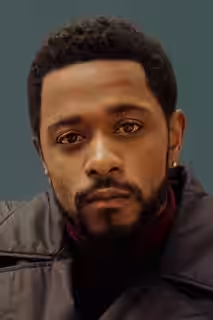
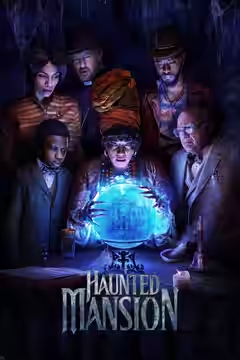
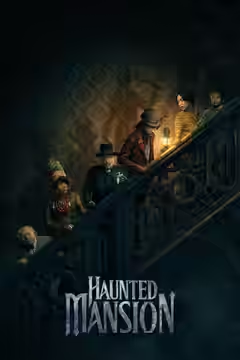
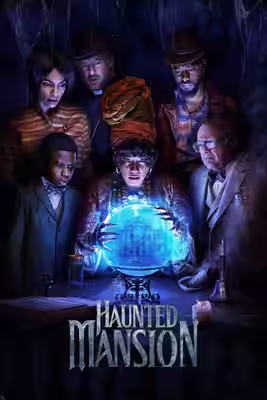
Justin Simien has made a 123-minute film out of a theme-park ride, and it is the second time Disney has tried it with this particular ride: the 2003 version with Eddie Murphy is remembered, where it is remembered at all, as a warning. Katie Dippold’s script has a better idea than that one did. Ben Matthias (LaKeith Stanfield) is a widower who cannot put his grief down, and the house he is hired to photograph is full of people who cannot leave at all. That is a decent match of man and setting. The film states it in its first half hour, and then spends the next ninety minutes walking us from room to room while somebody explains what each one is for.
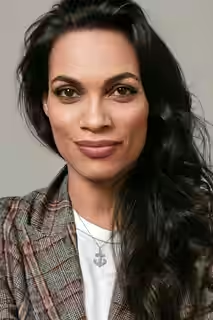
Stanfield is the reason to stay. He plays Ben low and tired, a man who has stopped expecting anything to work, and he delivers the exposition as if he resents having to. There is a quiet scene with Rosario Dawson’s Gabbie in which he explains what his camera was built to do and who he built it for, and it moved us, more than a Disney ride film has any business doing, because Stanfield keeps his voice flat and lets the sentence do the work. Then the film cuts to a green ghost and a joke about a hat, and we felt the temperature drop.
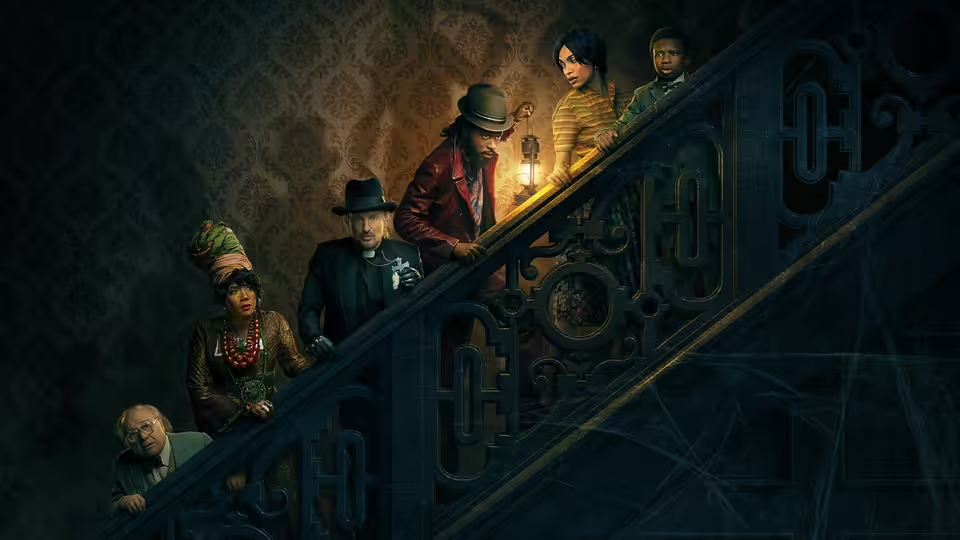
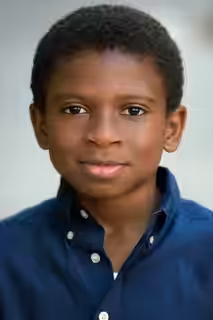
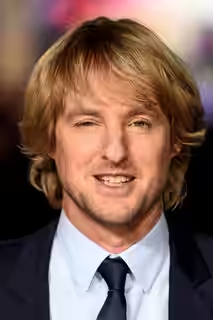
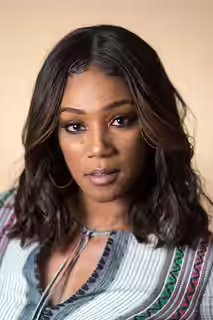
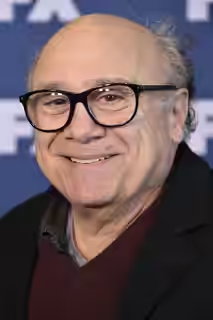
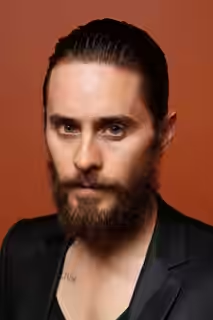
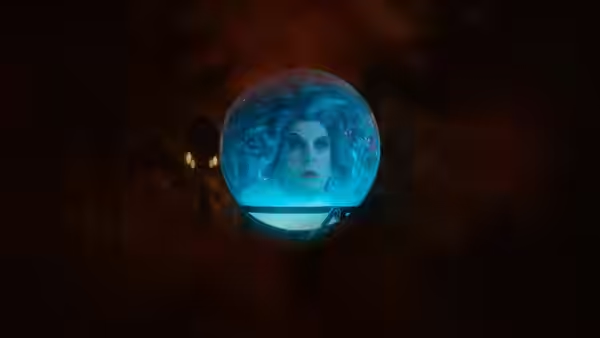
The supporting cast fare in proportion to how much the script needs them. Owen Wilson’s Father Kent wanders in as a priest of uncertain qualifications and gets most of the lines that land; he seems to have decided this is a lark, and he is right. Tiffany Haddish’s medium is pitched at a volume the film never asks her to lower. Danny DeVito arrives as a historian and is mostly there to be frightened, which he does well. Jamie Lee Curtis spends the film as a head in a crystal ball, filmed as one, and is good fun for two scenes. Jared Leto is a voice and a costume under the Hatbox Ghost, introduced with a fanfare the film cannot pay off. Chase W. Dillon, as Travis, is the only performer besides Stanfield who is allowed to be sad without a punchline following.
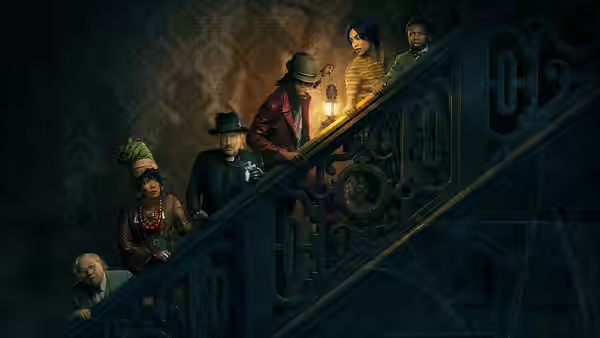
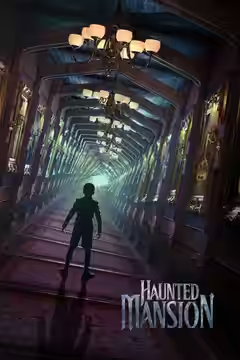
The house itself is well built. Darren Gilford’s production design gives us the stretching portrait gallery, the corridor of candelabra and the ballroom of dancers, each one recognisable from the ride, and Jeffrey Waldron lights them in candle-orange with a lurid pink and purple bleeding in from the windows, so that the whole place looks like a fairground after closing. Jeffrey Kurland’s costumes do the same job for the dead: high collars, wet-looking lace, hats that belong to another century. Kris Bowers’s score leans on strings to do the feeling the script has not quite earned.
The ghosts are the problem. They are digital, translucent and weightless, and they drift through walls like screensavers; a haunted house is only frightening if you believe the things in it could touch you, and nothing here could. Phillip J. Bartell’s cut does the film no favours either. The middle hour goes room, ghost, explanation, joke, room, and every joke is held a beat past the laugh. We were bored by the eighty-minute mark, and then we were annoyed about being bored, because Stanfield and Wilson were standing right there with nothing to do while a computer finished rendering a corridor. There are product placements clumsy enough to get a laugh the film was not after.
Simien’s Dear White People, from 2014, was sharp and quick about people who talk over each other. Here everyone talks and nobody has anything new to say. It is a better piece of work than the 2003 attempt, and a kinder one, and it is still a two-hour film made from a theme-park ride.
Take the children on a wet afternoon if they are old enough for the 12A and young enough to find a floating hat alarming; the scares are mild and the sadness is real. At home you can pause it whenever someone starts explaining the house, which will give you plenty of chances to put the kettle on.