Film review

Heaven Can Wait

1943 · Directed by Ernst Lubitsch · 1h 52m · MPA NR

In a sentenceHenry Van Cleve presents his sins to the Devil like a wine list, and not one of them is a vintage

ComedyRomanceFantasyDrama

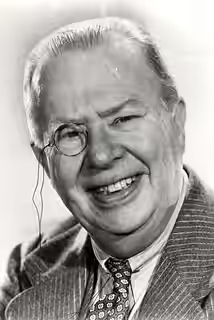
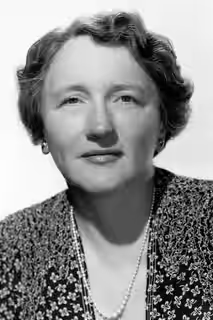
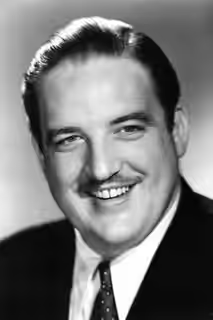
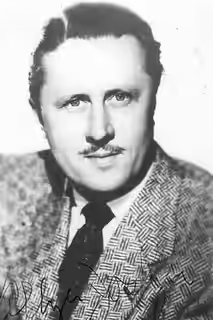
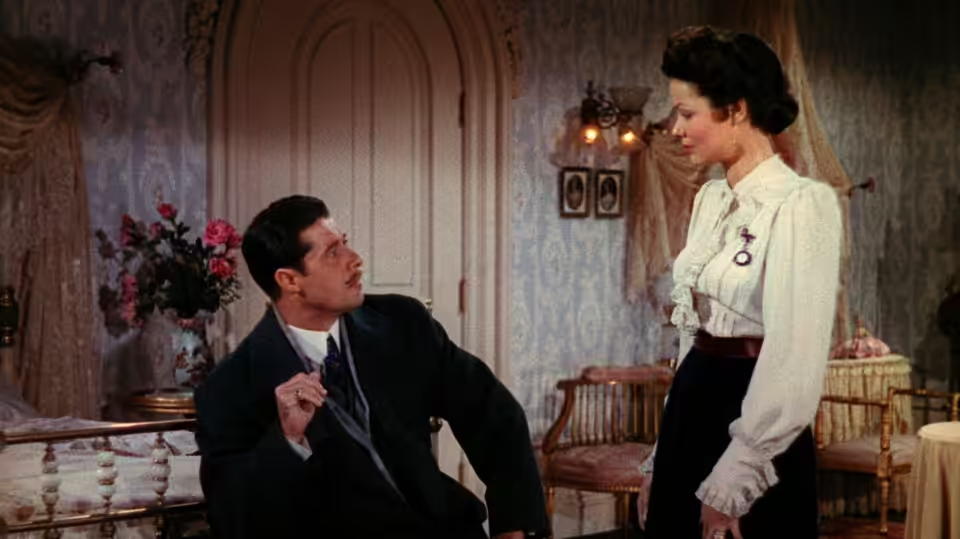
Henry Van Cleve (Don Ameche), newly dead, presents himself at the reception hall of Hell in a good suit and asks to be admitted. His Excellency (Laird Cregar) is courteous but wants evidence, so Henry tells his life story from the beginning. He is born into a wealthy New York family in the 1870s: a doting grandfather, Hugo (Charles Coburn); a stiff father, Randolph (Louis Calhern); a fretful mother, Bertha (Spring Byington); and a French governess, Yvette (Signe Hasso), who teaches him more than French. Grown up and idle, Henry meets Martha Strabel (Gene Tierney) in a bookshop, pretends to be a shop assistant, and discovers she is engaged to his prim cousin Albert (Allyn Joslyn). Her parents, E.F. and Mrs. Strabel (Eugene Pallette, Marjorie Main), are Kansas meat-packing money who barely speak to each other. Henry decides to have her anyway.

Fi1m review

Ernst Lubitsch’s comedy about a rich, idle, charming man explaining himself to the Devil is the warmest film he made and one of his best. It asks you to forgive a great deal on very little evidence, and mostly you will.

Henry Van Cleve (Don Ameche) arrives in Hell well dressed and certain he belongs there. His Excellency (Laird Cregar), a courteous man behind a large desk, is not so sure and asks him to make his case. Henry tells him his life story. That is the whole shape of Heaven Can Wait: seventy-odd years of a New Yorker who never worked a day, chased women, married one, and was mostly at home. It is among the finest things Lubitsch made, and we recommend it to anyone, with one caveat: it wants you to forgive a man who is unusually good at asking.

Samson Raphaelson’s screenplay moves through Henry’s life a birthday at a time, and each stop is a small comedy. There is the governess, Yvette (Signe Hasso), who teaches the boy about women while his parents, Bertha (Spring Byington) and Randolph (Louis Calhern), argue about his upbringing. There is the grandfather, Hugo (Charles Coburn), who approves of everything Henry does because he recognises it. There is the bookshop where Henry meets Martha Strabel (Gene Tierney), pretends to be the shop assistant and learns she is engaged to his cousin Albert (Allyn Joslyn), who has never done anything wrong. Her parents, E.F. Strabel (Eugene Pallette) and Mrs. Strabel (Marjorie Main), are Kansas beef money who conduct their marriage as a feud over the Sunday papers.

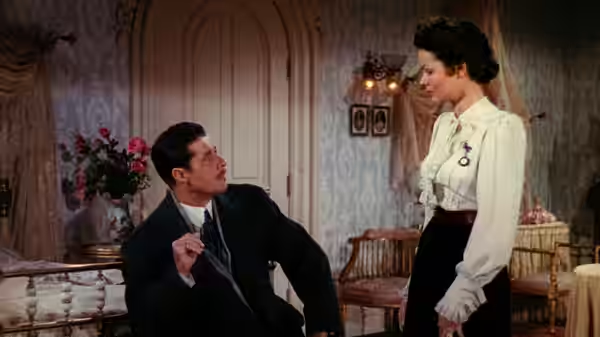
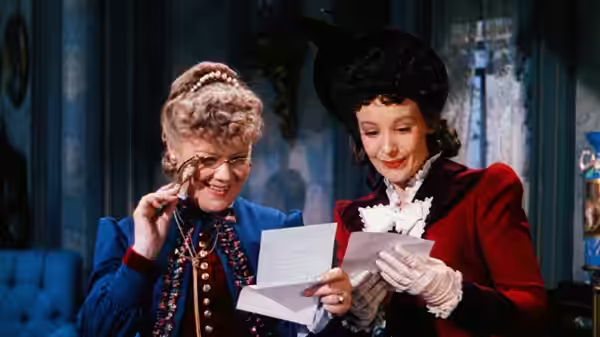
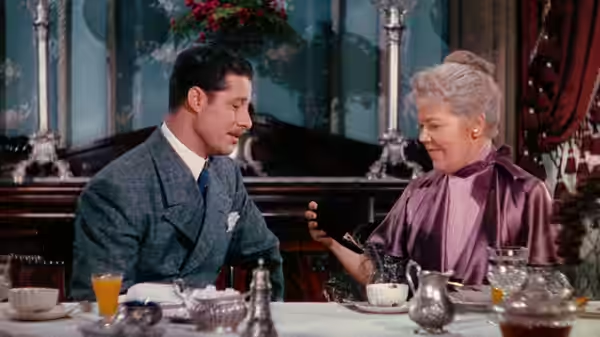
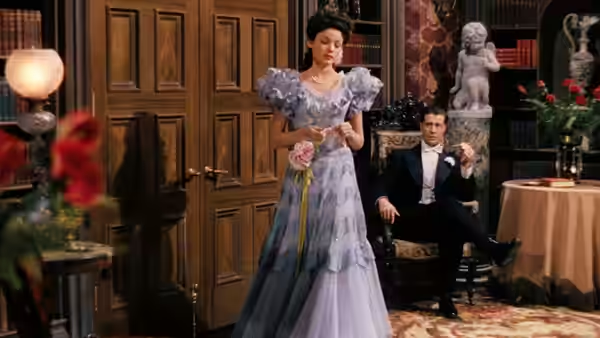
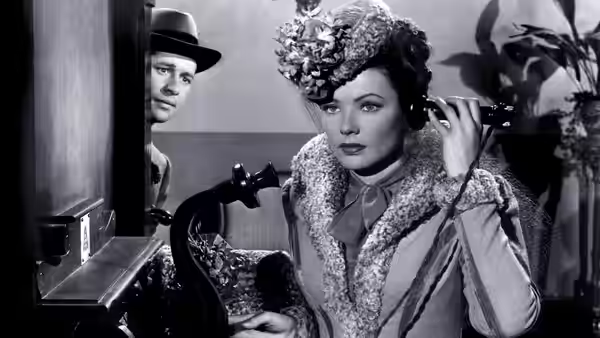
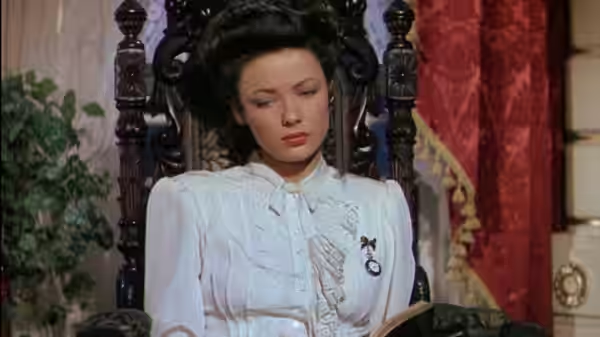
Edward Cronjager shoots it in Technicolor, and not the shouting kind. The Van Cleve house is cream walls, dark wood and the deep reds of upholstery; the colour is period furniture rather than spectacle. René Hubert’s costumes do the work of a calendar: bustles give way to shirtwaists and then to the dropped waists of the twenties, and Tierney wears each as though she had chosen it that morning. Dorothy Spencer cuts between decades with no fuss; Lubitsch shows you the new wallpaper in the hall and Spencer moves on before anyone says what year it is. Alfred Newman and Cyril J. Mockridge score it with waltzes that stay in the background, where a film about a man who never raised his voice needs them.

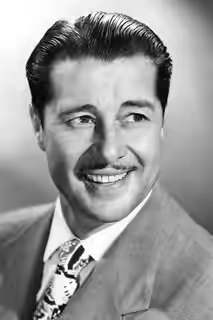
Ameche plays Henry as a man who has never been refused and is faintly puzzled by the idea. He is light and quick and he never asks to be liked, which is why he is. Tierney has the harder part. Martha is given less to do: she is the only person in it who understands exactly what she has married, and Tierney lets you see her decide, more than once, that it is worth it. Coburn walks off with every scene, and Cregar, in a role that could have been one joke, gives the Devil the patience of a good headmaster.

There is a scene between the couple in later life, which we will not describe, in which they simply sit and talk. Nothing happens. Lubitsch does not move the camera and Spencer does not cut, and we were moved more than we expected to be, because the joke and the sadness arrive in the same sentence and neither is allowed to win.

The flaws are real and they are the same flaw twice. Henry’s sins are almost all kept off screen. The film tells us he is a rogue and shows us a man who takes his wife to the theatre. When it does put one on screen, the episode with a showgirl, Peggy Nash (Helene Whitney), the tone wobbles and the film hurries past it. The Hell framing is one idea, and by the third return to the desk it is a way of changing the subject. At 112 minutes the middle stretch, once the household has settled, loses its pace for a reel, and we noticed.

Set against Lubitsch’s own work, it is gentler than Trouble in Paradise and softer than Ninotchka, with none of their appetite for making a fool of somebody. This is a film about being fond of people who do not deserve it, made by a man who plainly was. Watch it with someone you have been married to for a while, and do not expect to agree afterwards on whether Henry got what he deserved.
Critical consensus AI synthesised

80
Positive
6
Mixed
0
Negative
0

The reviews are unanimously favourable, and they agree on the reason: Lubitsch. Most critics describe the film as classic Lubitsch, light in tone but sharp in its social and sexual satire, with the director’s famous delicacy in the handling of key scenes. Samson Raphaelson’s script draws consistent praise for its wit, and several reviews single out the Technicolor photography. Among the cast, Don Ameche’s genial rogue is the most praised performance, with Gene Tierney and Charles Coburn close behind.

The spread is narrow and the reservations are small. The New York Times finds the film occasionally loses its tempo, and Variety treats it as smooth and commercial rather than anything grander. The more recent reviews are the warmest: Slant Magazine calls it one of Lubitsch’s most emotionally complex works, and Consequence finds it touching enough to leave a first-time viewer in love with cinema. The 1943 notices are the mildest; the affection has grown with time.

Empire
6 April 2006 · David Parkinson
90*

The critic praises Lubitsch's witty morality tale as a glorious encapsulation of the classical Hollywood era, highlighting the director's famous touch in key scenes and the strong performances, especially Don Ameche's genial roguery and Gene Tierney's loyalty.

Read the full review →
Slant Magazine
22 August 2018 · Jake Cole
85*

The critic praises the film as one of Lubitsch’s greatest and most emotionally complex works, highlighting how its florid Technicolor images complement Samson Raphaelson’s witty script full of satirical jabs at social mores.

Read the full review →
Time Out
15 June 2016 · MA
80*

The critic calls it classic Lubitsch, light in tone yet astute in its social and sexual satire. They single out the director's characteristic delicacy in handling the story along with the brilliant Technicolor photography.

Read the full review →
The New York Times
12 August 1943 · Bosley Crowther
70*

The critic calls it an amusing comedy of manners in the slickest Lubitsch style, a nostalgic nosegay poking sly sentimental fun at fin-de-siècle naughtiness that affords solid entertainment. He praises the writing and performances, especially Charles Coburn as the grandfather, while noting it occasionally loses tempo.

Read the full review →
Variety
31 December 1942 · Variety Staff
70*

The critic finds the film a smooth, appealing and highly commercial production with generous comedy, light amusing sophistication and heart-warming nostalgia. Lubitsch skillfully handles the cast, especially noting Charles Coburn's standout performance.

Read the full review →
Consequence
23 February 2016 · Blake Goble
90*

The critic finds the film a revelation and touching charmer that leaves viewers emotionally satisfied and deeply in love with cinema after a first viewing prompted by Scorsese. He praises Lubitsch's graceful direction, Ameche's charismatic performance as the charming scamp Henry Van Cleve, and the film's sophisticated blend of comedy, pathos, and flawless storytelling across decades.

Read the full review →

Cast

Awards

Academy Awards, 1944

Nominated
Best Cinematography, Color
Nominated
Best Director
Nominated
Best Picture

If you liked this, try…

Trouble in Paradise poster

Trouble in Paradise

1932 · Lubitsch with his claws still out: thieves in love, and nobody reformed.

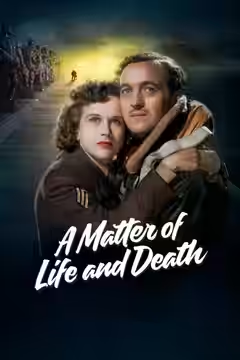
A Matter of Life and Death poster92

A Matter of Life and Death

1946 · Another man argues his case to the afterlife, in colour and in verse.

Le Plaisir poster

Le Plaisir

1952 · Ophüls on pleasure and its bill, told in three stories and one long crane shot.

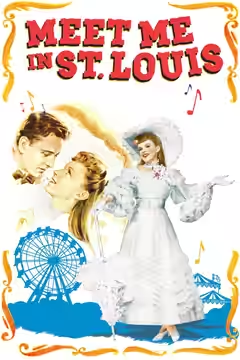
Meet Me in St. Louis poster

Meet Me in St. Louis

1944 · A family and a house watched across a year, in Technicolor that breathes.

Defending Your Life poster

Defending Your Life

1991 · Albert Brooks stands trial for a timid life; the prosecution has clips.