Gene Kelly builds an entire 1890s New York and marches hundreds of people through it, and Barbra Streisand, too young for the part and undaunted by it, is the one thing on screen that moves faster than the scenery. Stay for the title number; the rest is upholstery.
Ernest Lehman writes and produces, Gene Kelly directs, and between them they have taken a stage musical about a matchmaker and made it 148 minutes long. The idea seems to have been that if a musical were big enough, nobody would ask what it was about. Dolly Levi wants to marry Horace Vandergelder, the Yonkers feed merchant who has hired her to find him somebody else, and everything in the film that is not a full-size New York street is in service of that plot. It is not much of a plot, and the film knows it, which is why it keeps building more street.
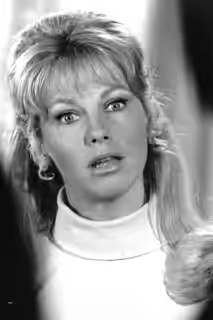
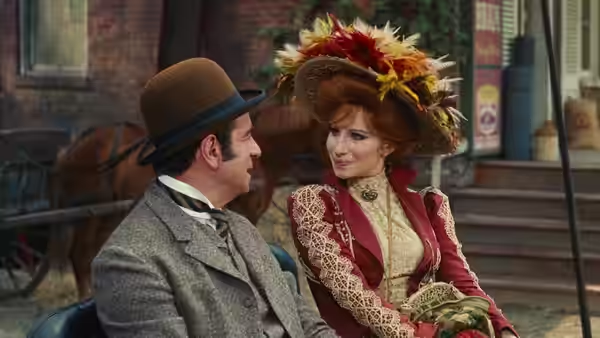
Barbra Streisand is far too young for Dolly, a widow who has spent years in mourning and decided to rejoin the living, and the film never pretends otherwise. What she does instead is play the part as an act: the voice drops into a purr, the hands go to the hips, and she talks to Vandergelder as if she has known him longer than she has been alive. For long stretches it works, because Streisand can sing a line and think a joke at the same time, and nobody else on screen can. When she stops singing, the mannerisms are all that is left, and there is a great deal of not singing.
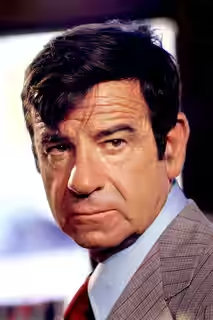
Walter Matthau plays Vandergelder as a man being slowly deafened by everyone he employs. It is a proper comic performance, sour and unhurried, and the film treats it as an obstacle, leaving him in his office while the picture goes off to enjoy itself. He and Streisand have perhaps three scenes in which the match feels like a match. Lehman’s script gives him grumbles rather than lines, and Matthau makes them funny by refusing to speed up.
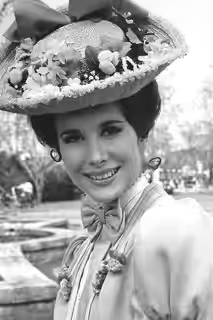
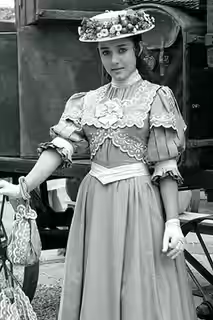
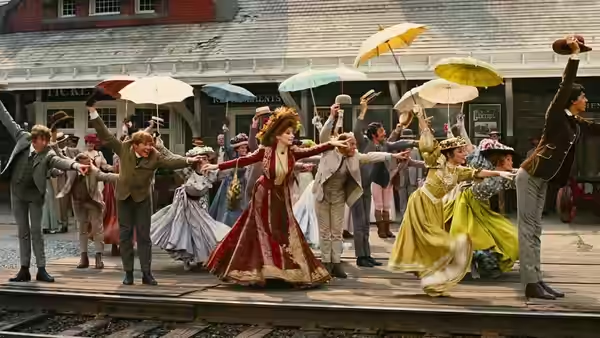
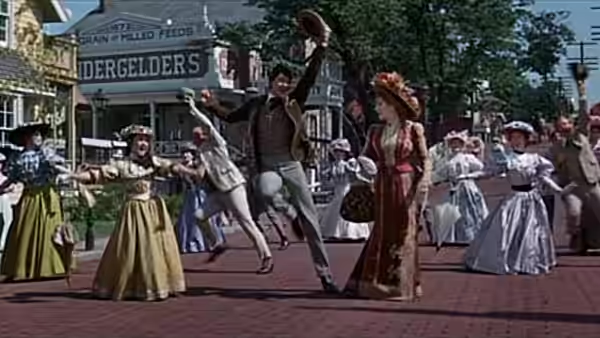
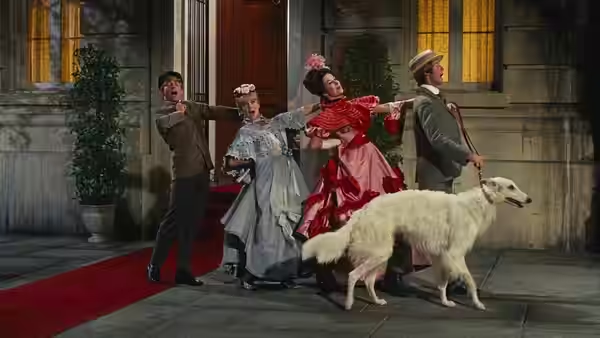
The clerks fare better. Michael Crawford’s Cornelius Hackl is all elbows and breaking voice, a man who has decided to have one adventure and is terrified of it, and Danny Lockin’s Barnaby follows him like a dog that has not been told where they are going. Their number at the Yonkers railway station, with the whole town in Irene Sharaff’s Sunday best and the train arriving on cue, is the one point where the size of the film and the size of the joke agree. We sat forward for it. Marianne McAndrew and E.J. Peaker, as the milliner and her assistant, are handed a hat shop and a farce and play both with more grace than the film notices.
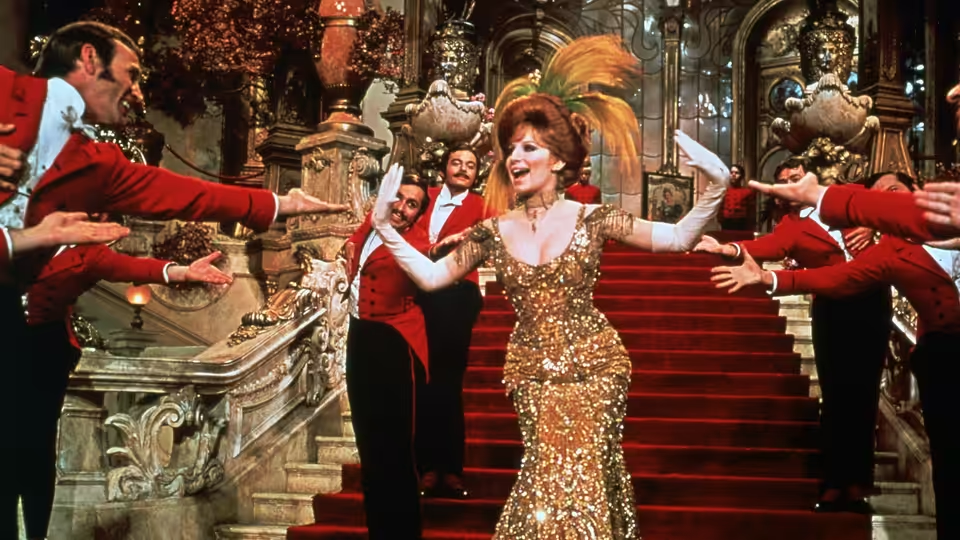
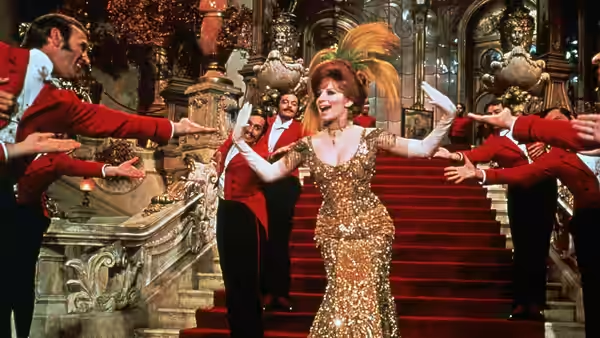
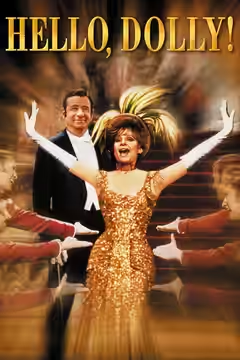
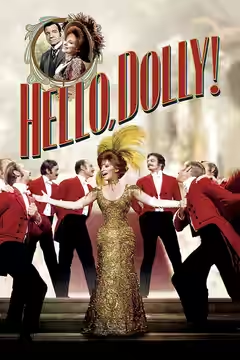
Then there is the title number, and we should be honest about it: for the eight minutes Streisand is on the staircase of the Harmonia Gardens, in gold, with a regiment of waiters galloping beneath her, we were entirely happy. John DeCuir’s restaurant is a red and gilt cavern the size of a railway terminus. Harry Stradling lights it so the brass shines and the faces do not sweat, and Lionel Newman and Lennie Hayton let the band swell under her without drowning her. This is the sequence the rest of the film is trying to justify.
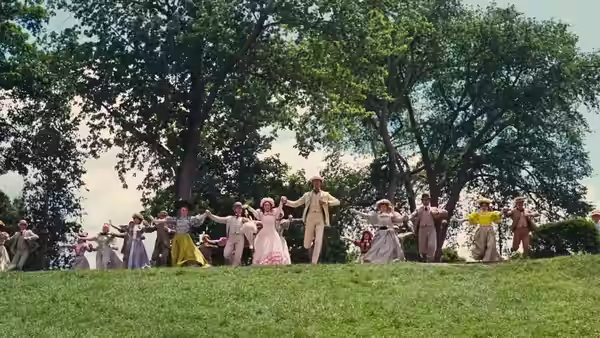
The rest of the film is the problem. William H. Reynolds cuts the dances so that we see the top of a movement and seldom the feet, and cuts the dialogue scenes so that we see all of them. Ermengarde (Joyce Ames) and her artist Ambrose (Tommy Tune) have a subplot the film keeps remembering and then leaving in a cab. DeCuir has built a 14th Street the length of a real one, and the parade that fills it is exact, enormous and about a minute too long. Somewhere in the second hour we were bored, and then we were cross about it, because a film with this many people in it ought to be able to find something for two of them to do.
Kelly co-directed On the Town in 1949 and Singin’ in the Rain in 1952, films in which the camera moved because the people did. Here the people move a great deal and the film stands still and watches, like a man who has paid for the fireworks and intends to see every one. He was a dancer, and this is a film in which dancing is something that happens in the background of shots of scenery.
It is a U, and it is 148 minutes. If you want it, want it for the station and the staircase, and know that between them lies a long afternoon in Yonkers. Children will be asleep before the waiters arrive.