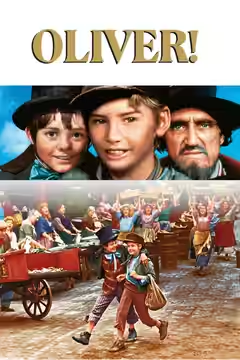
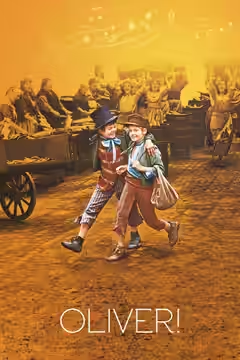
Carol Reed’s film of Lionel Bart’s musical is beautifully built and superbly cast around the edges, with Ron Moody and Jack Wild doing the work the hero cannot. It runs long and never squares the grime with the grins, but it earns its Sunday afternoon.
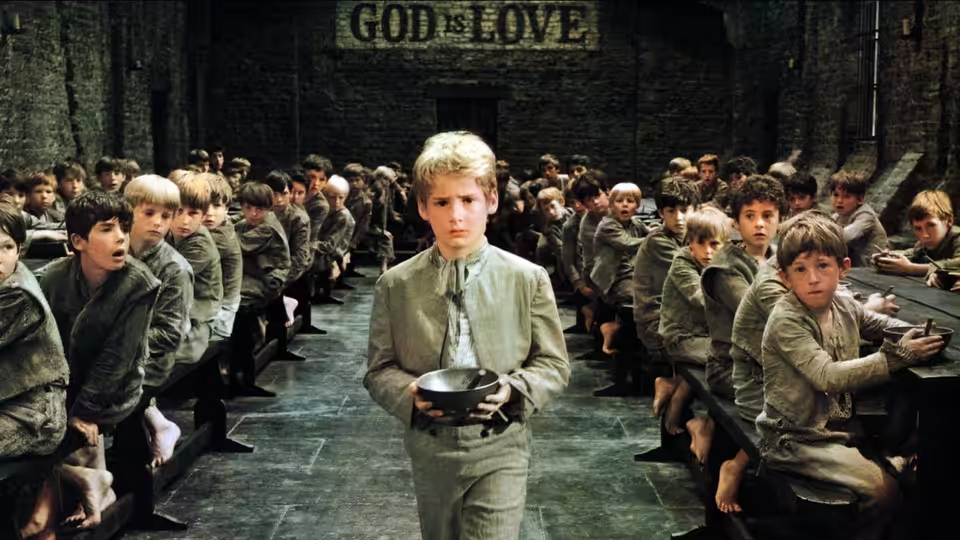
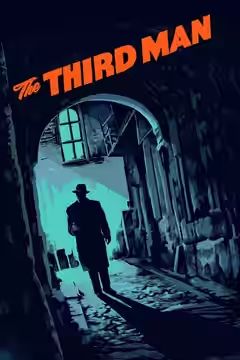
Carol Reed, who made The Third Man (1949), takes Lionel Bart’s stage musical of Oliver Twist and turns it into a 153-minute family film with a London built from the ground up. It is big, warm and expertly made, and for most of its length we were glad to be in its company. It is also too long, it has a hole where its hero should be, and it never decides how hungry its orphans are meant to look. Those faults are not enough to keep us away.
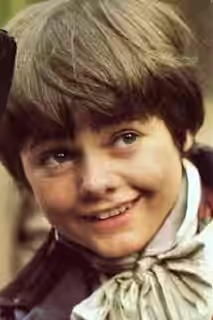
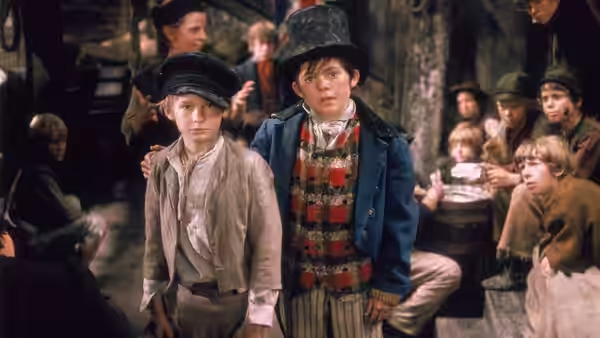
The film belongs to Ron Moody. His Fagin is a bundle of rags and gestures, fingers always moving, eyes always counting, and he plays him as a man who has talked himself into his life. ‘Reviewing the Situation’, in which he weighs going straight and finds each honest trade worse than the last, is the best number in the film because it is also a scene. Jack Wild’s Artful Dodger, in a top hat two sizes too big, walks London as if he holds the lease, and his ‘Consider Yourself’ is the point where the film stops being about a workhouse and starts being fun.
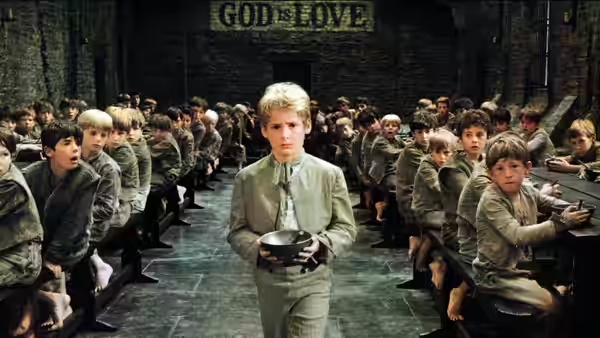
John Box’s London is the other star: leaning tenements, plank walkways, wet cobbles, and Fagin’s den on the rooftops so the boys spill down ladders into the street. Oswald Morris lights the workhouse in brown and grey so the boys’ faces are the only pale things in the frame, and lights the square where ‘Who Will Buy?’ takes place as if it had been scrubbed that morning. That number lifted us more than we expected. A whole square of milkmaids, rose-sellers and soldiers fills in behind one boy at a window, and it is the first time anyone has given Oliver anything, and the film lets him stand and look. Phyllis Dalton puts Fagin in a greatcoat of many layers, Nancy in red and the boys in cast-offs that fit nobody.
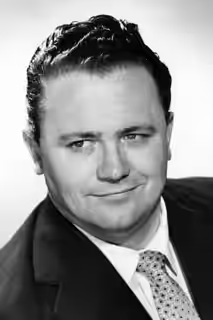
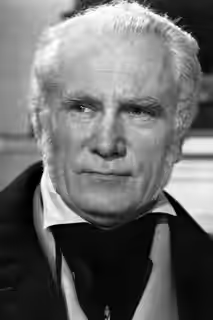
Oliver Reed’s Bill Sikes barely sings, and does not need to. He arrives with a dog and a stare and the children go quiet, and so did we; it is real menace in a U-certificate film. Shani Wallis sings Nancy’s ‘As Long As He Needs Me’ with everything she has, and it is a fine performance of an awkward song: a woman declaring her devotion to a man who beats her, and the film asking us to applaud. We did not know what to do with our hands. Leonard Rossiter and Hylda Baker make the undertakers a pair of small, mean comic turns, and Harry Secombe and Peggy Mount bluster nicely as the Bumbles.
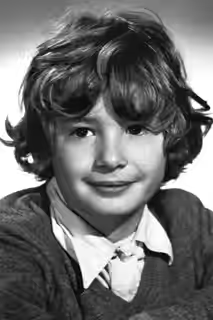
The trouble is the boy. Mark Lester is pale, polite and almost entirely passive, and his Oliver is a thing that happens to other people. The camera keeps finding him at the edge of a room while everyone else does something, and ‘Where Is Love?’, sung among the coffins in the undertaker’s cellar, is so gentle it seems to apologise for interrupting. Dickens wrote him that way. It does not help a musical.
Then there is the length. Vernon Harris’s screenplay keeps the numbers coming, and for the first hour the film is one set piece after another, so a story about hungry children stops every ten minutes for a dance. Ralph Kemplen cuts the big numbers in long takes so we can see the whole floor, which means they run and run. Johnny Green, who shares the music credit with Bart, drives the orchestra hard, and ‘Food, Glorious Food’ is belted by boys with the cheeks of a dairy advertisement. One dissenting critic thought this made the whole film uneasy; most critics forgive it, and so, mostly, do we.
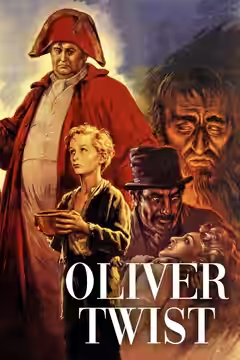
David Lean’s Oliver Twist (1948) is blacker and shorter and closer to the book. This is the version to show a child first. The second half takes a turn we will not describe, except to say that Carol Reed shoots it as a thriller rather than a musical and it is the best directed stretch of the film. Watch it on a wet Sunday with the whole house, and keep a small hand within reach for the end.