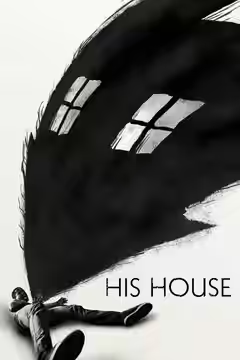
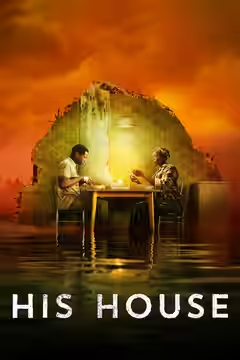
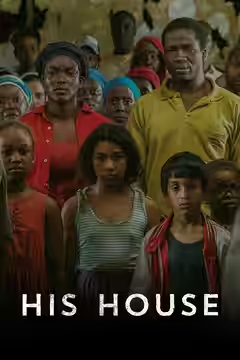
Remi Weekes’s film puts a couple newly granted asylum in a house on an English estate where the walls talk. It is frightening, well acted and about something, and it explains itself too much near the end. We recommend it.
Bol and Rial Majur have been given a house on an English estate. It comes with a weekly allowance and a caseworker, and they must live in it and nowhere else, without work or visitors. Remi Weekes, who writes and directs, has noticed that this is also the shape of a haunted house film: two people who cannot leave, in a building that wants them gone. His House is a good horror film and a better film about asylum than most dramas. It frightened us for most of its 93 minutes, and then, near the end, it explained what it had already shown us.
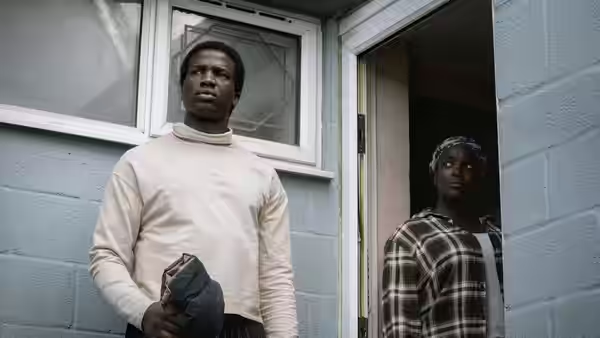
The house is the first achievement. Jacqueline Abrahams’s production design gives it rubbish bags left by the last tenants, wallpaper coming off in sheets, bare wiring where a light fitting should be and a damp stain the size of a door. Jo Willems shoots the inside with the lights mostly off, faces lit from the street through the curtains, and the estate as flat brick under a white sky. Holly Rebecca dresses Bol (Sope Dirisu) in a polo shirt bought to match the smiling man on an advert, and keeps Rial (Wunmi Mosaku) in the printed dress and headwrap she arrived in. They stand in the same rooms and look as if they are in different countries.
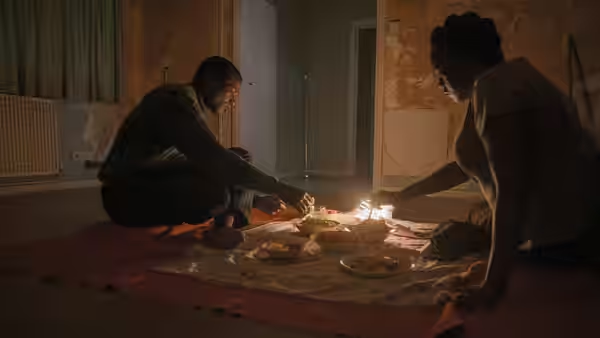
The frights are real ones. Bol hears something behind the plaster and takes a hammer to it, and the holes he makes become eyes. The witch Rial believes is with them is played by Javier Botet, a long thin figure who moves as if he has too many joints, and Weekes shows him a second at a time, usually where Bol is not looking. A scene at the dining table, Bol eating alone in the dark, frightened us in the plain, childish way we thought we had grown out of. Julia Bloch cuts these scenes slowly, holding a shot while the light changes rather than cutting on the shock, and that is why they work. Roque Baños’s score does not trust them to. His strings arrive on top of moments already doing the job, and twice they cover a quiet scene that wanted silence.
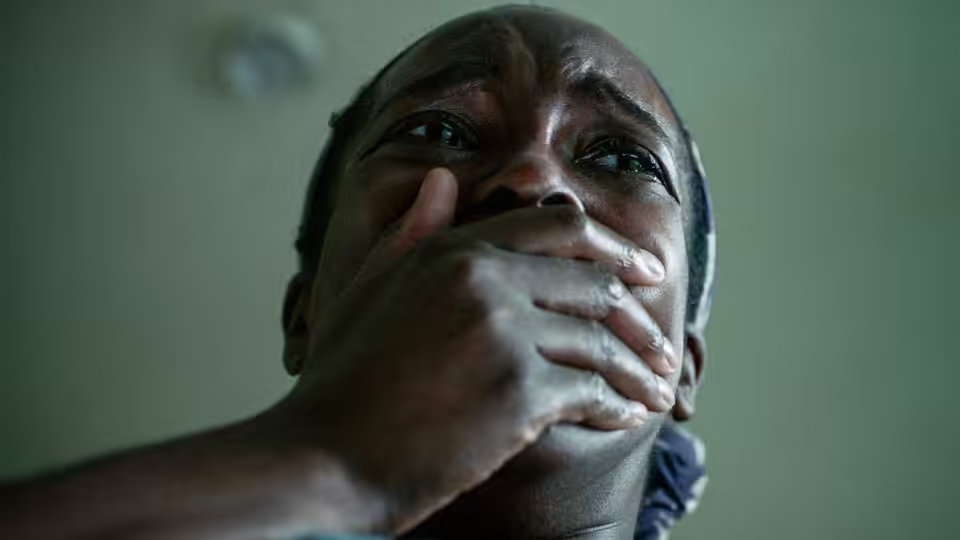
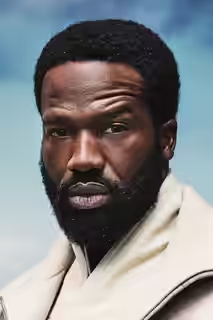
Dirisu plays Bol as a man performing a part. He sings football songs in the pub, insists on knife and fork at the table, tells Rial to speak English, and lets you see the performance is the only thing holding him up. Mosaku’s Rial is the one who remembers. On the estate she asks three boys for directions and they tell her to go back to Africa. That moved us more than any of the ghosts did. It is a small, ordinary cruelty, and Mosaku takes it as someone who has survived larger ones does, with a nod and a walk away. Matt Smith, as the caseworker Mark Essworth, is tired and kind by rote, and plays it without irony.
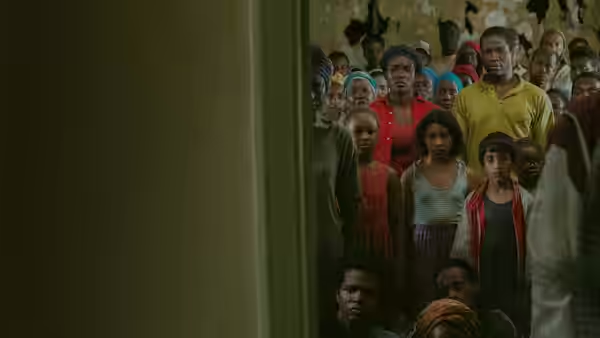
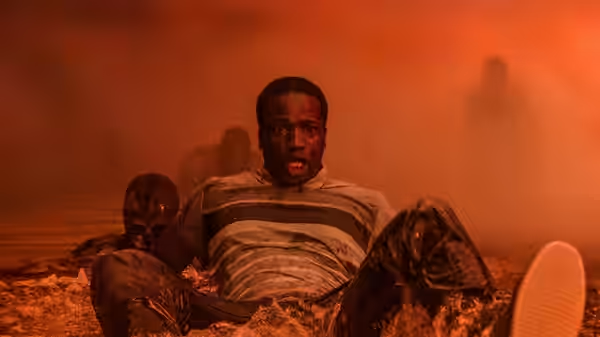
Nyagak (Malaika Wakoli-Abigaba), the couple’s daughter, drowned in the opening minutes, and her parents carry her differently: Bol wants to put her away, Rial wants her back. At night the walls open onto the water, and the dead in Bol’s kitchen are people from the crossing. For an hour the horror and the grief are the same thing, and the film does not have to say so.
Then it says so. The last twenty minutes bring a reveal we will not describe, and having shown it once, Weekes shows it again in flashback and then has a character explain it. The story is credited to Toby Venables and Felicity Evans as well as Weekes, and the ending is tidier and less strange than the rest. We were not bored, but we were ahead of it, and we had not been ahead of anything until then.
Set beside The Babadook and Under the Shadow, this holds its own, and it has something they did not: an outside world as hostile as anything indoors. Watch it with the lights off. You will be checking the wallpaper for a week.