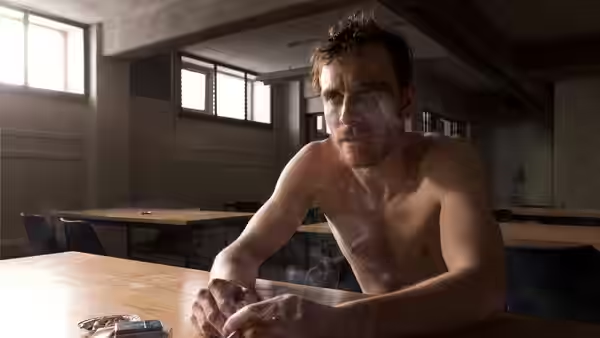
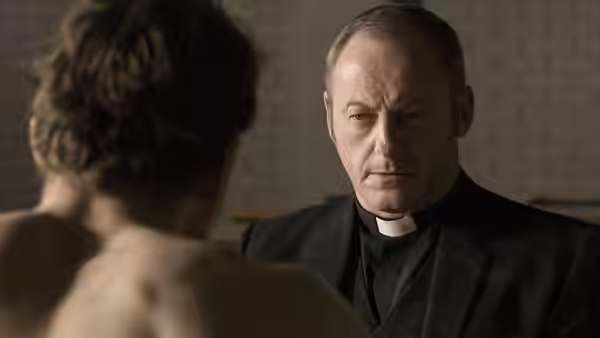
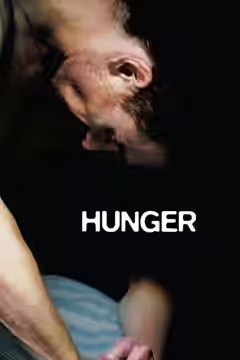
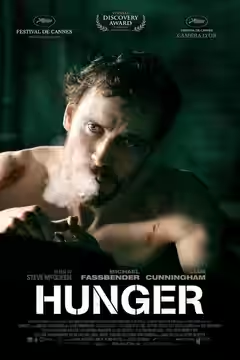
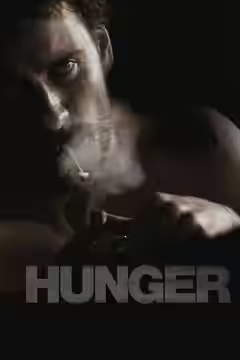
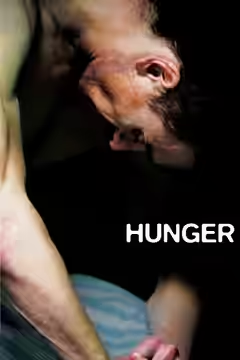
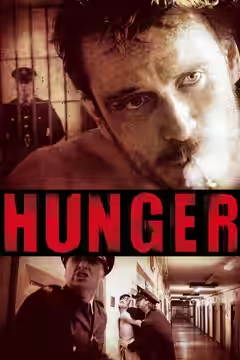
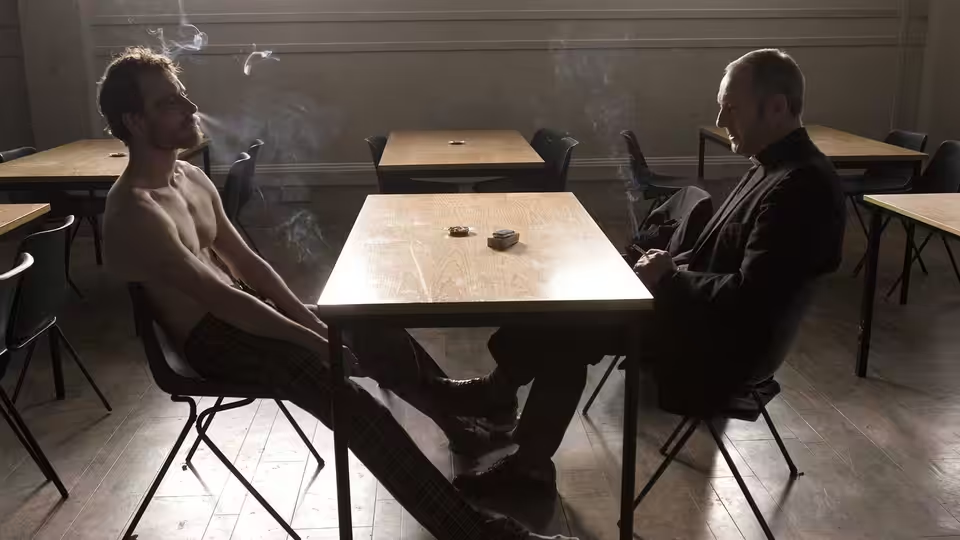
Bobby Sands (Michael Fassbender) and Priest (Liam Cunningham) sit at a table amid cigarette smoke
Film review

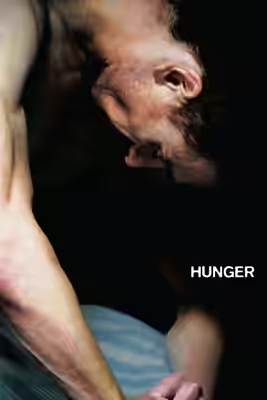
Hunger

2008 · Directed by Steve McQueen · 1h 36m

In a sentenceA prison film where even a conversation with a priest offers no chance to relax

Inside the Maze Prison in 1981, IRA prisoners refuse to wear prison uniforms as part of a protest that extends into the filthy conditions of their cells. The film follows prisoners and a guard through the routines of confinement, resistance and violence, before focusing on Bobby Sands (Michael Fassbender) and his decision to begin a hunger strike. A conversation with a priest (Liam Cunningham) puts that decision under scrutiny. Steve McQueen directs, with Stuart Graham as Ray Lohan, Brian Milligan as Davey Gillen and Liam McMahon as Gerry Campbell.

Plays from YouTube when you press play; nothing loads from them until then.

Fi1m review

Steve McQueen’s Hunger is a harrowing, superbly acted prison drama, with Michael Fassbender holding our attention as Bobby Sands. We recommend it strongly, with a warning about its violence and the scant political context surrounding the suffering.

Steve McQueen’s Hunger is a prison film that gives the routines of confinement as much attention as the protest. Set in the Maze Prison around the 1981 hunger strike, it takes time to reach Bobby Sands, played by Michael Fassbender. There is a guard’s working life to consider, and prisoners refusing uniforms in cells made filthy by protest. We think it is an exceptionally assured film, with a serious limit to how much political history it supplies.

The early passages contain little dialogue, and McQueen lets bodily discomfort accumulate without somebody explaining what it means. We were horrified by the filthy cells and the violence inflicted on the prisoners; the stretches of routine around them made that brutality feel established and ordinary. Sean Bobbitt’s cinematography gives us time to inspect what we might prefer to glance at. His carefully composed frames can make us conscious of the skill involved, but their steadiness mostly prevents the violence becoming a blur.

Production designer Tom McCullagh gives the cells a cramped, filthy solidity that makes the blanket protest comprehensible as a daily ordeal. There is little sense of a set cleared for the actors to perform in, and the confinement is oppressive even without violence. Stuart Graham, as Ray Lohan, helps the film attend to life beyond its central prisoner. McQueen’s willingness to look at guards as well as inmates matters: the violence does not require everyone involved to be presented as a monster.

Editor Joe Walker makes the extended conversation between Sands and a priest feel like a necessary interruption. After so much near-wordless physical punishment, the arrival of sustained speech is a relief, although the relief soon passes. Walker allows the exchange to continue without the usual reassuring changes of shot, leaving us to listen to two people rather than wait for the next piece of action. The duration earns its place because we have time to consider what each man says.

The writing, by McQueen and Enda Walsh, gives Liam Cunningham’s priest enough weight to make the discussion more than an invitation to admire Sands. Cunningham is a substantial presence, and Fassbender does not soften Sands’s determination to make him easier company. We found the exchange more disturbing than we expected because neither performance lets us treat the decision as settled merely because it has been made. Fassbender makes certainty uncomfortable to sit beside, without resorting to a display of menace.

David Holmes and Leo Abrahams’s music adds to the unease without supplying a ready-made response, while the wider sound work makes the prison oppressive even in quieter passages. McQueen is less persuasive when the compositions ask to be admired for their own sake. Those moments are occasional; the shortage of political explanation matters more. Viewers unfamiliar with the conflict receive little help in understanding the wider struggle, and the intense scrutiny of prison life cannot supply all of that missing history.

The long takes will frustrate anyone who expects a prison drama to keep finding a new incident. We think their patience is justified: resistance here has to be sustained through days whose routines barely change. At 96 minutes, the film still asks for considerable stamina, particularly from anyone sensitive to violence. Choose an evening when there is time afterwards to talk.

Critical consensus AI synthesised

81
Positive
13
Mixed
0
Negative
1

Most critics respond strongly to Hunger, praising Steve McQueen’s controlled direction and the force of its depiction of prison protest and physical suffering. The praise centres on the precise compositions, the use of sound and silence, and Michael Fassbender’s physically demanding performance as Bobby Sands. The extended conversation between Sands and a priest is repeatedly singled out for giving sustained attention to the moral questions surrounding the protest, while several reviews value the film’s resistance to simple heroes and villains.

Reservations concern the deliberate pace, an occasionally overdetermined structure and symbolism that some find too self-conscious. The spread is wide despite the strongly positive consensus: The Hollywood Reporter stands apart in finding the film trite, politically unilluminating and uneven, though it acknowledges Fassbender’s commitment. Elsewhere, such objections mostly qualify admiration for a gruelling film whose concentration on bodies and prison conditions carries more weight than conventional historical explanation.

Slant Magazine
1 October 2008 · ★★★★/4
100

The critic hails the film as a nuanced masterpiece for its assured integration of visuals, sound design and script in depicting the daily intricacies of prison protest and revolution, singling out the powerful 22-minute dialogue scene and poetic imagery for particular praise.

Read the full review →
Time Out
16 May 2008 · ★★★★★ · Dave Calhoun
100

An extraordinary, convention-defying study of Maze Prison life and the 1981 hunger strikes that moves from communal brutality to personal focus on Bobby Sands. McQueen balances perspectives with a masterful structure of life, debate and death, creating an invigorating if difficult watch anchored by Fassbender's committed performance.

Read the full review →
The Guardian
31 October 2008 · Peter Bradshaw
90*

The critic describes the film as an icily brilliant and superbly acted portrait of the 1981 hunger strike that unflinchingly conveys the nauseous reality of the dirty protest and the tragic futility of the events. He singles out the austere long-take scene between Sands and the priest, Fassbender’s emaciated performance, and McQueen’s fierce concentration on stark imagery for particular praise.

Read the full review →
The New York Times
20 March 2009 · A.O. Scott
85*

With calm, deliberate attention the film explores physical extremity and political extremism in the Maze prison protests of 1981. Dignity is the real subject as it recreates the atmosphere of resistance with an uncanny balance of violence and quiet, emphasizing the prisoners' refusal of prison uniforms and the resulting conditions.

Read the full review →
The AV Club
19 March 2009 · B+ · Noel Murray
83

The critic highlights the visceral, dialogue-free immersion in the Maze Prison's brutal conditions and praises McQueen's visually stunning direction and Fassbender's remarkable performance, while noting the structure can feel overdetermined at times.

Read the full review →
Empire
26 September 2008 · Ian Freer
80*

Hunger is a powerful, difficult piece that announces Steve McQueen as a singular talent and Michael Fassbender as an actor of note. It is a gruelling, compelling experience that offers no easy pleasures or simple analysis.

Read the full review →

Straight answers AI written, from our review

Is Hunger worth watching?
Hunger is worth watching for anyone prepared for a harrowing, patient prison drama, and we scored it 86. Michael Fassbender holds the screen as Bobby Sands, and the long conversation with a priest is the most unsettling passage. Anyone wanting the political history of the 1981 hunger strike explained will get little help.
How long is Hunger, and what is it rated?
Hunger runs 1h 36m. It is a drama and history film.
Where can I watch Hunger in Vietnam?
Hunger is not on any streaming or rental service in Vietnam at the moment. It is available in 9 other countries; change your country at the top of the page to see where. Availability is checked daily.
How violent or frightening is Hunger, and is it suitable for children?
Hunger carries a UK 15 certificate and is not suitable for children. It shows sustained violence inflicted on prisoners, filthy cells and prolonged physical suffering, all held in steady frames that give us time to look rather than glance. We were horrified, and anyone sensitive to violence should think twice before an evening with it.
How does Hunger compare to The Look of Silence?
Hunger is a scripted drama about IRA prisoners in the Maze, while The Look of Silence is a documentary in which a man sits with those who murdered his brother. Both are patient with faces and silences, and both are hard to watch. The documentary cuts deeper; McQueen's film is the more assured piece of craft and the more physically brutal.
What should I watch after Hunger?
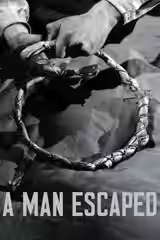
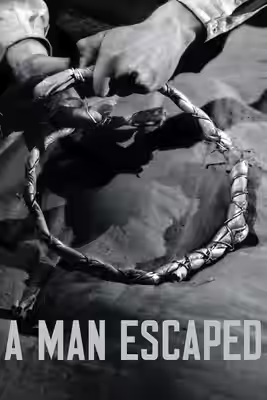
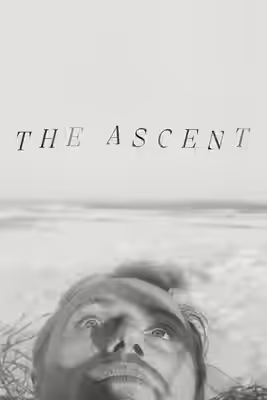
After Hunger, try A Man Escaped (1956, Fi1m 90): Prison resistance observed through small tasks, patient attention and the sounds beyond a cell. Then The Ascent (1977, Fi1m 88): Conviction under unbearable pressure, with faces given as much weight as physical suffering; and The Look of Silence (2014, Fi1m 87): A patient confrontation with political violence, attentive to faces and difficult silences.

Cast

Awards

BAFTA Film Awards, 2009

Nominated
Best British Film

Evening Standard British Film Awards, 2009

Won
Evening Standard British Film Awards

Caméra d'Or, 2008

Won
Caméra d'Or

European Film Award for Best Actor, 2008

Nominated
European Film Award for Best Actor

European Film Award for Best Director, 2008

Nominated
European Film Award for Best Director

European Film Award for European Discovery of the Year, 2008

Won
European Film Award for European Discovery of the Year

If you liked this, try…

  1. A Man Escaped (1956, Fi1m 90)Prison resistance observed through small tasks, patient attention and the sounds beyond a cell.

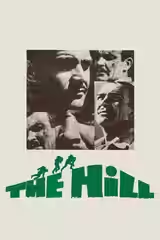
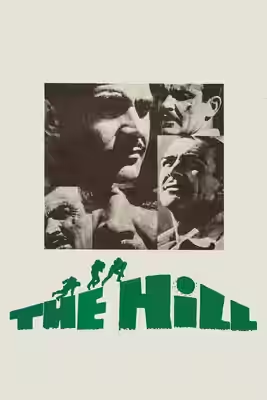
  2. The Hill (1965) · not reviewed yetMilitary imprisonment and institutional cruelty, made painfully immediate through the prisoners’ physical exhaustion.

  3. The Ascent (1977, Fi1m 88)Conviction under unbearable pressure, with faces given as much weight as physical suffering.

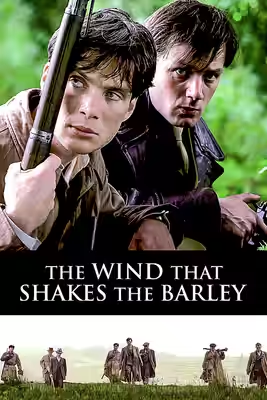
  4. The Wind That Shakes the Barley (2006) · not reviewed yetIrish political struggle receives the wider historical treatment that McQueen largely leaves aside.

  5. The Look of Silence (2014, Fi1m 87)A patient confrontation with political violence, attentive to faces and difficult silences.

Free account

Know what to watch tonight

Two lists that know where things are streaming, collections you can share, your own score beside ours, and Discover that remembers what you have seen.

  • Want to see, sorted by what is streaming now
  • Seen, with your score out of ten
  • No adverts, ever