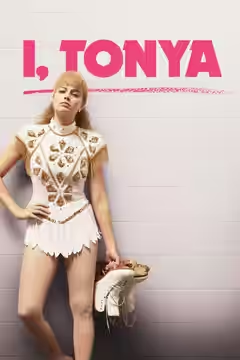
Craig Gillespie’s Tonya Harding film is quick, rude and often funny, with Margot Robbie and Allison Janney on form and the skating shot like a chase. The jokes and the beatings never settle in the same room, and the film ends by blaming us.
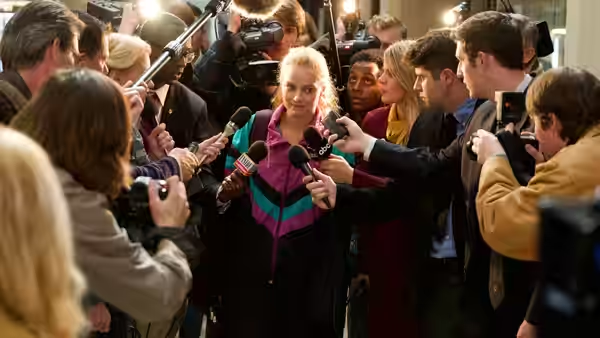
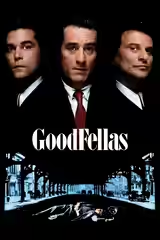
Craig Gillespie tells the Tonya Harding story the way Martin Scorsese told Henry Hill’s in Goodfellas (1990): interviews to camera, old rock on the soundtrack, a narrator who turns round to correct the record. Steven Rogers’s script lets Tonya and her ex-husband Jeff tell it in turn, agreeing on almost nothing. The result is 120 minutes that move fast, land most of their jokes and never decide what to do when the jokes stop. It is a good evening, and in stretches an uncomfortable one.
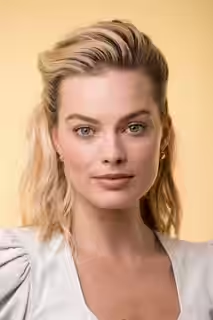
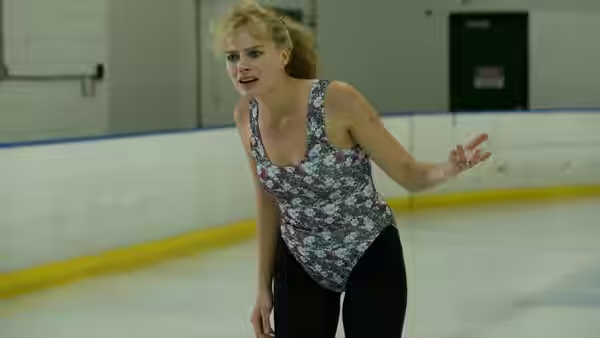
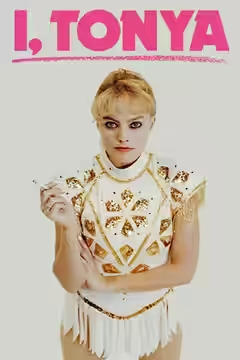
Margot Robbie plays Harding from fifteen into middle age, and most of the performance is in the jaw. She skates with her chin out, takes her marks with her chin out, and when her coach suggests something tasteful to wear she pushes it further out still. To camera she is a woman who has rehearsed her grievances so long they have worn smooth. When Jeff hits her she turns to us mid-blow to say it did not happen like that, and we did not know whether to laugh. We think that is deliberate; we are not sure it was wise.
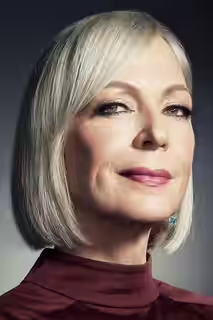
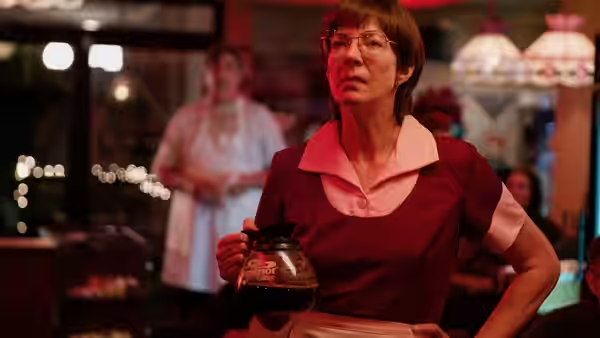
Allison Janney’s LaVona has most of the film’s best lines. She sits for her interview in a fur coat with an oxygen line under her nose and a parakeet on her shoulder, and talks about her daughter like a car that never ran properly. At the rink she smokes, drinks from a flask, pays Diane Rawlinson (Julianne Nicholson, patient and prim) out of her tips and tells the child she skates better angry. We laughed at nearly everything she said and felt a little ashamed each time, because Gillespie keeps the bruises in frame. Janney never softens and never asks to be forgiven.
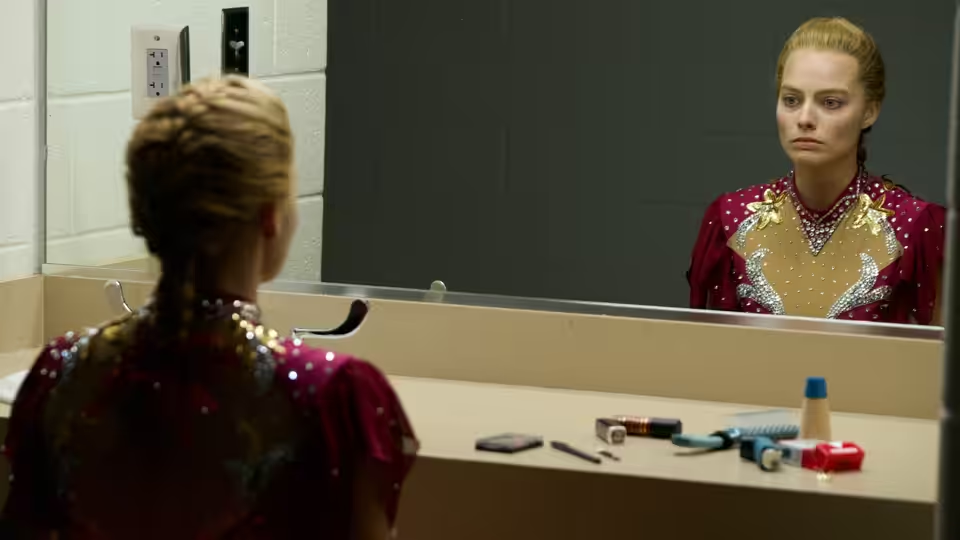
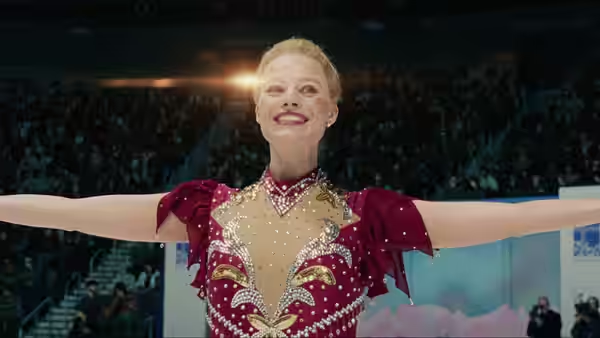
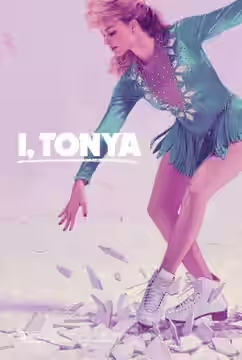
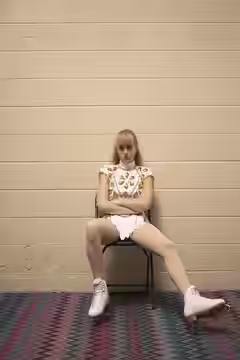
Nicolas Karakatsanis shoots the skating in long gliding takes that stay with Robbie across the ice and turn when she turns, so the triple axel plays as one held breath. The sequences have a nerve the rest of the film keeps reaching for. Tatiana S. Riegel cuts the off-ice scenes to the beat of a soundtrack of radio rock, so that Peter Nashel’s own score barely gets a word in. Jade Healy gives everyone wood panelling, brown carpet and one lamp. Jennifer Johnson’s costumes are the ones the judges marked down, sequins sewn at the kitchen table, and a fur for LaVona that costs more than anything else in shot.
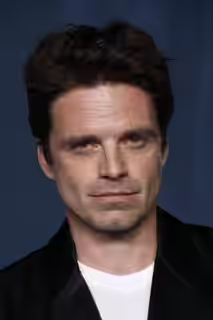
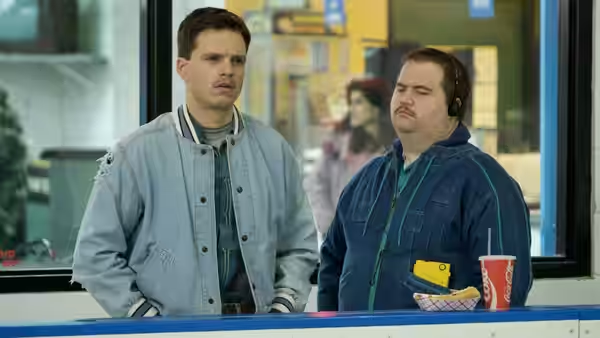
Sebastian Stan plays Jeff with a moustache, a mumble and a wish to be liked that turns into something else once the door is shut. Paul Walter Hauser’s Shawn, Tonya’s self-appointed bodyguard, lives with his parents and claims a background in counter-terrorism, and Hauser plays him dead straight, which is why he is funny. The second half follows these men into the plot everyone knows, and the film loses grip there. The planning is funny, the people are idiots, and the picture seems to think their idiocy settles the question of blame.
It does not. Rogers wants us to see Harding as a woman hit in turn by her mother, her husband, the judges and the public, and near the end she looks into the lens and tells us we were part of it too. But the film has spent ninety minutes inviting us to laugh at the people it now says we should have pitied, and the accusation arrives too late and too neatly to land. Gillespie, who made the gentler Lars and the Real Girl (2007), has the comic timing. He has not found a tone that lets the comedy and the beatings sit in one room.
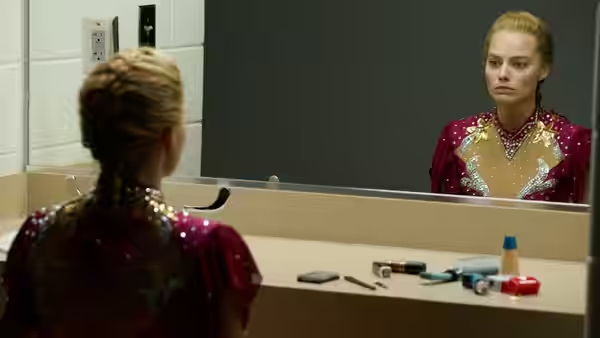
And still it got us. There is a scene late on, Robbie alone at a mirror with a make-up sponge, that we will not describe, except that it is held long and silent and did more than any speech to make us feel what the whole business cost her. See it for that, for Janney, and for the skating, where the film’s speed and its feeling arrive together. It carries a 15 certificate, mostly for the language, which LaVona supplies almost single-handed.