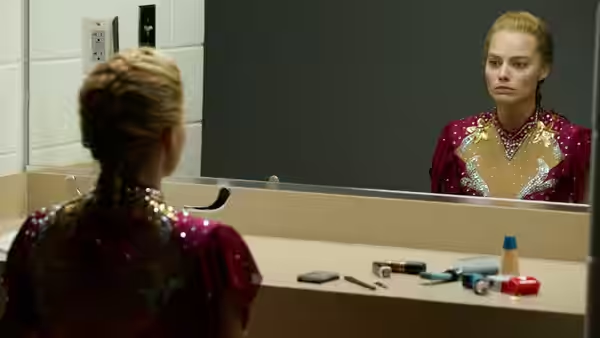
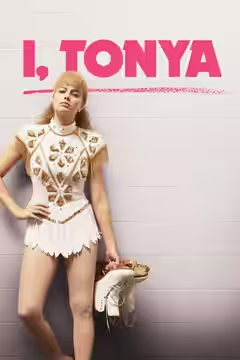
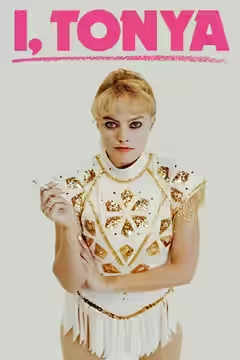
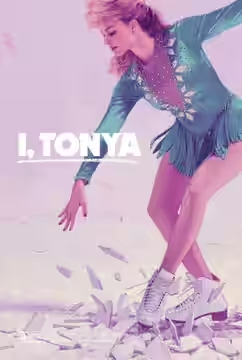
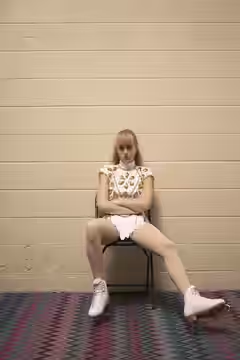
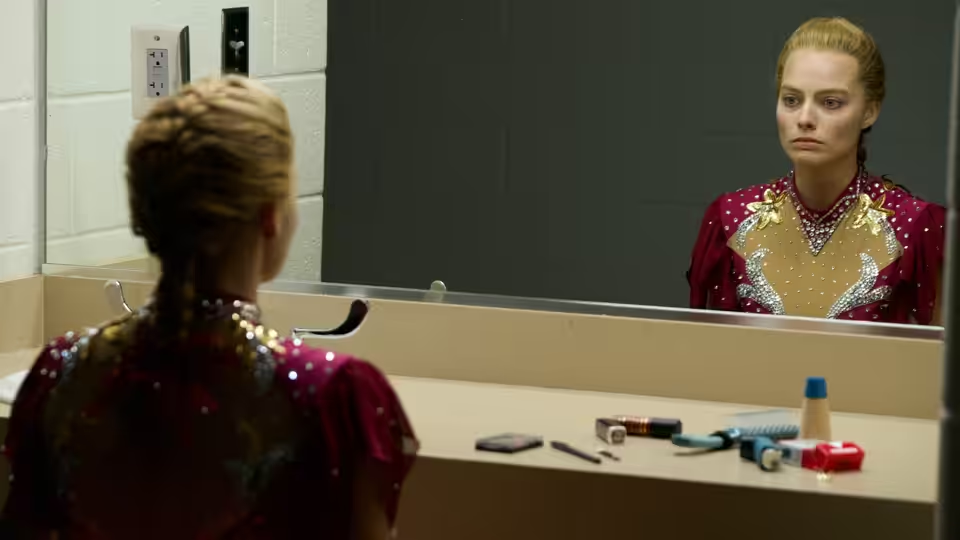
Tonya (Margot Robbie) studies her reflection in a dressing-room mirror, wearing her skating costume
Film review

I, Tonya

2017 · Directed by Craig Gillespie · 2h 00m · Derzhkino 16+

In a sentenceEveryone turns to the camera to say it was not their fault, and the parakeet declines to comment

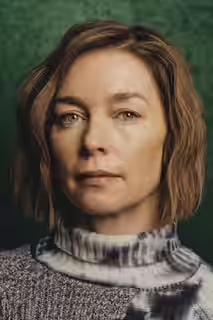
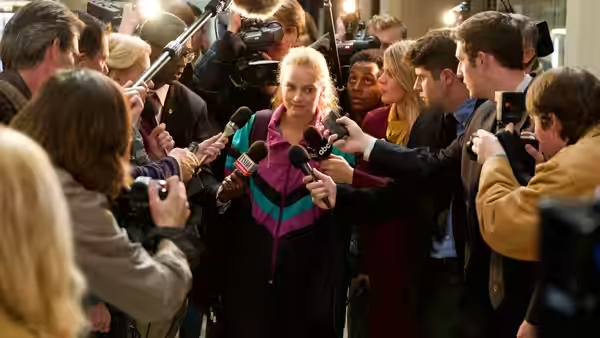
Portland, Oregon, in the 1970s. LaVona (Allison Janney) marches her three-and-a-half-year-old daughter Tonya (Maizie Smith) to the local rink and will not leave until coach Diane Rawlinson (Julianne Nicholson) agrees to take her on. LaVona smokes at the barrier, pays in waitressing tips and tells the child she skates better angry. By her teens Tonya (Margot Robbie) can land jumps the other girls cannot, sews her own costumes because there is no money for better, and watches judges mark her down for not being the right kind of girl. At fifteen she meets Jeff (Sebastian Stan), who is sweet until he is not. All of it is told years later, to camera, by Tonya, Jeff and LaVona, who agree on nothing, least of all what happened to Nancy Kerrigan (Caitlin Carver) in 1994.

Plays from YouTube when you press play; nothing loads from them until then.

Fi1m review

Craig Gillespie’s Tonya Harding film is quick, rude and often funny, with Margot Robbie and Allison Janney on form and the skating shot like a chase. The jokes and the beatings never settle in the same room, and the film ends by blaming us.

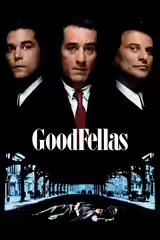
Craig Gillespie tells the Tonya Harding story the way Martin Scorsese told Henry Hill’s in Goodfellas (1990): interviews to camera, old rock on the soundtrack, a narrator who turns round to correct the record. Steven Rogers’s script lets Tonya and her ex-husband Jeff tell it in turn, agreeing on almost nothing. The result is 120 minutes that move fast, land most of their jokes and never decide what to do when the jokes stop. It is a good evening, and in stretches an uncomfortable one.

Margot Robbie plays Harding from fifteen into middle age, and most of the performance is in the jaw. She skates with her chin out, takes her marks with her chin out, and when her coach suggests something tasteful to wear she pushes it further out still. To camera she is a woman who has rehearsed her grievances so long they have worn smooth. When Jeff hits her she turns to us mid-blow to say it did not happen like that, and we did not know whether to laugh. We think that is deliberate; we are not sure it was wise.

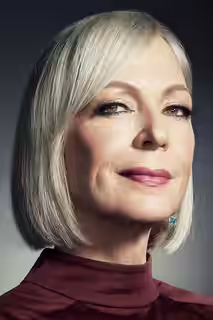
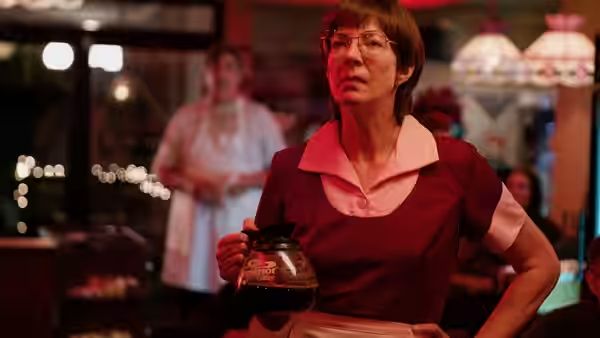
Allison Janney’s LaVona has most of the film’s best lines. She sits for her interview in a fur coat with an oxygen line under her nose and a parakeet on her shoulder, and talks about her daughter like a car that never ran properly. At the rink she smokes, drinks from a flask, pays Diane Rawlinson (Julianne Nicholson, patient and prim) out of her tips and tells the child she skates better angry. We laughed at nearly everything she said and felt a little ashamed each time, because Gillespie keeps the bruises in frame. Janney never softens and never asks to be forgiven.

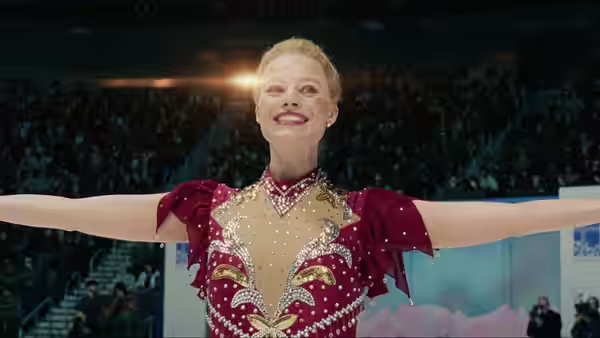
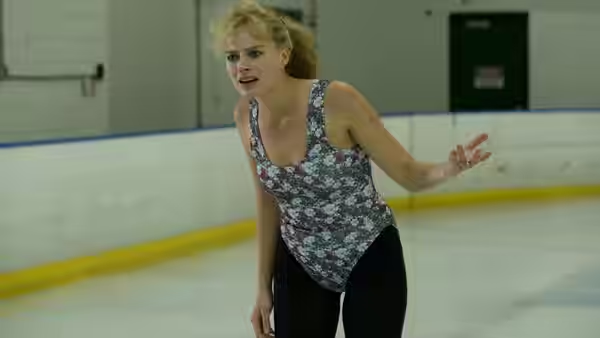
Nicolas Karakatsanis shoots the skating in long gliding takes that stay with Robbie across the ice and turn when she turns, so the triple axel plays as one held breath. The sequences have a nerve the rest of the film keeps reaching for. Tatiana S. Riegel cuts the off-ice scenes to the beat of a soundtrack of radio rock, so that Peter Nashel’s own score barely gets a word in. Jade Healy gives everyone wood panelling, brown carpet and one lamp. Jennifer Johnson’s costumes are the ones the judges marked down, sequins sewn at the kitchen table, and a fur for LaVona that costs more than anything else in shot.

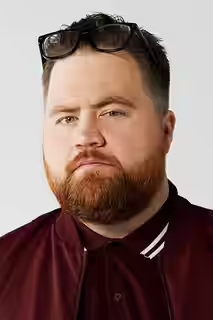
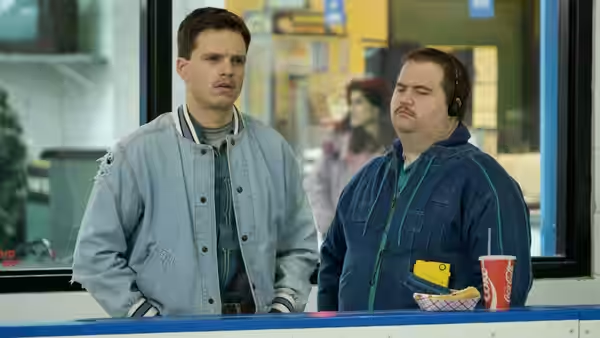
Sebastian Stan plays Jeff with a moustache, a mumble and a wish to be liked that turns into something else once the door is shut. Paul Walter Hauser’s Shawn, Tonya’s self-appointed bodyguard, lives with his parents and claims a background in counter-terrorism, and Hauser plays him dead straight, which is why he is funny. The second half follows these men into the plot everyone knows, and the film loses grip there. The planning is funny, the people are idiots, and the picture seems to think their idiocy settles the question of blame.

It does not. Rogers wants us to see Harding as a woman hit in turn by her mother, her husband, the judges and the public, and near the end she looks into the lens and tells us we were part of it too. But the film has spent ninety minutes inviting us to laugh at the people it now says we should have pitied, and the accusation arrives too late and too neatly to land. Gillespie, who made the gentler Lars and the Real Girl (2007), has the comic timing. He has not found a tone that lets the comedy and the beatings sit in one room.

And still it got us. There is a scene late on, Robbie alone at a mirror with a make-up sponge, that we will not describe, except that it is held long and silent and did more than any speech to make us feel what the whole business cost her. See it for that, for Janney, and for the skating, where the film’s speed and its feeling arrive together. It carries a 15 certificate, mostly for the language, which LaVona supplies almost single-handed.
Critical consensus AI synthesised

71
Positive
17
Mixed
6
Negative
3
Time Out
8 December 2017 · ★★★★★ · Joshua Rothkopf
100

Rothkopf calls the film a provocative biopic that gives Tonya Harding belated dignity. The standfirst describes it as a dazzlingly compelling take on her story, despite suggesting it may not be the movie she deserves.

Read the full review →
Screen Daily
9 September 2017 · festival review · Fionnuala Halligan
90*

Halligan’s standfirst gives Margot Robbie’s performance a glowing verdict. It singles out her portrayal of figure skater Tonya Harding for praise.

Read the full review →
Sight and Sound
5 March 2018 · Nikki Baughan
90*

The review finds the film stunning and sharply critical of the forces that constrained Tonya Harding. It especially praises Margot Robbie’s transformative performance.

Read the full review →
Variety
9 September 2017 · Critics Pick · Owen Gleiberman
85*

Gleiberman finds the film wickedly enjoyable and sympathetic toward Harding. He particularly praises Margot Robbie’s canny, live-wire performance and the thrillingly staged skating scenes.

Read the full review →
Empire
19 February 2018 · Helen O'Hara
80*

The critic finds the film gripping, darkly funny, and corrective in its portrayal of Harding. She praises Robbie and Janney’s performances, while noting that stylistic flourishes sometimes distract from Harding’s inner life.

Read the full review →
Total Film
19 February 2018 · ★★★★ · Matt Glasby
80

Glasby finds the film viciously funny, entertaining, and expertly made, though troubled by its tonal clash with domestic violence. He praises Margot Robbie’s performance and the breathtaking skating sequences.

Read the full review →

Straight answers AI written, from our review

Is I, Tonya worth watching?
I, Tonya is worth watching for anyone who likes a brisk, rude comedy about real people behaving badly, and we scored it 70. Margot Robbie and Allison Janney are both on form and the skating is shot like a chase, but the film never finds a tone that lets the jokes and the beatings sit together, and its late attempt to blame the audience arrives too neatly to land.
How long is I, Tonya, and what is it rated?
I, Tonya runs 2h 00m and is rated 16+ by the Derzhkino in Ukraine. It is a drama and comedy film.
Where can I watch I, Tonya in Ukraine?
I, Tonya is not on any streaming or rental service in Ukraine at the moment. It is available in 29 other countries; change your country at the top of the page to see where. Availability is checked daily.
How violent or frightening is I, Tonya, and is it suitable for children?
I, Tonya carries a UK 15 certificate, mostly for the language, which Allison Janney's LaVona supplies almost single-handed. It is not frightening, but it shows a mother hitting her child and a husband beating his wife, often while the film is asking us to laugh, and it is not for children. Teenagers of the certificate's age should be fine; the squeamish may find the domestic violence harder than the swearing.
How does I, Tonya compare to GoodFellas?
I, Tonya borrows its shape from GoodFellas: interviews to camera, old rock on the soundtrack, a narrator who turns round to correct the record. The Scorsese film is the better of the two, because it takes its violence as seriously as its jokes, where Gillespie's never settles which room it is in. Choose I, Tonya for Janney and the skating; choose GoodFellas if you want the whole thing to hold together.
What should I watch after I, Tonya?
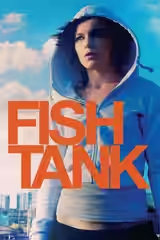
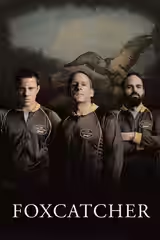
After I, Tonya, try Goodfellas (1990, Fi1m 93): The structure Gillespie borrowed, with the beatings taken as seriously as the jokes. Then Fish Tank (2009, Fi1m 85): Andrea Arnold’s Essex girl dances alone in an empty flat; the same anger, no sequins; and Foxcatcher (2014, Fi1m 82): Sport, money and a parent’s disappointment, played dead straight and all the colder for it.

Cast

Awards

Academy Awards, 2018

Nominated
Best Actress
Nominated
Best Film Editing
Won
Best Supporting Actress

IFFR audience award, 2018

Nominated
IFFR audience award

If you liked this, try…

  1. Goodfellas (1990, Fi1m 93)The structure Gillespie borrowed, with the beatings taken as seriously as the jokes.

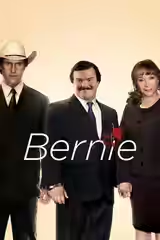
  2. Bernie (2011) · not reviewed yetRichard Linklater’s true-crime comedy, told by townsfolk who cannot agree what happened either.

  3. Fish Tank (2009, Fi1m 85)Andrea Arnold’s Essex girl dances alone in an empty flat; the same anger, no sequins.

  4. Foxcatcher (2014, Fi1m 82)Sport, money and a parent’s disappointment, played dead straight and all the colder for it.

  5. The Price of Gold (2014) · not reviewed yetThe documentary version, with the real Harding talking and the real footage from the ice.