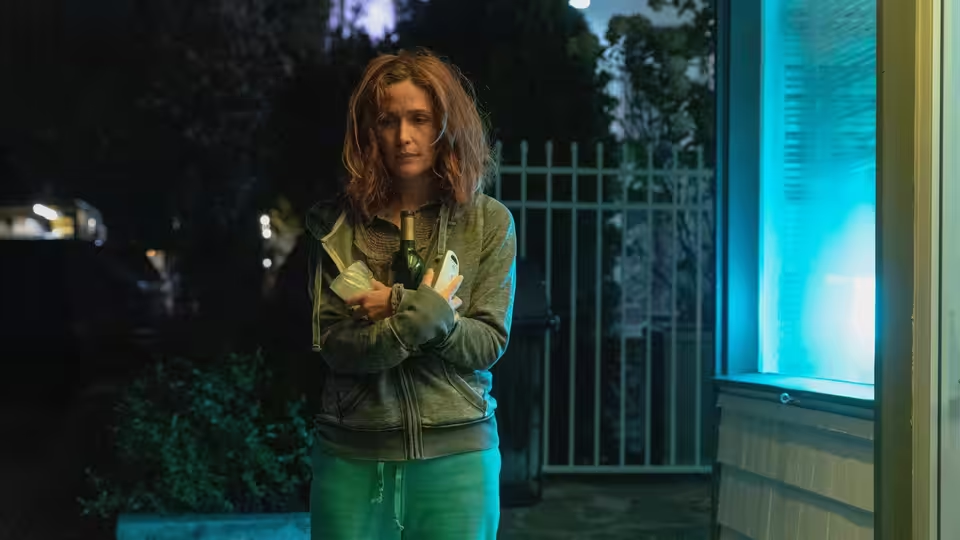
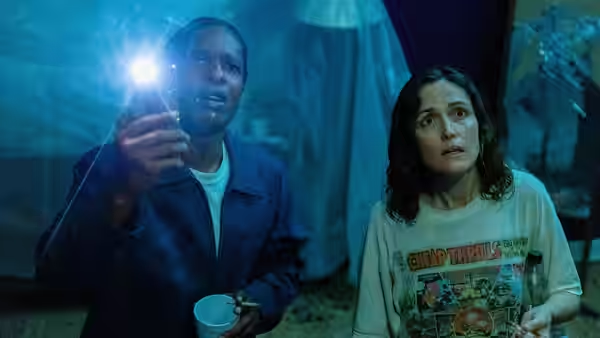
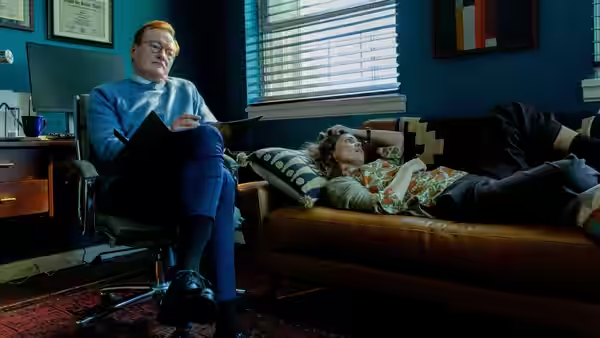
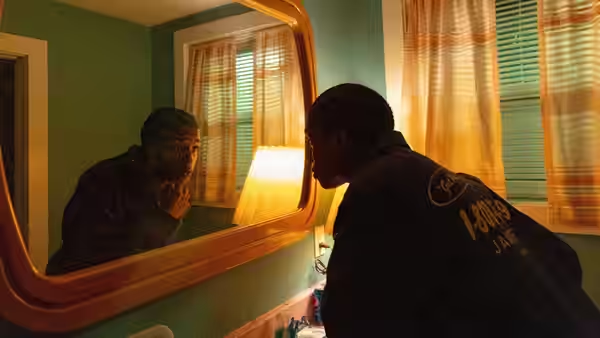
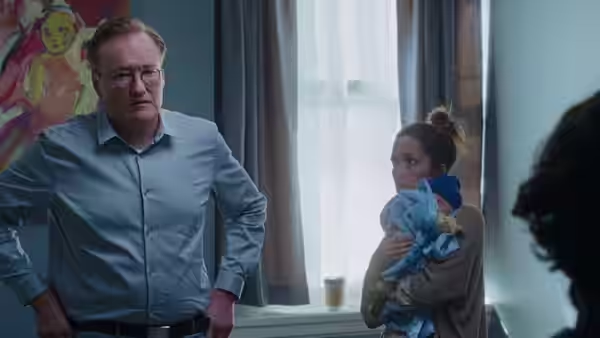
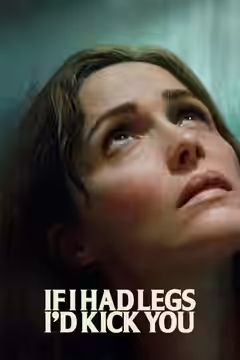
Rose Byrne is painfully convincing in Mary Bronstein’s abrasive drama about maternal exhaustion. Its constant pressure can wear us down, but Linda’s anger and resistance to help make this worth watching if an anxious evening appeals.
If I Had Legs I’d Kick You gives an exhausted mother little room to compose herself and gives us scarcely any more. Mary Bronstein, who writes and directs, stays with Linda’s anger, distress and reluctance to accept help without trying to make each response reasonable. We think it is a good, punishing film, sustained by Rose Byrne even when the relentless pressure begins to feel repetitive. Anyone looking for a consoling account of parenthood should know that Linda is allowed to be selfish, and that the film does not hurry to apologise for her.
Rose Byrne is convincing because she does not make Linda’s suffering an excuse for everything. Her resistance to help can be maddening, and the performance lets that remain so even while making her exhaustion believable. The bitter humour works because Linda is allowed to be difficult without immediately becoming a joke at her own expense. We are not being asked to certify her as a good mother before we can take her distress seriously.
Christopher Messina’s close-ups are central to that discomfort. We felt trapped by the attention to Linda’s strained face, particularly when the frame denied us the relief of looking at anyone else. Keeping her daughter offscreen makes that restriction more pointed: the person needing care is not available to redirect our sympathy whenever Linda becomes abrasive. The sound is oppressive too, leaving little sense of quiet beyond what we can see. It is an effective use of techniques associated with horror, even though the subject is a mother’s exhaustion.
Lucian Johnston’s editing keeps the pressure fairly constant, which is useful and eventually wearing. There are stretches when we have understood Linda’s agitation but are still being asked to sit inside it without learning much more about her. At 113 minutes, the film has time to develop that feeling beyond its first impact, yet too often chooses simply to sustain it. A little more variation would have made the difficult stretches harder to dismiss as repetition.
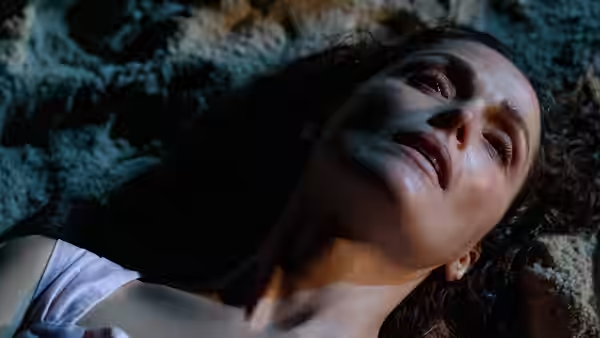
The more surreal passages bring a related problem. Carmen Navis’s production design contributes to the oppressive surroundings, but the close framing already does much of that work. The stranger imagery can feel unnecessary when a face has communicated the distress so clearly. We found ourselves wanting more time to consider Linda’s behaviour, rather than another reason to feel hemmed in by the film.
Within the family drama, it is welcome to find a mother whose unpleasant feelings are taken seriously without being made attractive. The film does not need its more conspicuous oddities to hold our attention, because the performance gives us enough to disagree with and enough to recognise. That is why we recommend it despite the stretches when the pressure stops producing much beyond more pressure. Choose it for Rose Byrne, but leave it for another evening if patience is already in short supply.