Chantal Akerman makes domestic routine worth close attention, helped by Delphine Seyrig’s absorbing performance. The 202 minutes occasionally test patience beyond their purpose, but this is a demanding drama we recommend making time for.
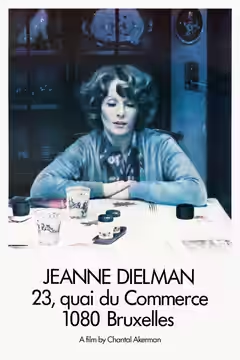
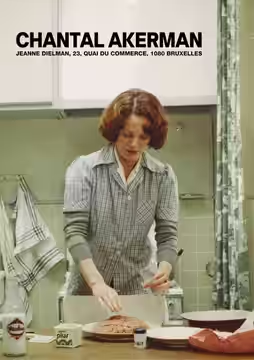
Chantal Akerman’s Jeanne Dielman, 23, quai du Commerce, 1080 Bruxelles is demanding, absorbing drama whose length has a purpose, though not every minute feels necessary. It asks us to look at domestic routines with a degree of attention that films seldom give them. At 202 minutes, that is a substantial request. We recommend it for the seriousness with which it watches Jeanne and for Delphine Seyrig’s ability to make such attention worthwhile.
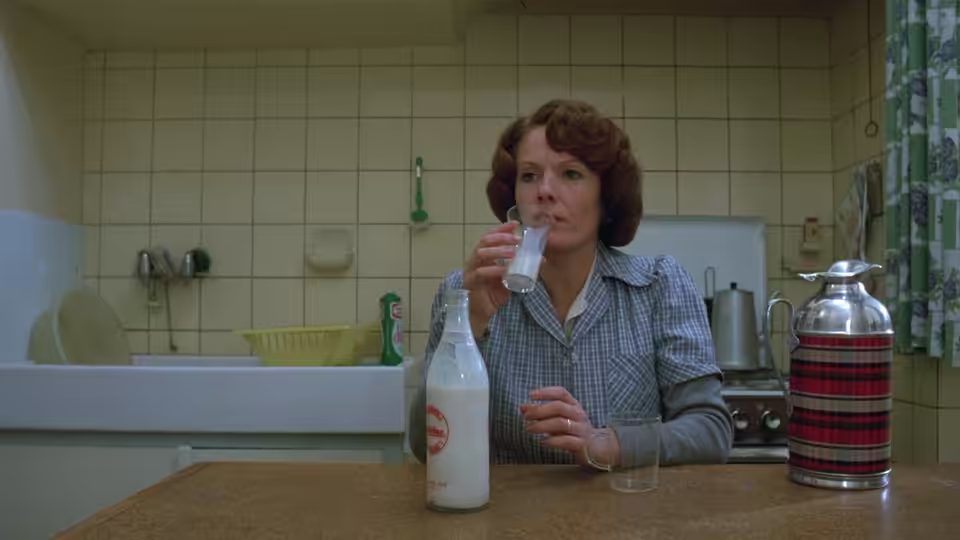
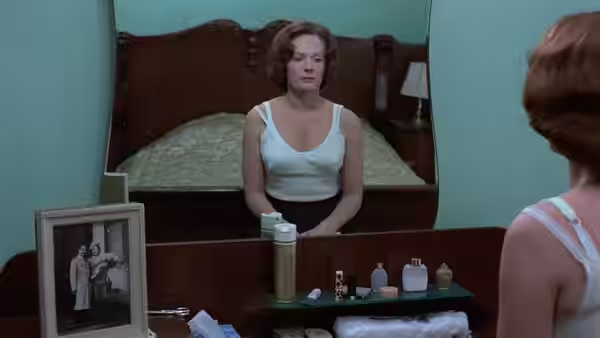
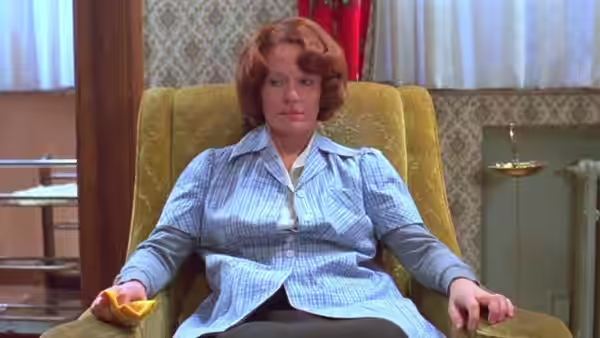
The performance is restrained without making Jeanne seem inaccessible. She does not advertise what we ought to feel, which leaves room for tenderness and irritation to arrive together. We were moved more than we expected. Watching her give the household routines such concentration made us think about the time they consume and how readily that effort goes unnoticed. The feeling develops through watching her work, without needing a conspicuously expressive moment to announce it.
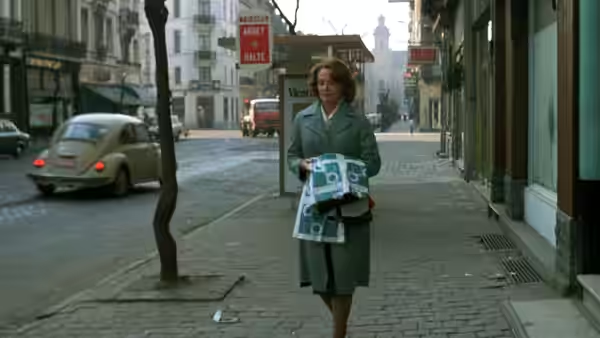
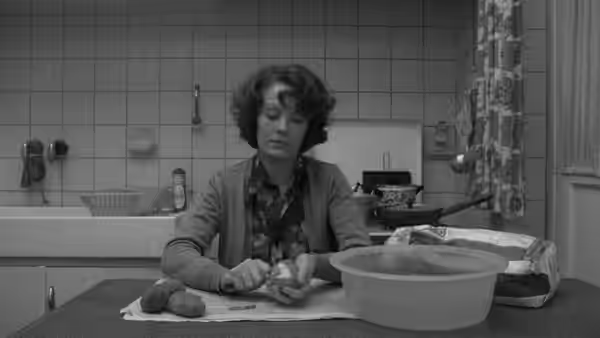
Babette Mangolte’s cinematography gives that performance room to be watched. The observational style allows household activity sustained attention, so we have a chance to study the person doing it. That sounds a modest achievement until we notice how accustomed we are to seeing such work hurried past. The approach gives us time to recognise the concentration involved, and to wonder why watching it should make us impatient.
Patricia Canino’s editing accepts the risk that a viewer will become restless. Keeping domestic routines at the centre of a film this long means that repetition begins to affect the way we watch. We start to feel how much time these activities consume. An edit that hurried us through them would make the film easier to sit through, and weaken a considerable part of what it achieves. The duration is doing useful work, even when it becomes uncomfortable.
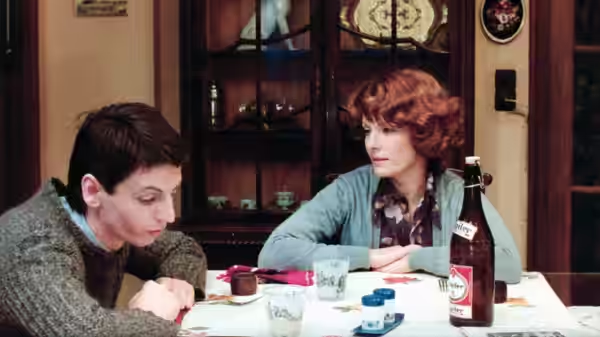
Chantal Akerman treats the labour involved as worthy of attention even when it is repetitive or unrewarding. The film’s feminist concerns become clear through that decision, without requiring Jeanne to stand for every woman. Delphine Seyrig remains essential here: her performance keeps the domestic activity attached to a particular person. That matters over this duration, when a less persuasive performance could leave us feeling that we were being given a demonstration of the director’s convictions.
There are stretches when we feel we have noticed all we can and are simply waiting. By then the film has established how much time routine consumes, and further observation adds little to our understanding. The director’s commitment can make the experience feel needlessly severe. Admiration for the method does not prevent impatience, and the film cannot always make that impatience worth our while.
The film makes an unusually sustained challenge to the idea that drama should keep supplying new incidents. The household routines have enough human interest to justify the experiment, though the running time remains a serious condition of our recommendation. It needs attention, and there is little point starting it in the hope that it will hurry up. Choose an evening when the housework can wait.