Jean Eustache’s long, talk-heavy romantic drama earns its demands through three performances that make selfishness painful to watch. Some exchanges outstay their usefulness, but the women’s emotional force makes this worth the time.
The Mother and the Whore is a demanding, frequently painful romantic drama that we recommend, provided an evening of talk sounds like an evening worth having. Jean Eustache gives it 219 minutes, and expects us to stay with people whose ideas about love do not make them any kinder. The length matters because we have to keep listening after we think we have understood somebody. The performances provide ample reason to do so.
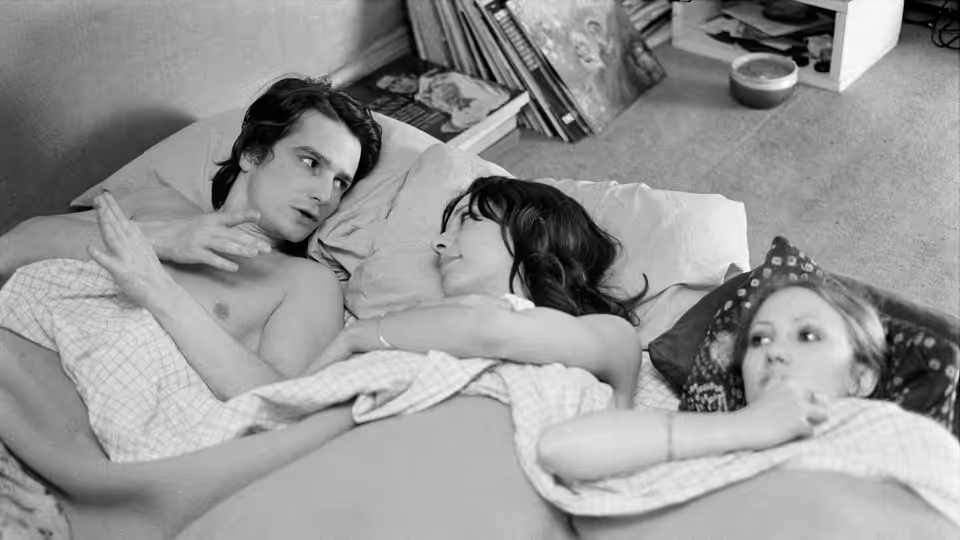
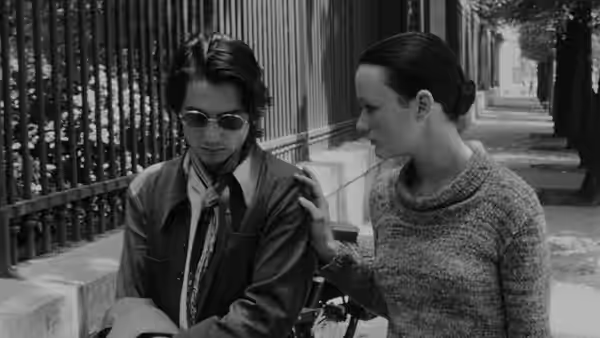
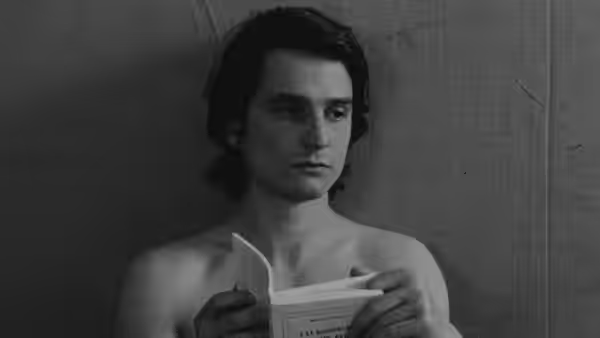
Jean-Pierre Léaud plays Alexandre with an assurance that becomes more unpleasant the longer we listen. He has plenty to say about women, but his confidence gives us no reason to believe he understands them. We grew angry listening to him. His habit of treating women’s desires as something to be defined on his terms makes the talk feel coercive, and Jean-Pierre Léaud does not soften that effect by asking for our affection.
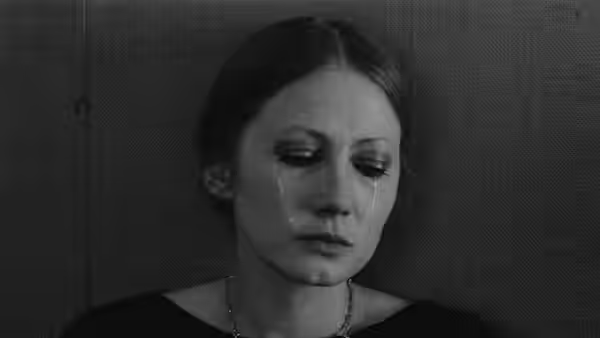
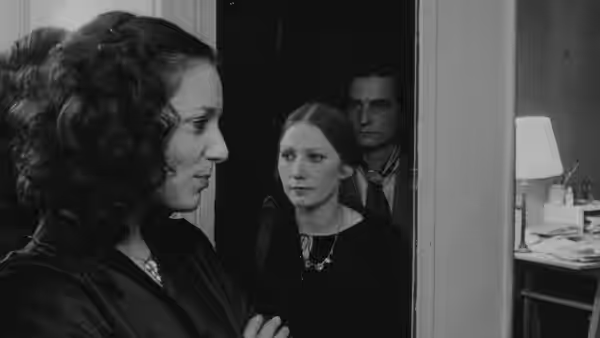
Bernadette Lafont’s Marie and Françoise Lebrun’s Veronika prevent that voice from becoming the film’s only account of love. Their emotional and sexual vulnerability makes Alexandre’s judgements harder to sit through. Both performances give weight to feelings he would prefer to explain away, and neither makes distress tidy or conveniently instructive. We remain interested in what these women want, even when Alexandre seems more interested in what their desires allow him to claim about them.
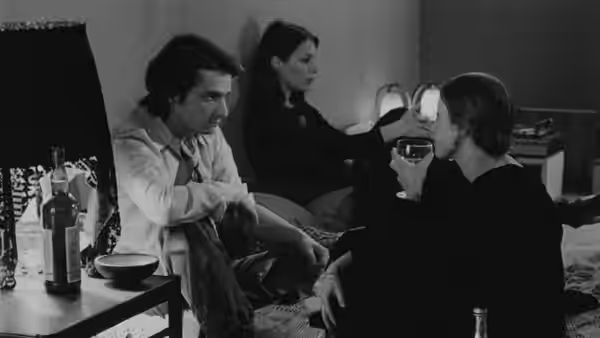
Pierre Lhomme’s black-and-white cinematography is direct and unobtrusive, which is precisely what this much speech needs. It does not keep competing with the actors for our attention. Jean Eustache’s long takes leave us to listen through the stretches when a speaker becomes uncomfortable company, and the plainness of the images makes that discomfort harder to shrug off. We can watch somebody talking without being told by a visual flourish that this is the important bit.
Denise de Casabianca and Jean Eustache share the editing credit, and their willingness to let an exchange continue is central to the effect. The film does not hurry to rescue us from an ugly thought or hurry past the feeling it causes. That patience is often rewarding, but it has a cost. There are stretches when another run of talk makes Alexandre no more revealing, merely more tiring, and the length stops feeling necessary.
As a romantic drama, it puts an unusual amount of pressure on the act of listening. People can speak openly about sex and still be selfish, controlling or cruel; Jean Eustache does not mistake frankness for good behaviour. Nor does he offer the comfortable distance of turning Alexandre into a joke we can dismiss. The sustained attention is what distinguishes the film, although it also means anyone already exhausted by this man’s opinions has a long evening ahead.
Make time for it, but not as casual company after a tiring day. The performances need sustained attention, and the long conversations ask us to stay alert to more than the cleverness of whoever happens to be speaking. Choose an evening when listening to somebody you dislike will not immediately send you looking for the remote.