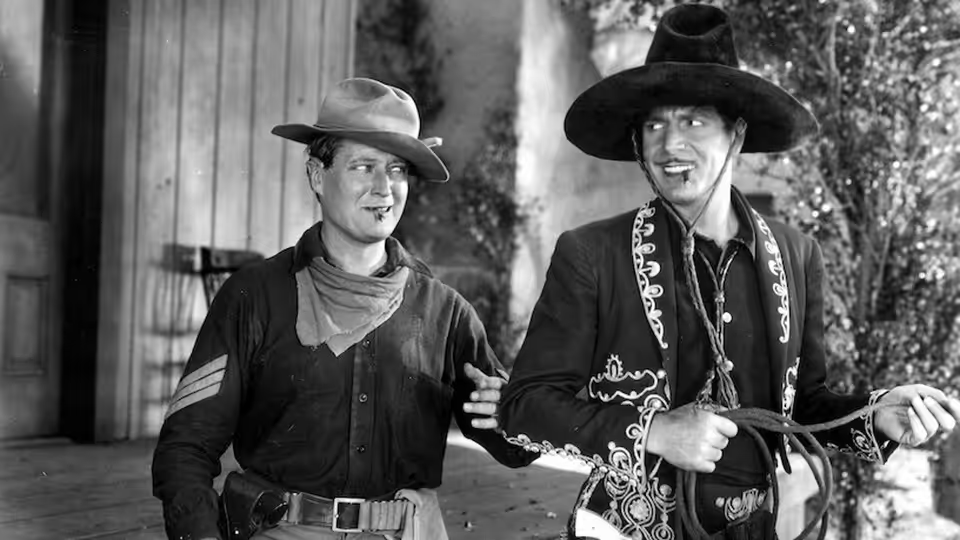
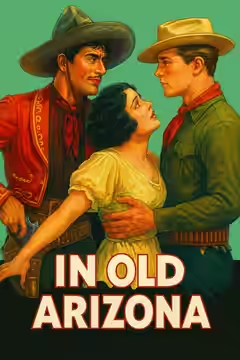
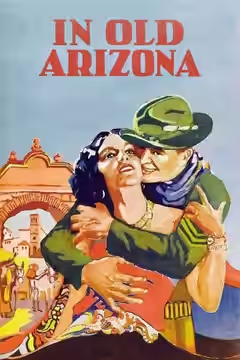
The first talkie to take its microphones outdoors, and the sound is still the best thing in it: hooves, cattle, eggs in a pan. Warner Baxter is a charming bandit. The film around him is slow, stagey and thinly written, for the curious rather than the Saturday-night crowd.
In 1928 a sound film meant a man in a dinner jacket standing near a curtain. In Old Arizona took a microphone into the open and pointed it at a desert, and that is why it is still talked about. Raoul Walsh and Irving Cummings share the directing credit. Between them they made a film that is a landmark and a slog in roughly equal measure, and we think anyone with an interest in how films learned to talk should see it once, and probably not twice.
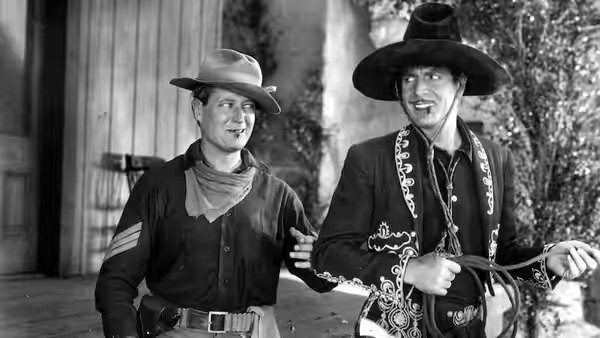
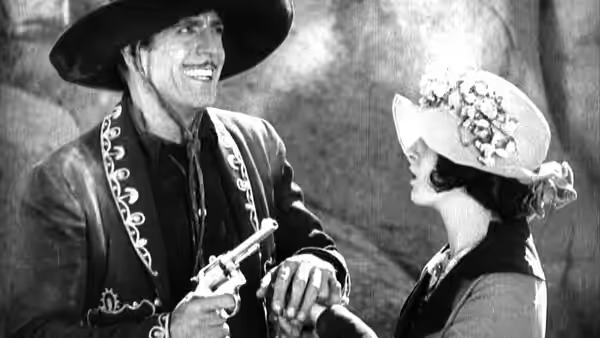
The story, from Tom Barry’s script, is a small one. The Cisco Kid robs stages and romances Tonia Maria; Sergeant Mickey Dunn is sent to catch him and falls for the same woman on the way. The film treats it as a large one, giving every scene the time to settle, and then a little more. Barry writes Dunn a string of wisecracks that were presumably fresh in 1928 and land now like a man telling you his one joke a fourth time. The Kid gets the better lines, and Baxter gets the better of them.
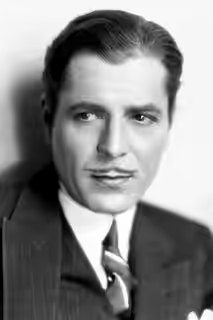
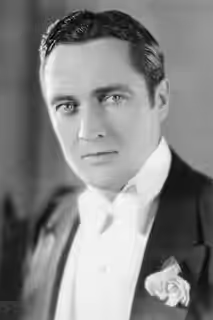
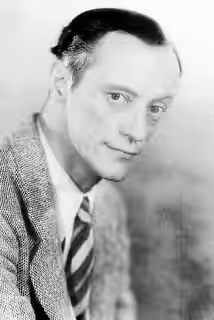
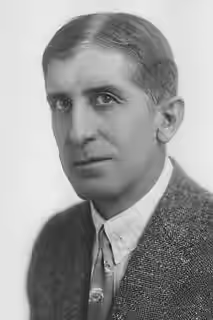
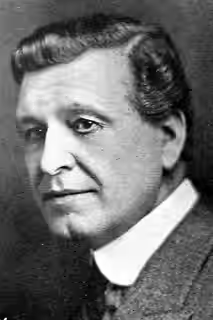
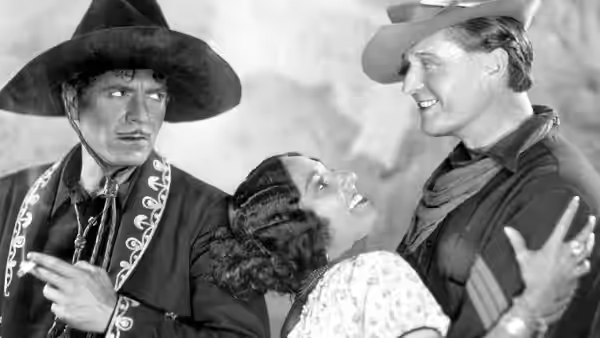
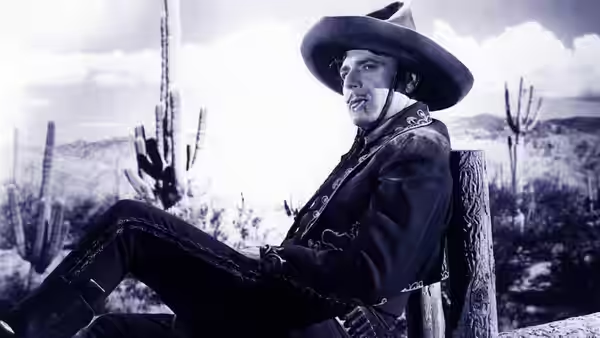
Baxter is the reason the film is watchable. He plays the Kid with a light, teasing courtesy, forever removing his hat and never quite meaning it, and he is the only actor here who seems to know the microphone is not a judge. His accent is a stage-Mexican thing that would not pass today, and there is no point pretending otherwise; what survives it is the ease. Lowe, by contrast, shouts everything as if the sound engineer were in the next county. Burgess plays Tonia as a woman who has done her sums about both men, and she is sharper than the script gives her credit for, though the film keeps asking her to be merely fickle.
The sound is the star, and we were more taken by it than we expected. Cattle move through a shot and you hear them go. Hooves come up the road before the rider appears, and in Tonita’s kitchen eggs sizzle in a pan while people talk over them. None of this is anything now, and all of it was something then, and watching it we found ourselves listening to a film for the first time in years. That novelty carries perhaps forty minutes.
Arthur Edeson’s camera has two modes. Outdoors it breathes: real dust, real distance, riders small against rock, and the sense that the horizon is not painted. Indoors it stops, because the microphone had to be hidden somewhere and the actors had to stand near it, so dialogue scenes play in a single flat frame with people arranged in a row like a school photograph. Louis R. Loeffler cuts almost nothing out of these; a scene ends when the talking ends, not when it should. Across the middle hour we were bored, and then faintly cross about it, because every time the film went outside it woke up, and every time it came back in it lay down again.
The second half takes a turn we will not describe. We will say that it is darker than the ninety minutes before it lead you to expect, and that it is the one place where Barry’s script and Baxter’s easy manner finally pull in the same direction. It unsettled us more than it had any right to after so much sitting about.
Against the silent Westerns of the same years, which could ride for reels without a title card, this is a step back in movement for a step forward in noise. Winfield Sheehan’s production is handsome and unhurried and, at 95 minutes, longer than its story. See it as history, with patience and perhaps a drink, and keep the volume up: the film is at its best when nobody is speaking.