Marguerite Duras puts every word off screen and every body on it, and asks for more patience than most evenings have. Give it that and it is strange and quietly upsetting; refuse and it is 115 minutes of beautiful people lying down.
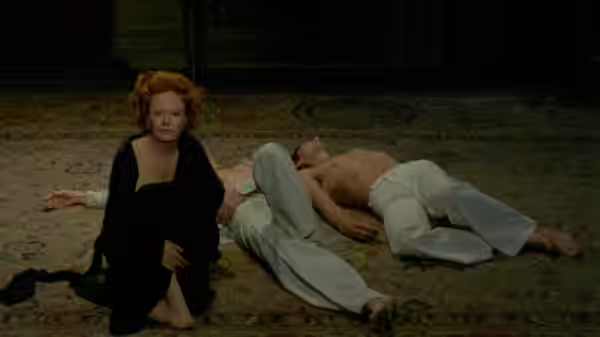
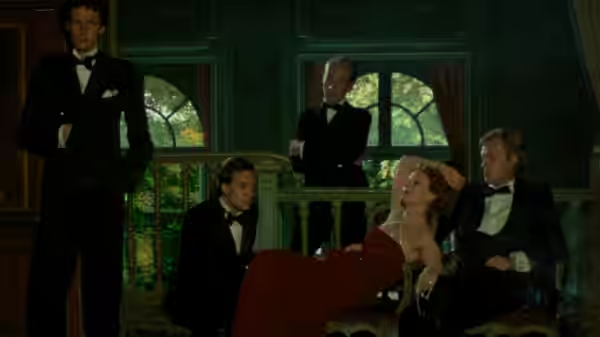
Marguerite Duras’s film rests on a decision most directors would not survive. Nobody on screen speaks. The actors drift through the salon of a French embassy, lie down on the carpet, dance a step or two, look into a mirror, and every word we hear comes from somewhere else: from unseen voices remembering the party, from a piano in another room, from a beggar woman singing outside. It is slow to the point of provocation. We think it is worth the patience, most of the way, and we would not say so to everyone.
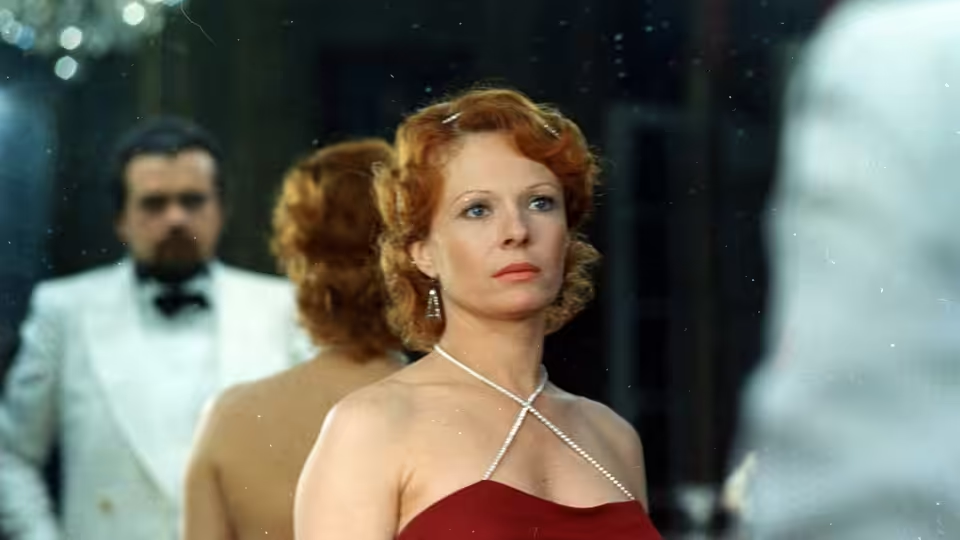
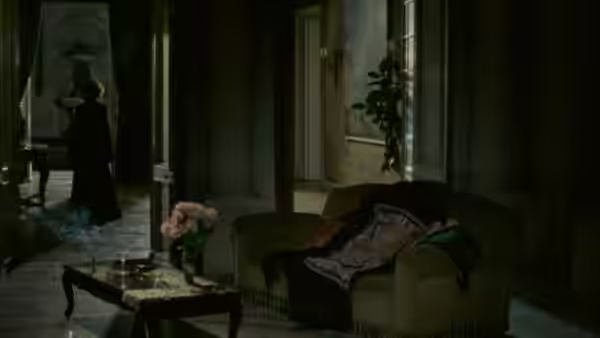
The look of it is one salon, one mirror and one lawn. Bruno Nuytten keeps the camera nearly still and lets shots run for minutes, lit by lamps and by a dusk that never quite becomes night. The mirror above the mantelpiece doubles the salon, so people arrive in the reflection before they arrive in the salon itself, and sometimes only in the reflection. Outside there is a tennis court with a red bicycle leaned against the net and a park where the light goes green through the trees. Solange Leprince cuts as seldom as she can, and when she does it is usually back to the same salon from a slightly different place.
The soundtrack does the work the picture refuses. Carlos D’Alessio wrote a slow, sweetish piano tune, the India Song of the title, and it comes round again and again, sometimes as a dance and sometimes as a blues from the next room, until you would know it anywhere. Around it are the voices: two women at first (Nicole Hiss and Monique Simonet), speaking in the past tense about the people we are watching, prompting and correcting each other like guests trying to recall a scandal; later two more (Viviane Forrester and Dionys Mascolo). And from outside, at intervals, the beggar woman’s song, in a voice credited to Satasinh Manila, a reminder of everything the party is keeping outside the gates.
For the first twenty minutes we were restless and slightly cross, waiting for the film to start. Then the tune came round for the third time, Seyrig lay down on the floor with her cheek against the carpet, and we realised it had started some while ago and we had missed it. Seyrig does almost nothing and we could not look away. Whatever grief the character carries is in the angle of her neck and in the fact that she is the only person at the party who ever looks tired.
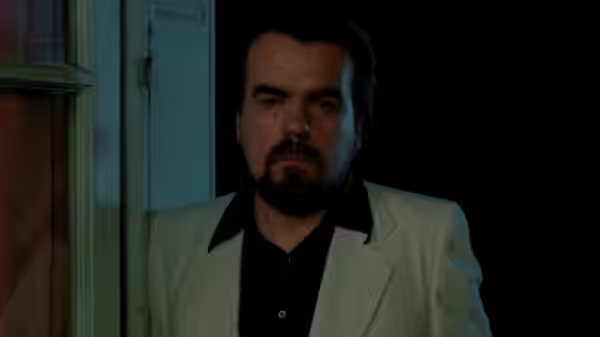
Michael Lonsdale’s Vice-Consul is the one who breaks the rule. He stands at the edge of the reception and then, off screen, screams her name, over and over, while the guests on screen go on standing perfectly still. We were horrified. It is a raw, ugly sound in a film that has spent an hour being beautiful, Nuytten does not cut away, and the gap between what we heard and what we saw is the most upsetting thing in the film.
The middle is long. After the Vice-Consul has gone the voices slow down, the camera has run out of new places to stand, and we caught ourselves working out how much was left. The German attaché (Mathieu Carrière) and the other guests (Vernon Dobtcheff, Didier Flamand) are furniture by design, and design does not stop furniture from being dull. Duras is not interested in whether we are comfortable, which is her right, and it is also why the film will lose a fair portion of any audience by the hour mark.
There is no puzzle to solve here. The voices tell you what happened and what will happen. Watch it at night, in the dark, with the sound turned up further than feels polite and the telephone in another room, and do not try to work out where each voice is coming from. It runs 115 minutes, and at some point in the second hour you will either be with it or you will have gone to make tea. We stayed.