Kevin Smith’s second road trip for Jay and Silent Bob is a cameo reel with one honest scene in it, shot flat and cut loose. Fans of the earlier films will have a decent night; anyone else will wonder what the fuss was about.
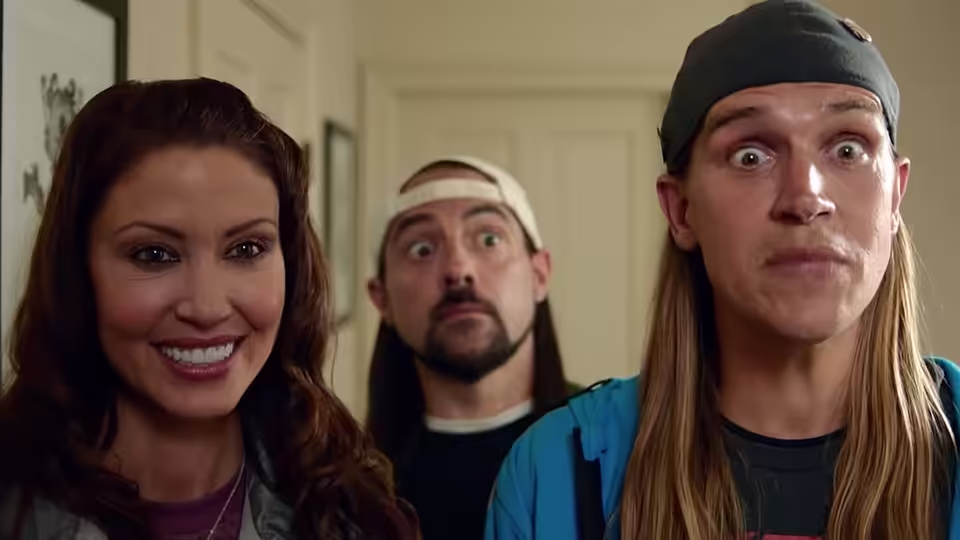
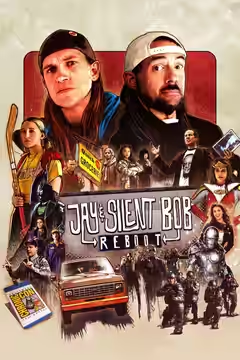
Eighteen years after Jay and Silent Bob Strike Back (2001), Kevin Smith puts the two of them back on the road to Hollywood to stop a film being made about them. The joke this time is that the film is a reboot, and so is this one, and Smith says so to camera within the first ten minutes, playing himself. What follows is 105 minutes of old friends, old gags and one thread of new feeling, made for the people who queued for Clerks (1994) and for nobody else. If that is you, there is an evening in it. If it is not, there is not.
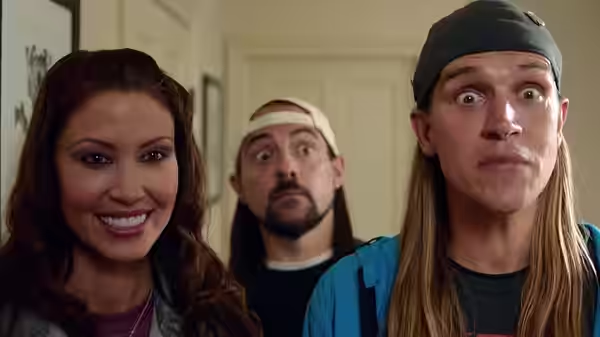
Jason Mewes has been playing Jay for a quarter of a century and he still commits to him completely, a grown man shouting about his genitals at strangers with the conviction of a preacher. He remains the engine of the film, and when the script hands him something new, a daughter he is not allowed to admit to, he plays it with a plainness that catches you off guard. Harley Quinn Smith’s Milly matches him, brash and quick, with an eye-roll that could carry a sitcom. The father-and-daughter strand is the only part of the picture that has been written rather than remembered, and it is the part that works.
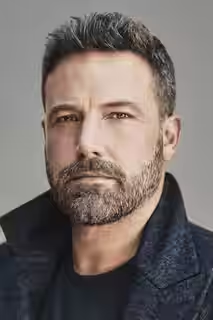
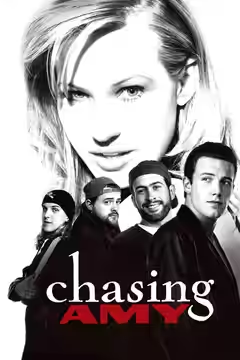
It works best in one scene we will not describe, in which Ben Affleck turns up as Holden McNeil from Chasing Amy (1997) and talks, for a few minutes, about what having a child does to a person. We went in braced for winks and came out having been moved, against our better judgement, by two middle-aged men talking quietly in a room with the camera left alone for once. Affleck plays it straight and Smith lets him. Then somebody makes a joke about masturbation and the film goes back to being what it was.
What it was is a cameo reel. Jason Lee’s Brodie Bruce gets the sharpest lines and delivers them as if he had never been away, and he is responsible for most of the five or six times we laughed out loud. Brian O’Halloran’s Dante and Joey Lauren Adams’s Alyssa have a scene each and are gone. The rest is a parade of faces from Smith’s address book, each greeted by the film as if applause were expected and the scene stopped until it arrives. The road trip carrying them has three stops and no momentum, and Milly’s friends, Jihad (Aparna Brielle), Sopapilla (Treshelle Edmond) and Shan Yu (Alice Wen), are given one trait apiece and asked to make it last to Hollywood.
Yaron Levy lights everything with a flat, even brightness that leaves no shadow to hide a cheap set in, so the cheapness is visible in every frame. Smith edits the film himself and it shows: scenes end a beat after the laugh, or two beats, and improvised runs are kept when they should have been cut in half. Nate Jones’s Chronic-Con, a ballroom hung with banners and filled with people in capes, is the one set with any life in it. James L. Venable scores the whole thing with the bounce of a nineties television theme, which is fair enough for a film that mostly wants to be one. Melissa Walker’s Bluntman and Chronic suits look properly ridiculous, as they should.
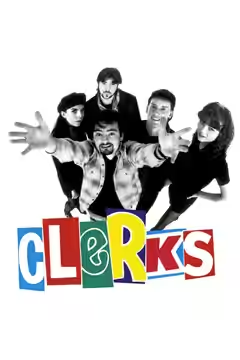
Smith’s best films were his cheapest. Clerks had two men behind a counter and a script that never ran out of things for them to say. Here he has more money, more friends and less to say, and he fills the gap by pointing at his older films and waiting for us to remember them. Most critics landed about where we have, split between those who enjoyed it as a reunion and those who judged it as a film, and both groups are right.
Watch it at home, with the people who know the references, and stop talking when Affleck arrives. Everything else can be talked over, and probably will be.