Rowan Atkinson finds laughs in a spy’s stubborn confidence, but Peter Howitt’s comedy gives him too few fresh mistakes to make. An undemanding diversion for admirers of his physical comedy, with thin writing to forgive.
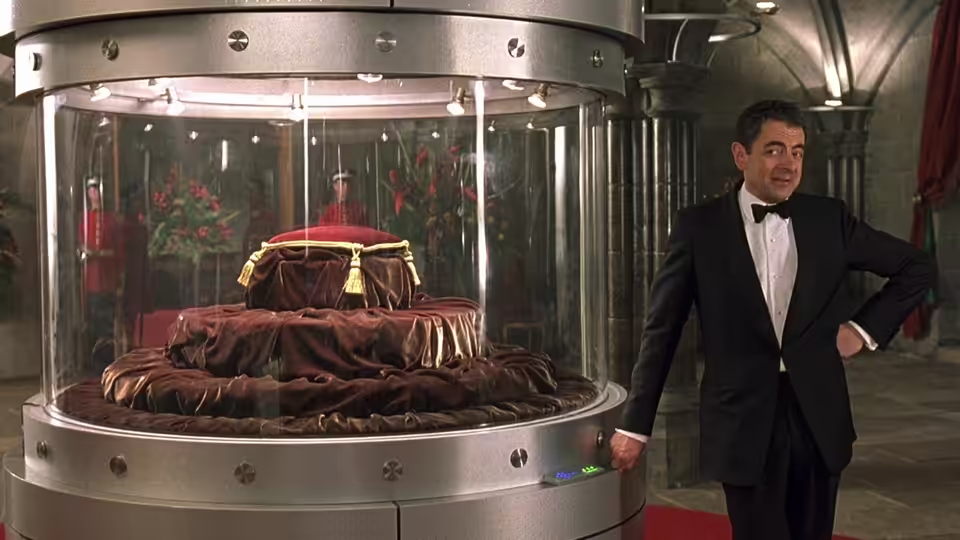
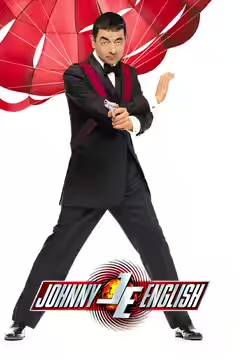
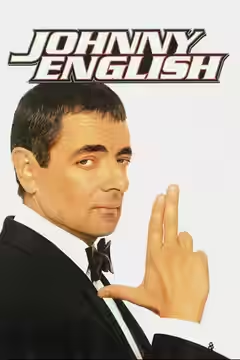
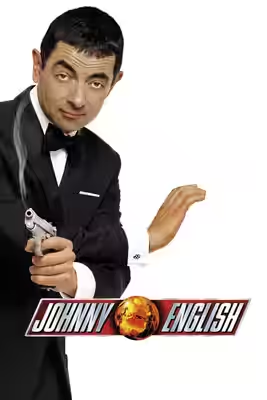
Johnny English is a mildly amusing spy spoof whose chief asset is Rowan Atkinson’s refusal to let embarrassment dent his character’s confidence. Peter Howitt keeps the ambition modest: give a bumbling agent enough trouble to expose his shortcomings, then let the actor supply the laughs. At 87 minutes, the film ought to have little opportunity to wear out that arrangement. It still finds some, though there is enough pleasure in the performance to make this a reasonable choice for Atkinson devotees.
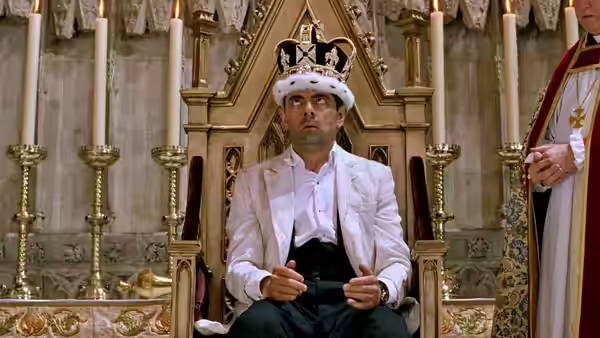
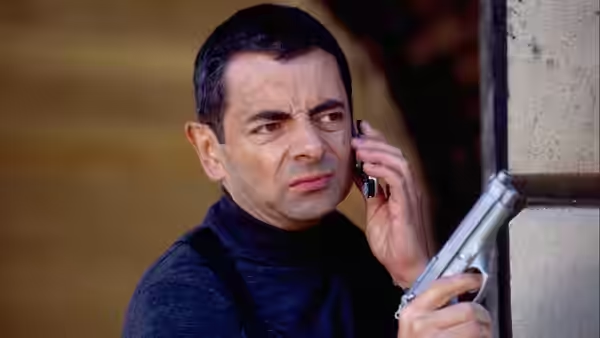
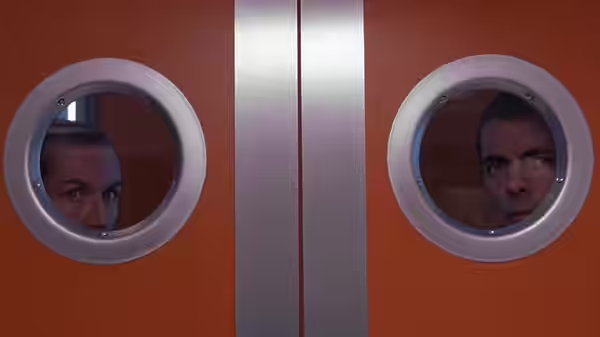
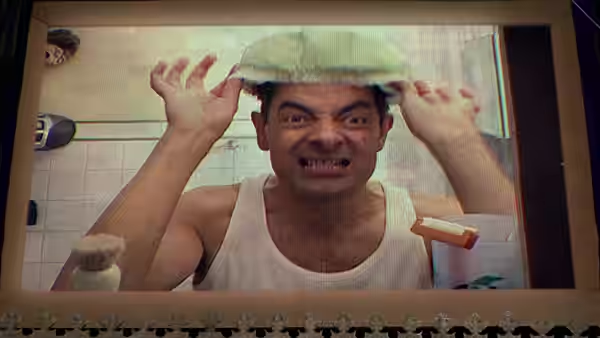
The useful thing about Johnny English is that we can see his inadequacy before he can, which gives even a familiar pratfall a little anticipation. Atkinson’s facial tics do much of the work, turning the effort to appear capable into something more demanding than the task itself. We laughed at his facial contortions, especially the effort to keep looking competent through the pratfalls. His timing is better than the jokes, and several stretches depend on our enjoying a mannerism we have already seen.
Robert Wade, Neal Purvis and William Davies supply a script that too often treats English’s incompetence as sufficient preparation and payoff for a joke. Once we have spotted the likely mistake, there is seldom enough invention in how he makes it. The schoolboy humour is not objectionable in itself; the problem is the repetition, which asks us to laugh again without giving us much more to laugh at. Older viewers may find themselves waiting for the next piece of physical business.
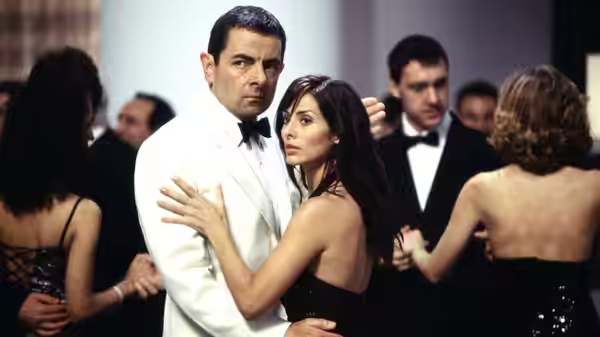
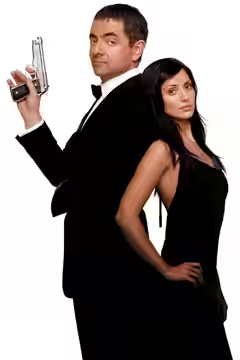
John Malkovich gives Pascal Sauvage a French accent and a degree of theatrical excess that briefly makes the film feel less timid. His timing helps, but the villain gets too little room to become a comic attraction in his own right. Natalie Imbruglia brings welcome personality to Lorna Campbell, though the film is so occupied with Atkinson that another performer’s ease can feel incidental. A little more attention to the people around English would have relieved the pressure on his repertoire.
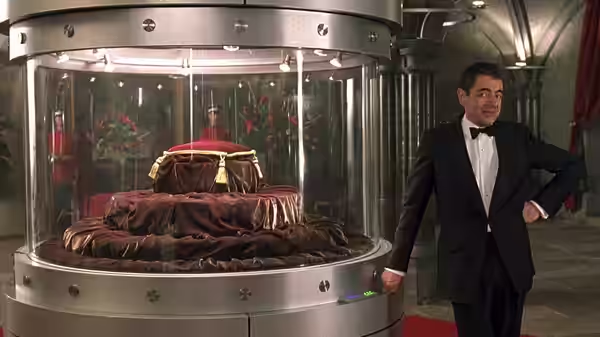
Remi Adefarasin’s cinematography is most effective as a way of watching Atkinson work: the face and the pratfall supply nearly all the interest. Chris Seagers’s production design gives the spy parody a serviceable setting, although it cannot make the repeated jokes feel any fresher. Neither contribution distracts from the actor, and neither gives us much to enjoy independently of him. That suits a vehicle for a physical comedian, but it becomes a problem whenever the comedy falters.
Robin Sales’s editing cannot entirely disguise how often the writing repeats itself, although the car chase gives the film some welcome momentum. That sequence works because movement provides a change from waiting for English to misunderstand his own abilities. Edward Shearmur’s music is effective support for the action, but it does little to make the comedy more distinctive. The film benefits whenever it remembers that a spy spoof can offer some of the pleasures of an adventure as well as mock its hero.
A spy comedy can be predictable and still earn its laughs, provided the execution keeps finding fresh ways to deliver them. This one manages that often enough to avoid becoming a chore, but too sporadically to recommend without qualification. Those who already enjoy Atkinson’s facial contortions and pratfalls are the audience most likely to forgive the thin writing. Choose it for him, and keep expectations of the espionage modest.