Neil Boyle and Kirk Hendry’s hand-drawn adventure is quietly affecting, especially when its drawings carry the feeling. The island’s dangers are softened too much, but the central friendship makes this worth a family’s evening.
Kensuke’s Kingdom is a good, gently paced adventure that finds enough feeling in its central friendship to make its quieter stretches worthwhile. Neil Boyle and Kirk Hendry adapt Michael Morpurgo’s novel without hurrying the connection between a stranded boy and an older man. That is a sound choice for a story set on an isolated island. The reservation is that their care for a family audience sometimes makes the predicament feel too manageable.
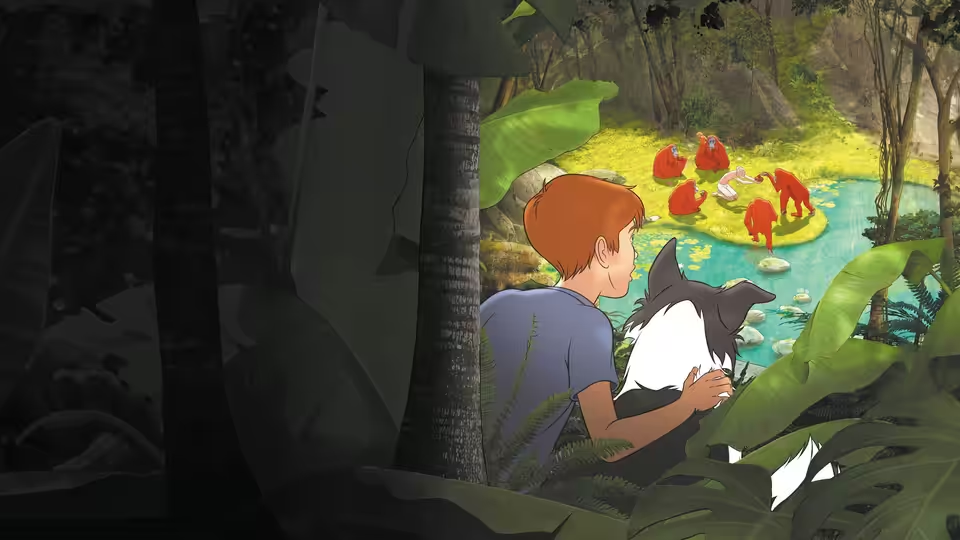
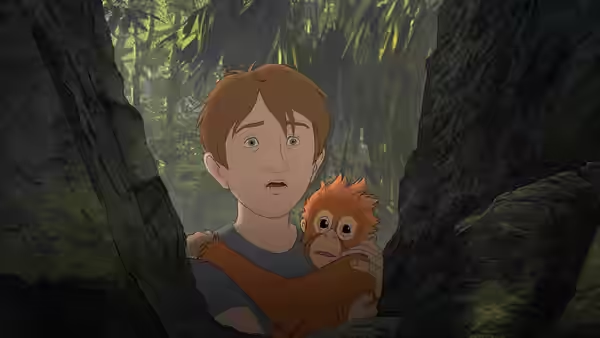
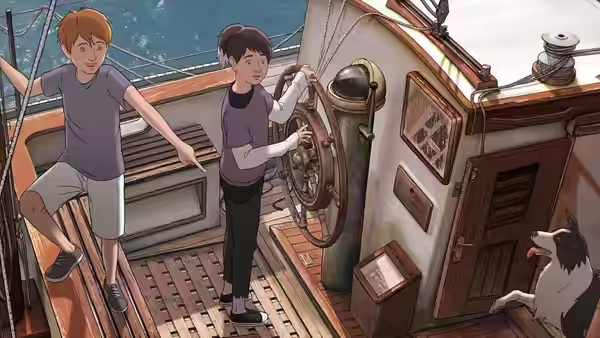
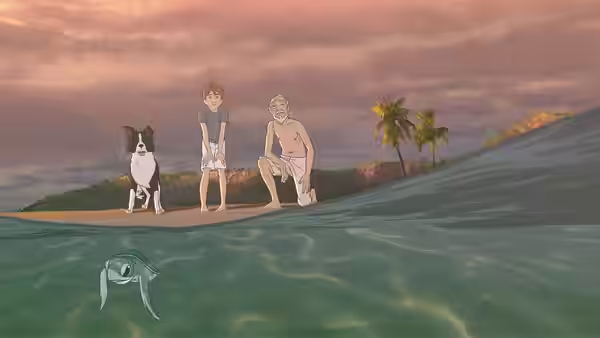
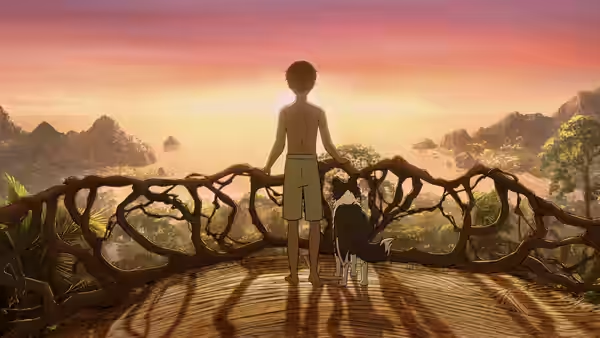
The hand-drawn animation gives that patience something worth looking at. The 2D landscapes make the island somewhere we want time to explore, while images that resemble watercolours give the film a welcome delicacy. The passages in which the characters’ own drawings come to life are especially effective. We were moved by them. They make private feelings visible without needing a character to explain them, and we wanted more of that freedom.
Frank Cottrell Boyce’s screenplay is strongest when it lets concern for the natural world grow out of the setting. The conservation message matters because the island has been made worth looking at, and because companionship is already at the centre of the story. We do not need much persuading that the place deserves care. The adaptation can nevertheless feel cautious, following its source closely when a little more of the drawings’ inventiveness might have made the storytelling less predictable.
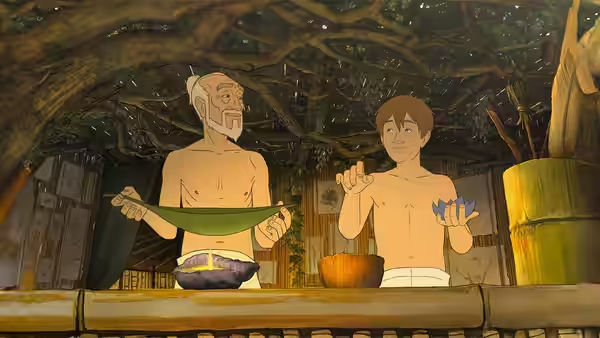
Aaron MacGregor voices Michael and Ken Watanabe voices Kensuke, whose presence gives the relationship much of its weight. The elderly man’s side of the story is more compelling, leaving the boy a slightly underpowered centre for his own adventure. That imbalance matters because we need to care about Michael for more than his connection to Kensuke. Cillian Murphy brings welcome warmth to Dad, but the lasting interest lies with the two islanders.
Richard Overall’s editing gives the images room to register within an economical 84 minutes. The pace suits the growing bond, even if the adventure could occasionally use more pressure. Stuart Hancock supplies the music, though the emotional work we remember most clearly is done by the animated faces. There is a useful confidence in letting a family film take this much time over how its characters respond to one another.
The weakness is survival itself, which can seem too comfortable for the story’s own good. A castaway adventure needs us to feel that being stranded matters, even when its audience includes children. Here the softened jeopardy sometimes leaves Michael with too little to struggle against, and good intentions cannot supply the missing tension. The environmental concern remains persuasive, but the drama does not always give it enough force.
The PG certificate should not be read as a promise of an entirely soothing evening. Some of the material has a severity that sits awkwardly with the gentler adventure, and younger children may need company through it. We would still choose this over a family film afraid to leave a moment unfilled. Watch it with children who like seeing a friendship develop, and leave time to talk afterwards.