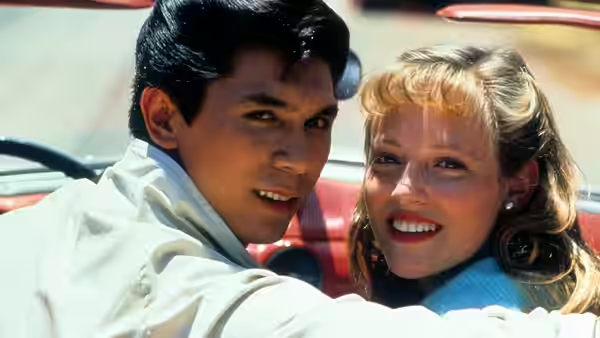
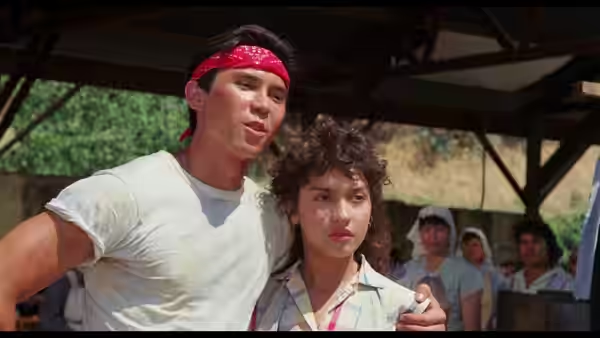
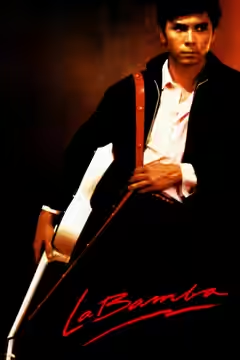
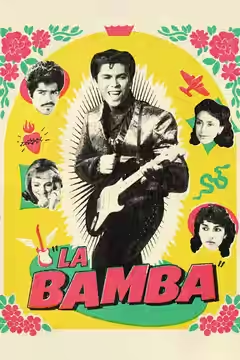
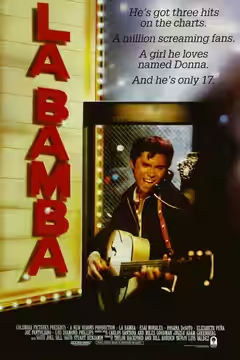
Lou Diamond Phillips makes La Bamba worth spending an evening with, even when the script follows the expected route. The music is persuasive, the supporting cast strong, and the storytelling a little too dutiful.
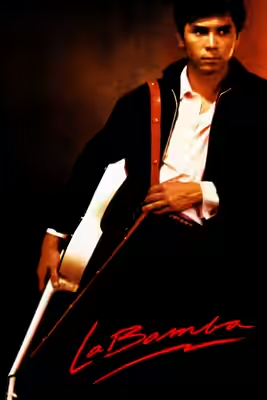
La Bamba is a good musical biopic, carried by Lou Diamond Phillips and an affection for its subject that never feels compulsory. Luis Valdez writes and directs Ritchie Valens’s journey from poverty towards stardom, keeping the ambition easy to understand and the man easy to like. We would have welcomed more curiosity about what makes him tick. Still, a straightforward account needs someone worth following, and this one has him.
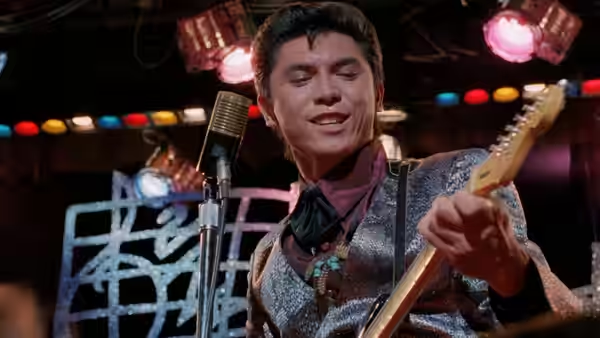
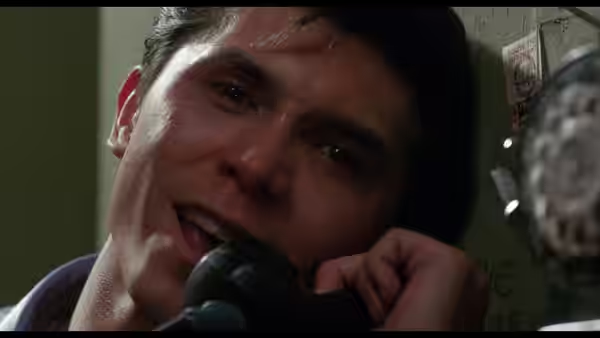
The central performance has an earnestness that could easily have become bland, but Lou Diamond Phillips is too alert for that. We warmed to Ritchie because the performance makes his desire to succeed feel hopeful rather than entitled. There is no assumption that recognising a famous name will be enough to make us care about the person carrying it. Phillips earns that affection without making Ritchie’s sincerity seem foolish, a considerable service to a script inclined to take the simplest route through a feeling.
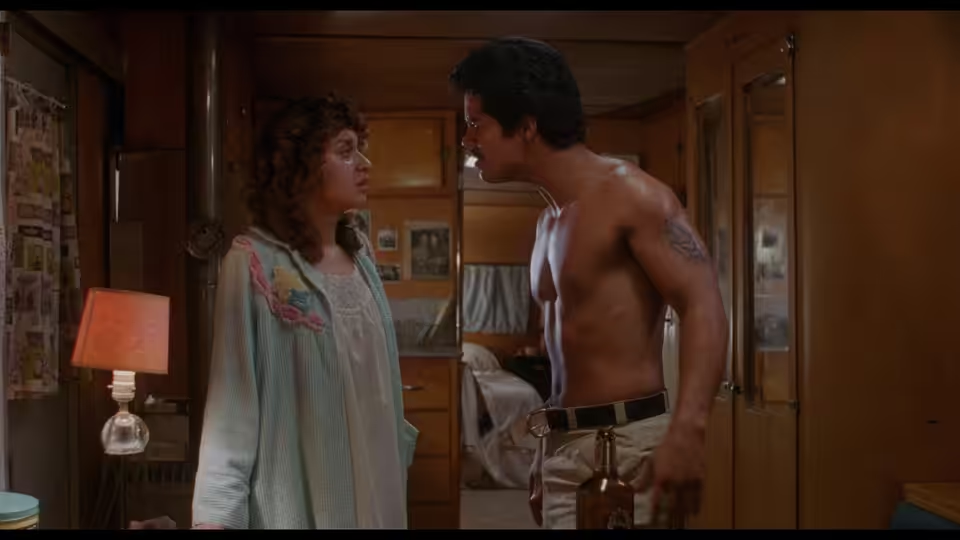
Esai Morales supplies a welcome rougher presence as Bob Morales, while Rosanna DeSoto gives Connie Valenzuela enough weight to keep the film from belonging entirely to its leading man. Danielle von Zerneck is less well served as Donna Ludwig. The acting makes us wish the writing would pause longer over the people surrounding Ritchie, instead of keeping his story moving quite so efficiently. Luis Valdez has a strong supporting cast and could have trusted them with more.
Adam Greenberg’s cinematography is clear and unobtrusive, which suits a central performance that needs little help winning us over. Vincent M. Cresciman’s production design likewise gives the actors convincing surroundings without competing for attention. That modesty is welcome, although the pictures seldom seem as excited by Ritchie as the music does. The visual restraint helps us attend to the performances, but it also contributes to the film’s slightly over-respectable manner.
The music, credited to Carlos Santana and Miles Goodman, helps supply the excitement that the dramatic writing sometimes misses. The musical passages can be enjoyed without a lecture about their importance, a relief in a film about a celebrated performer. We felt the film loosen up around its music; the pleasure of listening briefly makes its dutiful storytelling cease to matter. Some of that ease would have been welcome in the dialogue, where sincerity occasionally becomes solemnity.
Editors Sheldon Kahn and Don Brochu keep the film brisk across its 108 minutes, so its predictability rarely becomes a drag. The cost is that there is not always enough time for a feeling to become complicated before the story moves on. This is where the screenplay disappoints: a sympathetic account too often seems sufficient when the actors suggest something more searching is possible. The running time is sensible, but a few of those dramatic exchanges could have used more room.
The familiar musical-biopic structure is no reason to dismiss La Bamba. Watching a performer find an audience remains a sound basis for a film, provided the acting gives us reason to care, and Phillips does that. The reservation is how readily the writing accepts our affection as the job done. Choose it for an evening of music and sympathetic performances, rather than for a searching account of what ambition does to people.