Michael Apted’s film of Loretta Lynn’s life is warm, plainly told and acted with a care most singer biographies never manage, and Spacek does her own singing. The first hour is close to perfect. The last half hour is in a hurry.
Films about singers tend to arrive in a familiar order: the hard start, the break, the fame, the collapse, the comeback. Michael Apted’s film of Loretta Lynn’s life has all of those, and for most of its 125 minutes it does not seem to notice it has them. Apted came to features from documentary, and it shows in the best way. He watches people eat, argue and wait for buses, and he lets the songs happen in rooms that look as if someone lives in them. It is a warm, well-made picture with two performances we have not stopped thinking about, and a last act that rushes.
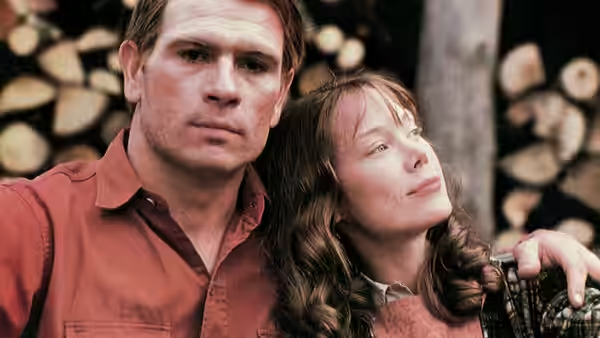
Loretta Webb grows up in Butcher Holler, Kentucky, in a cabin at the end of a dirt track, and the film has her at thirteen when she marries. Sissy Spacek is a grown woman playing a child, and we believed her. She does not squeak or skip. She stands wrong, all elbows, and watches the adults to see what will happen next. Tommy Lee Jones plays ‘Mooney’ Lynn, who comes home from the army in a jeep, buys her pie at a social and has her married within weeks. The wedding night is played without a drop of romance: she does not know what is expected and he does not much care. The film does not excuse him and it does not make a monster of him, and Jones holds both of those in one face for two hours.
Levon Helm plays her father Ted, and he has perhaps four scenes. The one at the bus, when Mooney is taking Loretta off to Washington state and Ted stands with his hands in his pockets and cannot get out the thing he has walked down the hill to say, moved us more than anything in the concert halls later. Helm does not act it. He simply fails to speak, and Spacek, in the bus window, watches him fail. Phyllis Boyens’s Clary gets less to do and does all of it.
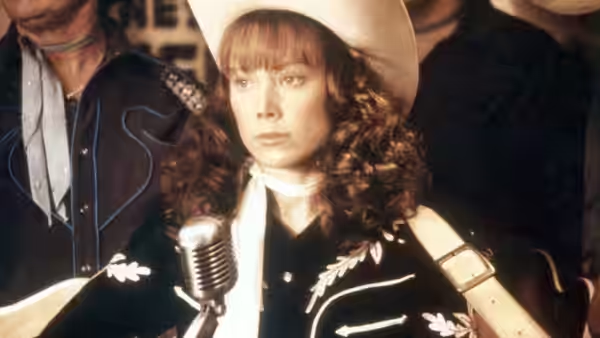
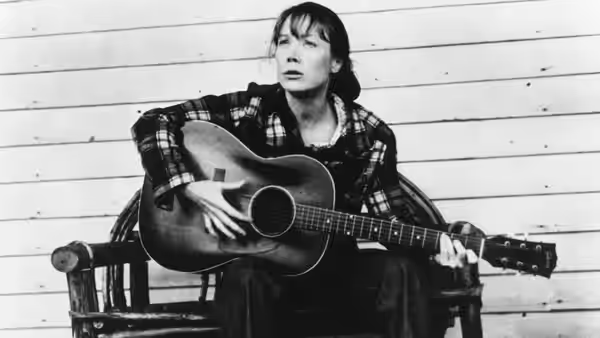
Then the guitar. Mooney buys it for an anniversary, and Loretta learns it from the radio while the children sleep, and one night he drives her to a tavern and makes her sing. Spacek sings every note in the film herself, and it is the reason the film works. She starts thin and frightened, a woman in a home-made dress in front of a dozen drinkers who carry on talking until, one by one, they do not. By the time she is on a proper stage the voice has grown and the person has not. Beverly D’Angelo, as Patsy Cline, sings too, and the scenes between the two women, Cline showing Lynn how to dress, how to drink and how to take a compliment, are the friendliest in the film. The second half takes a turn we will not describe.
Arthur Schmidt’s editing is sharpest in the stretch where Loretta and Mooney drive from one radio station to the next with a box of records in the boot, and the towns and disc jockeys blur into one long favour asked over and over. It tells you how a country career was built better than any speech could. Ralf D. Bode shoots Kentucky in the browns and greys of a place where washing never comes clean, and lets Nashville be brighter without making it lurid. John W. Corso’s production design puts real dirt on the cabin floor and a stove everyone stands too close to. Joe I. Tompkins’s costumes do a good deal of the storytelling: Loretta’s dresses get fuller and shinier as the years pass, and Mooney’s shirts hardly change.
The trouble is the last half hour. Once Loretta is famous the film has to get through exhaustion, pills, headaches and a marriage that has stopped working, and Thomas Rickman’s screenplay takes them at a trot. Things that earlier would have been given a whole evening now get a line in a dressing room. Apted, who spent an hour letting a girl wait for a bus, suddenly cannot sit still, and the film ends on a note of resolve it has not quite paid for. We wanted ten more minutes, which is not a complaint we make often.
It has been copied many times since, usually by films that get the songs right and the kitchens wrong. Watch it for the kitchens, stay for the singing, and forgive the last reel its hurry.