Film review

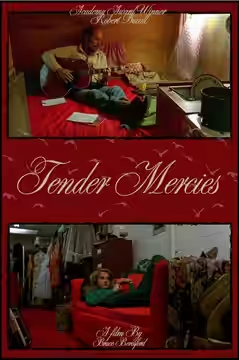
Tender Mercies

1983 · Directed by Bruce Beresford · 1h 32m · MPA PG

In a sentenceA country singer gets sober at a two-pump Texas motel and the film has the decency not to cheer

DramaMusicRomance

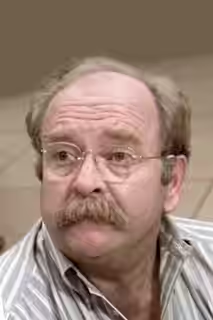
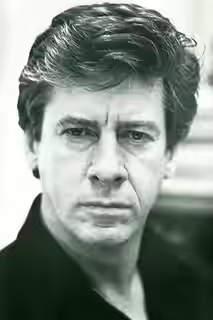
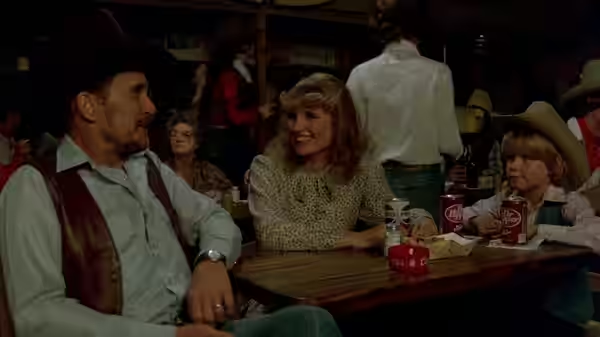
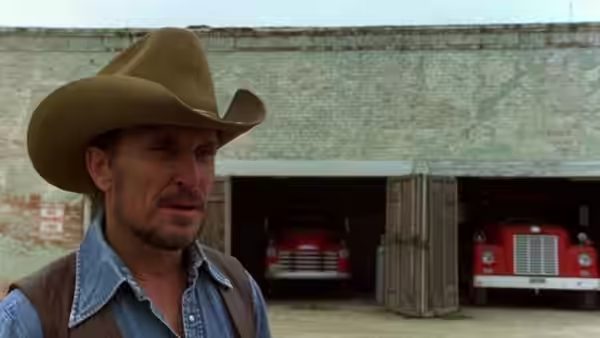
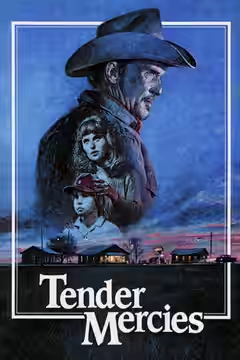
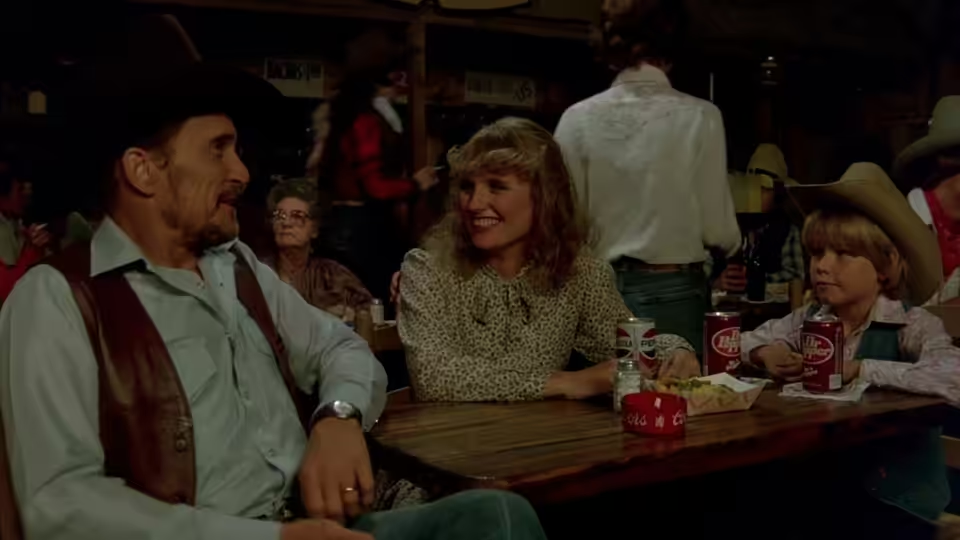
Mac Sledge (Robert Duvall) wakes on the floor of a motel room on the Texas flatland, broke and drunk, his drinking partner gone. He offers to work off the bill for Rosa Lee (Tess Harper), the widow who runs the motel and petrol pumps with her young son Sonny (Allan Hubbard). He fixes things, hoes the garden, stops drinking, and stays. Nobody in the place knows he was once a country singer with a name. His ex-wife Dixie (Betty Buckley) is still on the road with his songs and her manager Harry (Wilford Brimley), and their daughter Sue Anne (Ellen Barkin), whom Mac has not seen in years, is nearly grown. A reporter (Paul Gleason) turns up at the pumps to ask whether he is who he used to be.

Plays from YouTube when you press play; nothing loads from them until then.

Fi1m review

Bruce Beresford and Horton Foote tell the story of a drunk country singer’s second chance in an hour and a half of wind, silence and small kindnesses. Robert Duvall barely raises his voice and we believed every minute; the scenes away from the motel are less sure.

Mac Sledge is a drunk when we meet him, and for some time the film does not tell us he was ever anything else. He wakes on the floor of a motel room somewhere on the Texas flatland, his drinking partner gone, and asks the woman who owns the place whether he can work off the bill. Rosa Lee says yes, provided he does not drink on her property. He does not. Bruce Beresford and the writer Horton Foote take an hour and a half over what happens next, and almost none of it would count as an event in another film. That is why it works.

Foote leaves out the scenes another writer would have built the film around. Mac proposes in one sentence, in the vegetable patch, while Rosa Lee is bent over the beans; she asks if he means it; the next time we see them they are married. Nobody gets a speech about what they have lost. When the past turns up, in the shape of a reporter (Paul Gleason) who has worked out who the man at the petrol pumps used to be, Mac stands still and asks him to leave.

Robert Duvall plays all of it at a murmur. He gives Mac a stoop, a way of hooking his thumbs in his pockets, and a voice that sounds as if it has been left out in the weather. He does his own singing, and it is a plain baritone that would have filled a dance hall once and now fills a kitchen. The scene that got at us comes when his daughter Sue Anne (Ellen Barkin), whom he has not seen since she was small, asks whether he remembers a hymn he used to sing to her. He says no. She leaves. He sits down and sings it alone, to the window, and Beresford holds the shot. We were not ready for it, and we stopped the film for a minute afterwards.

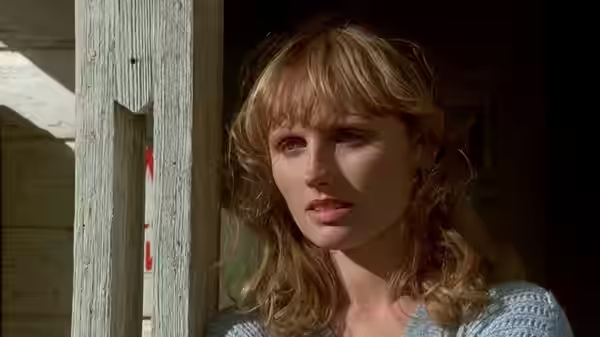
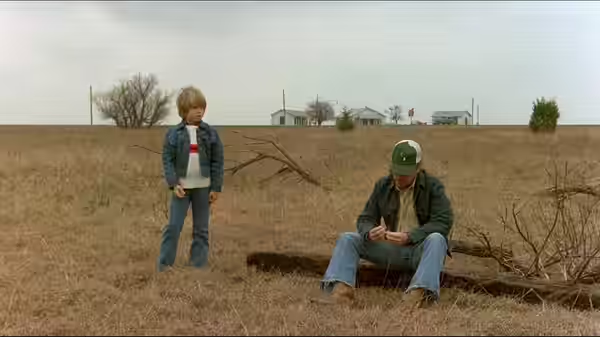
Tess Harper does not play Rosa Lee as a saint. She has a boy to raise, Sonny (Allan Hubbard), and a business to keep, and she takes Mac on the way she might take on a hand for the summer. Hubbard is the kind of child actor who does not appear to know he is one. The scene the three of them share in the truck after a baptism, Sonny asking whether he feels any different and Mac allowing that he does not, not yet, is one of the best scenes about faith we know, because nobody in it claims anything.

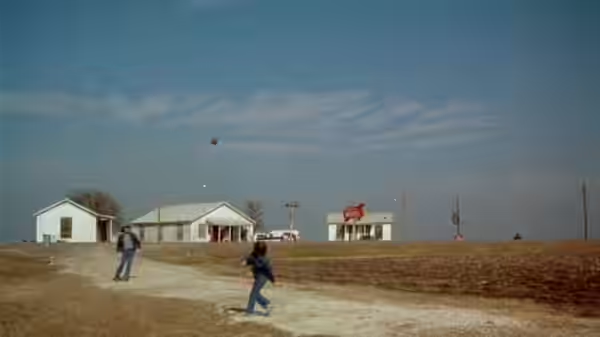
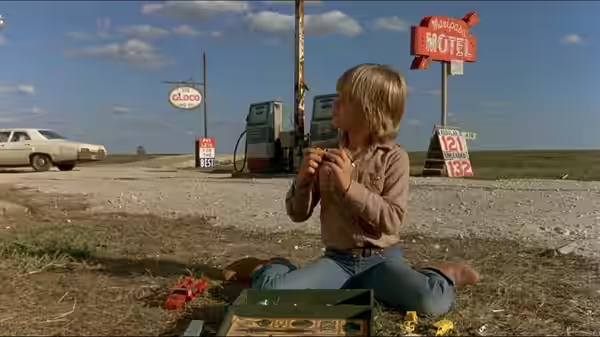
Russell Boyd shoots the motel as one low building in a great deal of sky and keeps the camera far enough back that the people are small in it. The wind is on the soundtrack most of the time. Indoors he uses what comes through the window and lets faces go half-dark. William M. Anderson ends scenes a beat before we expect, so the film keeps moving even when nobody on screen is. George Dreyfus’s score is a few bars of strings between scenes; the music that matters is the country songs, and the film lets them carry it. Jane Greenwood puts Mac in work shirts washed to nothing and Dixie in sequins.

Dixie is where the film is least sure. Betty Buckley plays Mac’s ex-wife, now the star he used to be, at a stage volume nobody else in the cast approaches, and her scenes with Wilford Brimley, as her manager Harry, seem to belong to a louder film. The young band who come asking for songs are picked up and set down without much consequence. And the film is so even in temper that when the hard thing happens, late on, and we will not say what, it is dealt with in the same tone as everything before it. We think that is right, and we understand anyone who finds it too composed.

Beresford came to this from Breaker Morant, which has a courtroom in it and a great deal of talking, and Foote had written the screenplay for To Kill a Mockingbird two decades before. Neither had made anything this quiet, and of everything either has done, this is the one we would keep.

Watch it on an evening when you do not want to be shouted at. It runs 92 minutes, and the wind does most of the talking.
Critical consensus AI synthesised

84
Positive
8
Mixed
0
Negative
0

Every one of the eight reviews is favourable, and the praise settles almost entirely on Robert Duvall. Critics describe his washed-up country singer as spare, unshowy and lived-in, a performance that works by holding back. Beyond him, the reviews credit Bruce Beresford’s restrained direction and Horton Foote’s script for revealing character through small details and silences, and several note the Texas locations and the attention paid to faces. Time Out goes furthest, treating the film as a source for later American independent cinema.

The spread is narrow. The one real reservation comes from The New Yorker, where Pauline Kael finds it slow to engage, with minimal dialogue and characters that stay blank for too long, before warming to its quiet relationships. Variety is more measured, describing it as old-fashioned in a good way and singling out Tess Harper and Allan Hubbard in support. Newer reviews, from The AV Club and Collider, are as fond as the ones from 1983.

Time Out
4 June 2013 · ★★★★★ · Tom Huddleston
100

The critic calls it a masterpiece and one of the wellsprings of US indie cinema, praising its quiet, relentless power, genuine redemption story, and Duvall's never-better performance alongside the entrancing rural landscapes and photography of human faces.

Read the full review →
RogerEbert.com
17 June 2009 · Roger Ebert
90*

The film is praised for its understated storytelling and Robert Duvall's quietly powerful performance as a washed-up country singer finding redemption. The critic highlights the minimalist approach of director Bruce Beresford and screenwriter Horton Foote, which reveals character through small details and silences rather than dramatic flourishes.

Read the full review →
The New York Times
4 March 1983 · Janet Maslin
90*

The review commends the film's spare, haunting quality and emotional power, largely due to Duvall's transformative performance as a defeated country singer. It notes the director's lighter touch compared to his previous work and the strong supporting cast, while observing the story's blend of loneliness, family themes, and country music.

Read the full review →
Radio Times
★★★★
80

The review highlights Duvall's spare, lean Oscar-winning performance as the washed-up country singer seeking redemption, noting Beresford's sympathetic direction of the Texas locations and Foote's realistic, poignant episodic story of second chances.

Read the full review →
The AV Club
29 March 2021 · Jesse Hassenger
80*

The critic praises the film's wonderfully low-key approach that avoids clichés, highlighting Robert Duvall's unshowy, lived-in performance and the perceptive handling of faith and redemption.

Read the full review →
The New Yorker
9 May 1983 · Pauline Kael
70*

The critic finds the film slow to engage due to its minimal dialogue and blank characterizations but appreciates the conception of steadfast values and redemption through quiet relationships. It singles out the off-screen emotional developments and Duvall's recovery arc as central to the story's gentle appeal.

Read the full review →

Cast

Awards

Academy Awards, 1984

Nominated
Best Director
Nominated
Best Picture
Won
Best Actor
Won
Best Writing, Original Screenplay

Directors Guild of America Award for Outstanding Directing – Feature Film, 1983

Nominated
Directors Guild of America Award for Outstanding Directing – Feature Film

Golden Globes, 1983

Nominated
Best Director
Nominated
Best Motion Picture – Drama
Nominated
Best Supporting Actress – Motion Picture
Won
Best Actor – Motion Picture Drama

Los Angeles Film Critics Association Award for Best Actor, 1983

Won
Los Angeles Film Critics Association Award for Best Actor

National Society of Film Critics Award for Best Actor, 1983

Nominated
National Society of Film Critics Award for Best Actor

New York Film Critics Circle Award for Best Actor, 1983

Won
New York Film Critics Circle Award for Best Actor

If you liked this, try…

Paris, Texas poster88

Paris, Texas

1984 · Another silent man walks out of the Texas scrub and tries to be a father again.

The Trip to Bountiful poster

The Trip to Bountiful

1985 · Horton Foote again, and Geraldine Page going home to a Texas town that is barely there.

Payday poster

Payday

1973 · Rip Torn’s country singer never stops drinking, and the film never lets him off.

Crazy Heart poster

Crazy Heart

2009 · The same story with a louder soundtrack; Jeff Bridges makes the drinking believable.

Ikiru poster92

Ikiru

1952 · Kurosawa’s clerk finds out what a small useful life looks like, quietly and late.