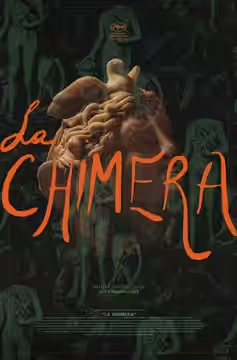
Alice Rohrwacher’s tale of tomb raiders in 1980s Tuscany is funny, sad and shot with a freedom most films never risk. It wanders for a stretch in the middle, and Josh O’Connor holds it together with a slump and a stare.
Arthur (Josh O’Connor) is asleep on a train when we meet him, dreaming of a woman in a white dress with a red thread coming loose from her hem. He wakes and walks back into the small Tuscan town where his friends are waiting and a prison sentence is just behind him. The friends are tombaroli, tomb raiders, and Arthur is the one who finds the tombs. He does it with a forked stick and a sort of fit: the rod dips, his knees go, and he lands flat on his back above two and a half thousand years of somebody else’s belongings. Alice Rohrwacher’s fourth feature is about what Arthur is looking for down there. We recommend it, with the caveat that it runs 131 minutes and does not need all of them.
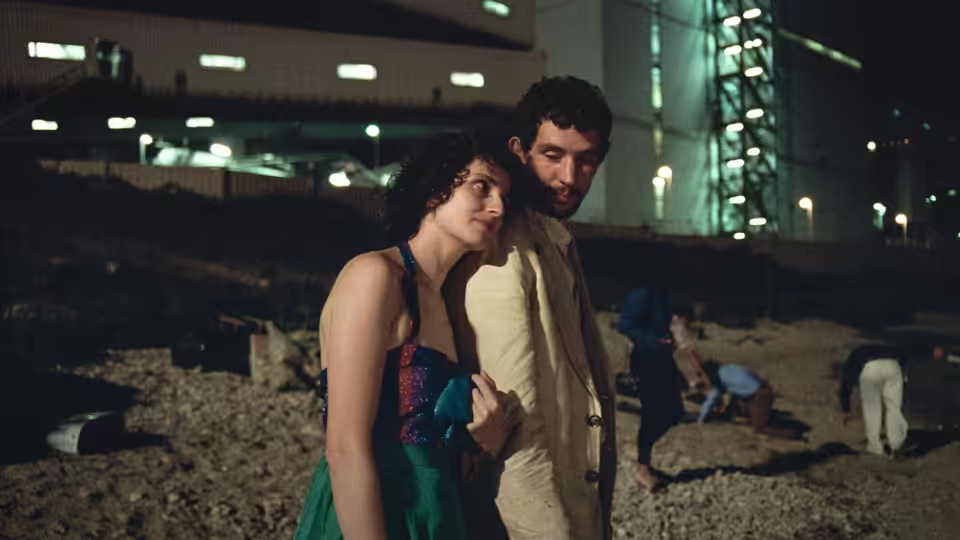
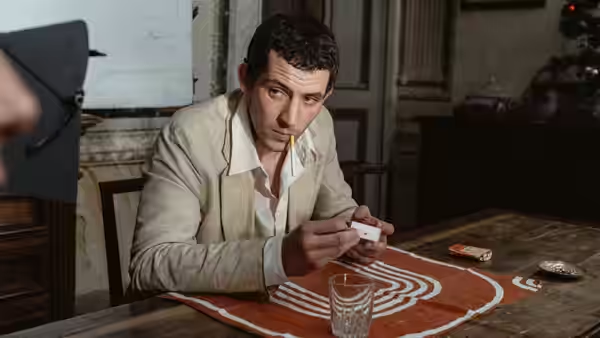
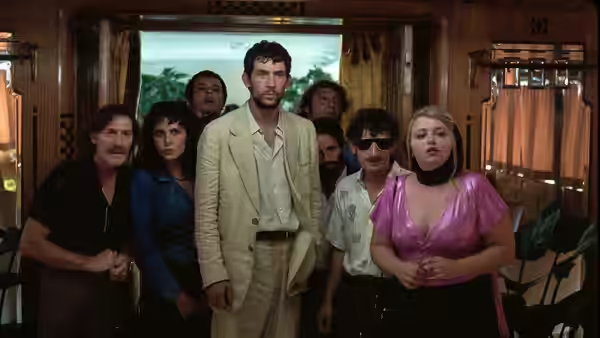
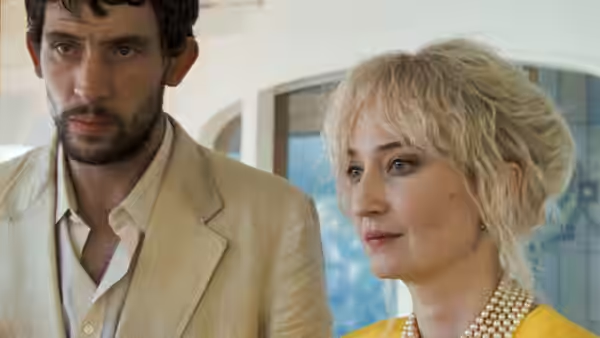
O’Connor delivers his lines in Italian and plays Arthur as a man who has stopped trying to be liked. The costume is half the performance: a cream suit he never changes and never washes, worn with a scowl that lifts perhaps four times in the whole film. Vincenzo Nemolato’s Pirro and the rest of the gang treat him as a mascot and a meal ticket at once. Isabella Rossellini’s Flora, a singing teacher gone to seed in a villa her daughters would like her out of, treats him as the son-in-law she never got. She is waiting for her daughter Beniamina (Yile Yara Vianello) to come home, and Arthur is the only other person in town who still behaves as if she might.
Carol Duarte’s Italia, Flora’s live-in pupil and skivvy, cannot hold a tune and is hiding two small children upstairs. Duarte plays her with a wide open face and no guile, and the film turns towards her by degrees.
Hélène Louvart shoots on more than one film stock and the frame keeps changing shape: scratchy and boxy for the gang’s night work, wider and softer for the dreams, with no announcement when one gives way to the other. When Arthur finds a tomb the camera goes over with him, so the horizon flips and we are looking at Tuscany upside down. We laughed the first time. By the third we had stopped, because Louvart holds the shot long enough for it to read as a man lying face up on the ground with the dead beneath him, and it got to us. Emita Frigato’s production design gives Flora peeling plaster and dust sheets, and gives Arthur a shack built into the old town wall, so that his bedroom is several centuries older than he is.
Nelly Quettier’s editing is the film’s chief pleasure. She speeds up the gang’s scrambles into silent-comedy scurrying, runs a shot backwards when it suits her, and cuts from a dream into a kitchen with nothing to warn us. A travelling musician turns up between scenes to sing the tombaroli’s exploits in rhymed verse, and Quettier uses him as a chorus. None of it is tidy. All of it is legible, which is rarer.
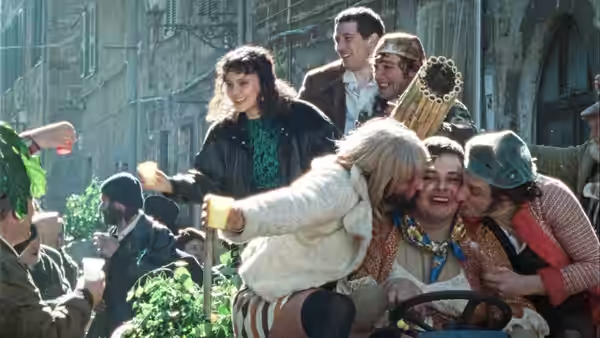
What does not work is the middle. A long carnival sequence and the gang’s celebrations go on past the point where they tell us anything, and the business with Spartaco (Alba Rohrwacher), the dealer who buys what they dig up, is played broad. The film knows the rich collectors at the end of the chain are the villains and has little to add to that. For twenty minutes or so we were checking how far in we were, and we resented it, because everything either side is so alive.
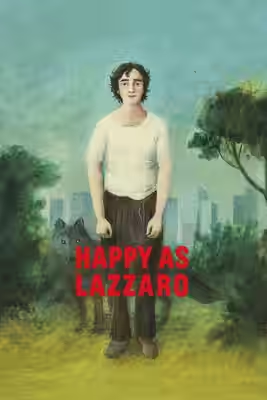
Rohrwacher has done this before. Happy as Lazzaro also let time slip without telling us and also put a holy fool at its centre. This one is looser, warmer and funnier, and more interested in the living. The second half takes a turn we will not describe.
See it in a cinema if you can. The changes in grain and frame carry a good deal of the meaning, and they are the first thing a television smooths away. And do not go expecting a heist film. Nobody in it can plan anything, least of all the man who keeps falling over.