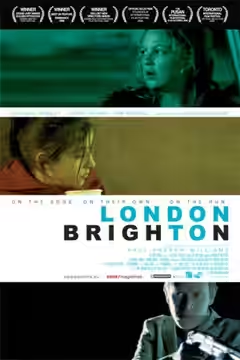
Paul Andrew Williams’s first film is lean, frightening and acted by near-unknowns who carry it with ease. It keeps its worst moment off screen and is the better for it; only a final stretch that reaches for tidiness lets it down.
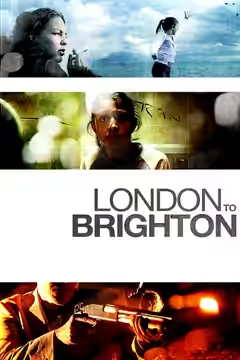
British crime films in the years after Lock, Stock were mostly about men in pubs threatening other men in pubs. Paul Andrew Williams, writing and directing his first film, has made one about the people those men use up: a working prostitute, a child she was paid to find, and the small-time pimp who sent her to do it. London to Brighton runs 85 minutes and does not waste any of them. It is a chase, with the gangsters behind and the sea in front, and it is a reconstruction of one night, assembled out of order and withheld until the film is good and ready.
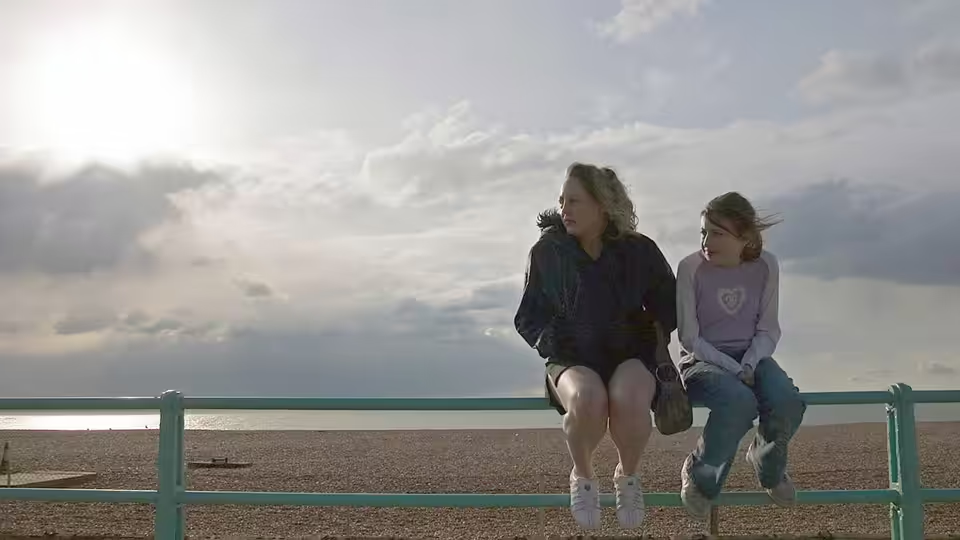
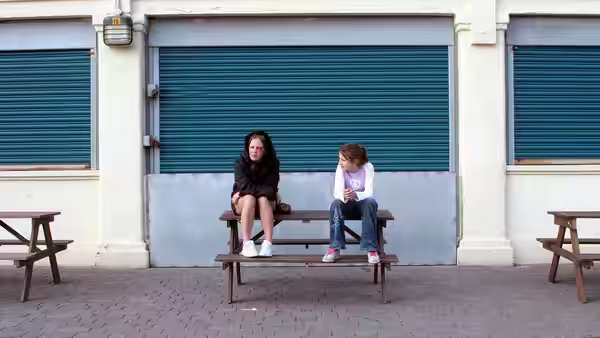
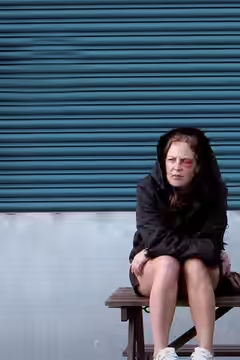
The acting is the reason to see it. Lorraine Stanley plays Kelly with a swollen eye and a voice that has given up on being listened to, and she makes the character’s decency a practical matter rather than a sentimental one: she buys chips, she finds a bed, she lies to the child when lying will help. Georgia Groome, as Joanne, does nothing an eleven-year-old would not do, which is harder than it sounds; she sulks, she asks the wrong questions, she wants her mum. Johnny Harris gives Derek the twitchy, aggrieved energy of a man who has always been the one getting hit and has just realised he is about to be hit much harder. Sam Spruell’s Stuart Allen is quiet and tidy and unpleasant, and Spruell has the sense not to raise his voice.
It was plainly made cheaply and it never once looks poor. Christopher Ross shoots London at night under orange street lamps and Brighton by day in flat grey light off the sea, and the switch between the two is how we always know where we are in time. The camera is handheld and close, often on the back of a head going somewhere in a hurry. Tom Hemmings cuts between the night and the morning so that each half answers a question the other has just raised, and he holds the key scene back for as long as the structure can bear. Laura Rossi’s score is a few strings and a lot of silence. Jane Levick, credited for both costume and production design, puts Kelly in one outfit for the whole film, which is correct, and dresses Duncan Allen’s house as the sort of place where nothing has ever been out of place.
The night at the house is kept almost entirely off screen, and it frightened us more than anything we have seen shown in a film of this kind. We watched the scene in which Kelly approaches Joanne outside the station with a dread that did not lift for the rest of the running time; Williams knows what the audience knows, and he lets Stanley’s face do the explaining. Later, a door closes, and the film stays outside with Kelly in the kitchen. We were grateful and we were sick. That is the film working exactly as intended.
What does not work is the gangster plot that surrounds the two women. Alexander Morton’s Duncan is a type we have met before, the soft-spoken boss with the nice house, and the scenes of Stuart and his men driving about and making calls are the one place the film goes slack. Nathan Constance, as Derek’s mate Chum, is good company but exists to be told things. And the final stretch, which we will not describe, tidies matters with a confrontation that needs several people to behave as the plot requires rather than as they have behaved for the previous hour. Most critics are split on this film, and the ones who dislike it are mostly reacting to that ending; we think it is a fault in a good film rather than proof of a hollow one.
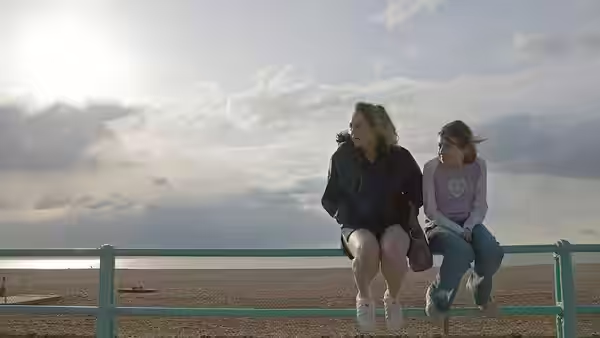
Against the genre’s own standards it stands up well. Mona Lisa (1986) is the obvious comparison, another story of a man in the trade who finds he has a conscience, and this is bleaker and less forgiving. It carries an 18 certificate, and the certificate is earned by what it implies rather than what it shows. See it with the lights off and do not expect to feel better afterwards; expect to remember Stanley and Groome on a cold beach, sharing a bag of chips, for some time.