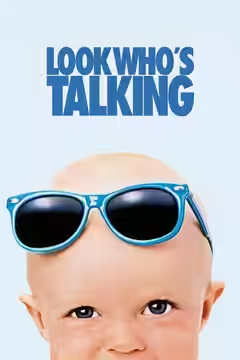
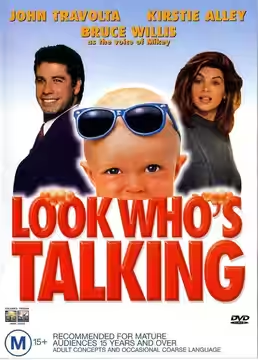
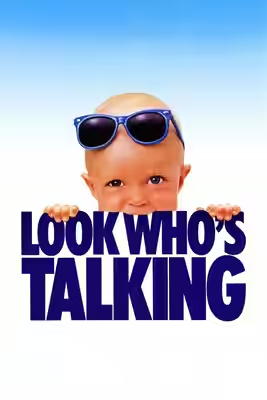
Look Who’s Talking is a slight, amiable comedy whose adult company proves more appealing than its talking-baby trick. John Travolta and Kirstie Alley make it worth an evening, even when the jokes grow predictable.
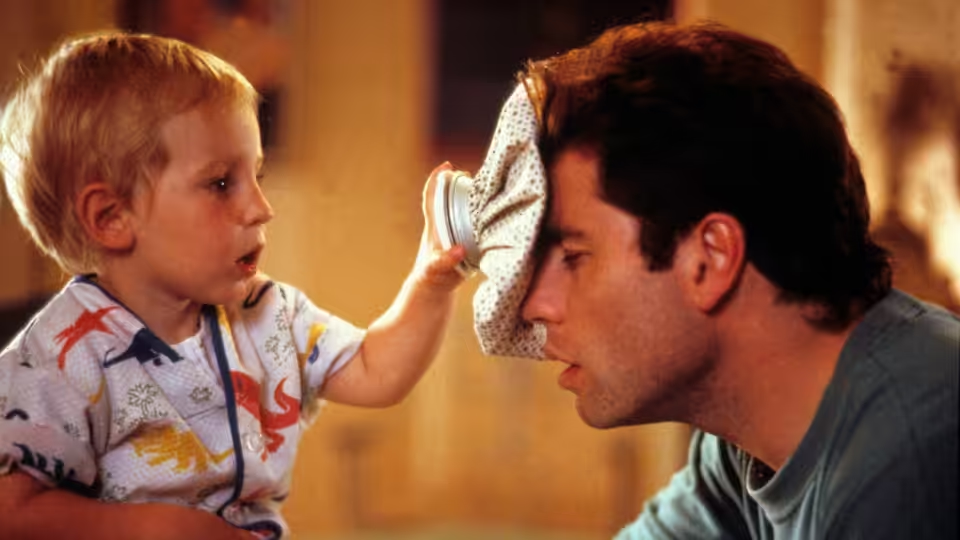
Amy Heckerling’s Look Who’s Talking has a premise that sounds capable of exhausting itself before the story has properly begun: give a baby Bruce Willis’s voice and let him comment on the adults. It lasts rather better than that suggests. This is an enjoyable romantic comedy, helped considerably by performers who make its thinly written grown-ups pleasant company. We would recommend it for them, with reasonable expectations about how far the baby jokes can stretch.
The opening sperm race gives the idea a suitably undignified start. We laughed at the spectacle of conception being treated as a competitive event, which is considerably less coy than the talking-baby premise sounds. Amy Heckerling, who also writes, understands the usefulness of getting the audience past embarrassment early. The baby commentary becomes more predictable as the film goes on.
Bruce Willis gives Mikey’s remarks enough brisk assurance to make the first few seem funnier than they deserve. The pleasure is in hearing that much adult certainty attached to a baby, and his delivery does most of the work. Repetition is the difficulty: once the mismatch has registered, each wisecrack needs to offer something beyond another reminder of the premise. Some of the later lines are only mildly amusing.
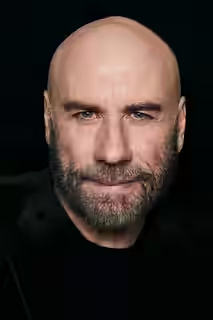
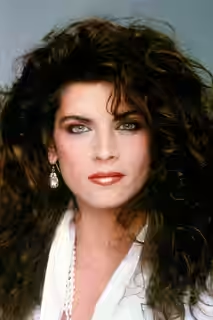
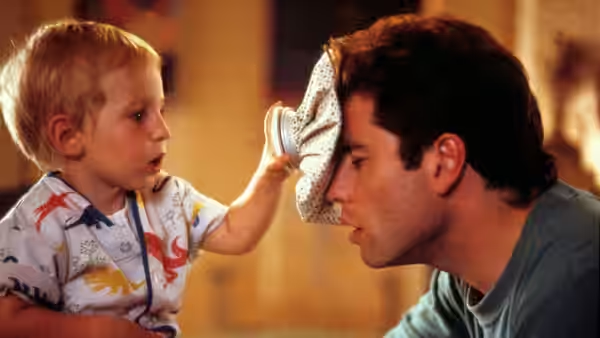
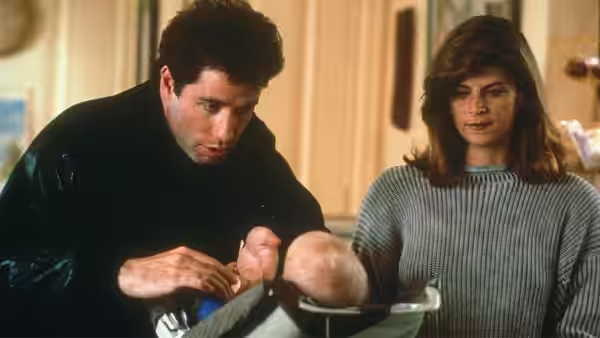
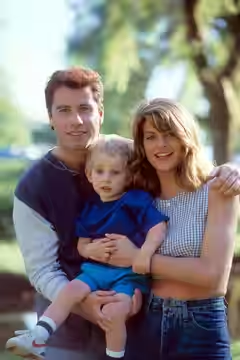
John Travolta is the stronger reason to stay. As James, he brings a gentleness that makes the romantic material easier to believe, allowing vulnerability without asking us to applaud him for it. Kirstie Alley gives Mollie enough appeal to keep the adult exchanges from becoming mere pauses between comments from Mikey. Together they make us interested in conversations that would look rather ordinary on the page, although neither can disguise how lightly the characters have been written.
Thomas Del Ruth’s cinematography serves the performances competently, without providing much additional pleasure when the writing slackens. Reuben Freed’s production design is similarly unobtrusive, and does little to make these adults seem more distinctive. Neither contribution gets in the way of the comedy, but we could have used a stronger sense of the lives surrounding the jokes. The cast is left to supply most of that interest.
Debra Chiate’s editing has to keep the adult exchanges moving while making space for a voice that nobody on screen can answer. The interruptions work often enough, though their rhythm becomes familiar well before the film is over. David Kitay’s music contributes to the agreeable tone without making the weaker passages noticeably funnier or warmer. At 96 minutes, the film is not punishingly long, but a few fewer remarks from Mikey might still have helped.
A romantic comedy needs us to enjoy spending time with its central pair, and this one manages that. Its treatment of motherhood is less satisfying, because the baby’s running commentary is allowed to do too much of the work. The charm survives, although anyone hoping for sharply drawn adults may find the thin characterisation wearing. Choose it for John Travolta and Kirstie Alley, and allow the smallest member of the cast a little indulgence.