Phyllida Lloyd’s wedding musical is awkwardly filmed and winningly performed, with Meryl Streep giving the songs more feeling than the plot deserves. We recommend it for the company, provided ABBA already have a place in the evening.
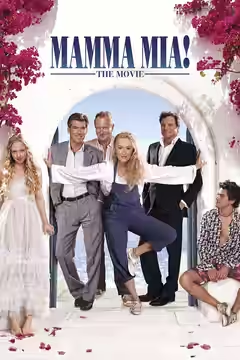
Phyllida Lloyd treats Mamma Mia as an invitation to enjoy people making a spectacle of themselves at a wedding. That is a sound enough ambition for a musical built around ABBA songs, and the film is good company despite some untidy direction. Its affection for the performers matters: nobody seems to have been put before the camera merely to be laughed at. The trouble comes when their enthusiasm is expected to do the work of staging, editing and a more substantial script.
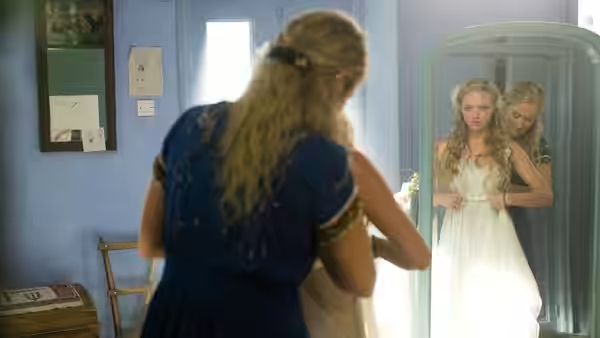
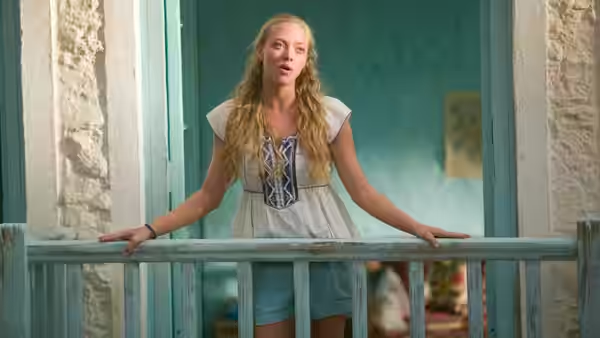
Catherine Johnson’s screenplay gives Sophie Sheridan three possible fathers and Donna Sheridan three former lovers to contend with, which is plenty of trouble for one wedding. Amanda Seyfried makes the daughter’s wish for a complete family easy to understand, even when the plotting around her feels contrived. The songs are often asked to supply feelings that the scenes have barely begun to establish. There are stretches when the next familiar tune arrives so promptly that the characters scarcely have to finish a thought.
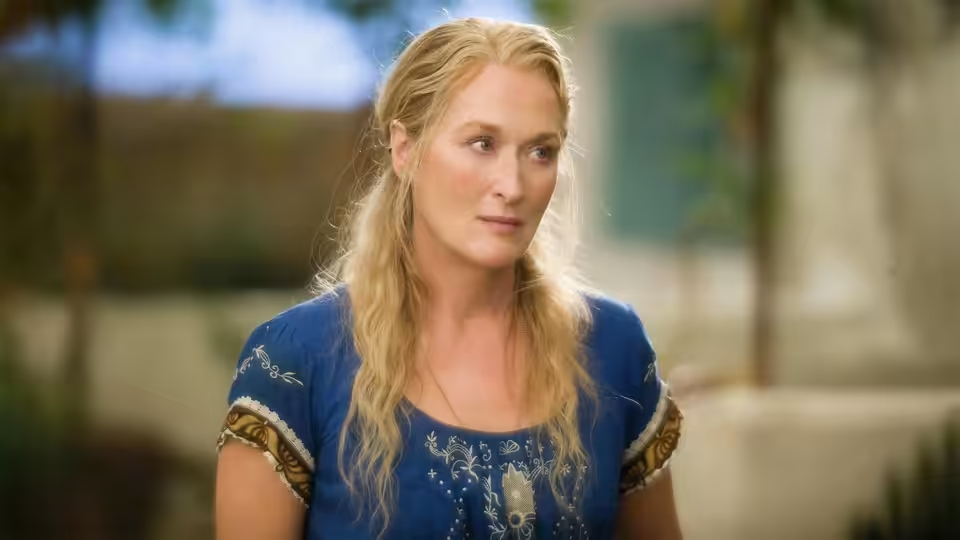
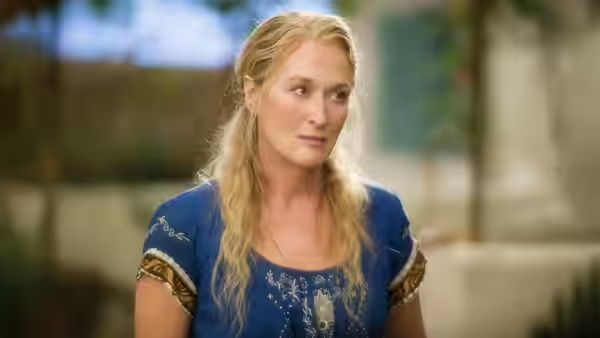
Meryl Streep gives the film enough feeling to get through those shortcuts. Her broad comedy can be overemphatic, but she lets Donna Sheridan’s dismay at the reunion interrupt the determined jollity. We were moved by her ‘Slipping Through My Fingers’. She makes a mother’s difficulty in letting go sound painfully ordinary, without needing the plot to become more complicated. That quieter singing gives us a reason to care about the wedding beyond sorting out the possible fathers.
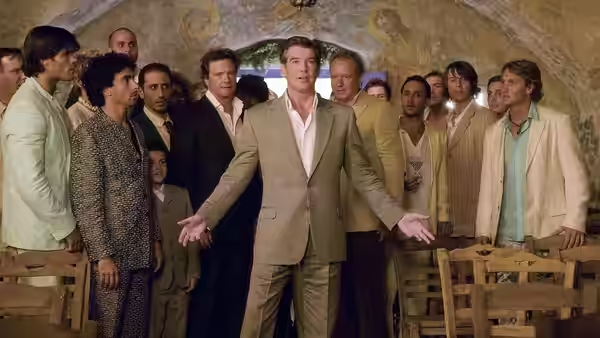
Christine Baranski brings a sharper comic timing to the celebrations, giving the surrounding exuberance some welcome precision. Julie Walters is equally game, and both help to keep the comedy from depending entirely on the central tangle of relatives and former lovers. Pierce Brosnan’s singing is strained enough to distract from the feeling he is trying to convey. His willingness to attempt it is appealing, but goodwill does not make the notes any easier to listen to.
The physical setting does useful work, though the film could trust it more. Haris Zambarloukos makes the locations inviting, and Maria Djurkovic’s production design gives the wedding a pleasingly informal setting. Phyllida Lloyd seems less certain about how to arrange people within it once the singing starts. Lesley Walker’s busy editing keeps interrupting movement when we need time to watch it, so the larger numbers can become tiring despite their cheerful purpose. A musical ought to let us see its performers sharing a space, and too often we are made to assemble that space ourselves.
Benny Andersson and Björn Ulvaeus provide songs with enough lift and sadness to accommodate the comedy and the bruised feelings. Their melodies remain easy to follow even when the staging is busy, which gives the film a steadiness it needs. ‘The Winner Takes It All’ benefits from Meryl Streep’s willingness to give a familiar song an uncomfortable edge. At such moments the music can hold our attention without the film insisting that everyone be having fun.
We would choose it for an evening when nobody needs persuading about ABBA. Come looking for elegant dancing and the restless camera is likely to be a nuisance. Bring company that can forgive a missed note.