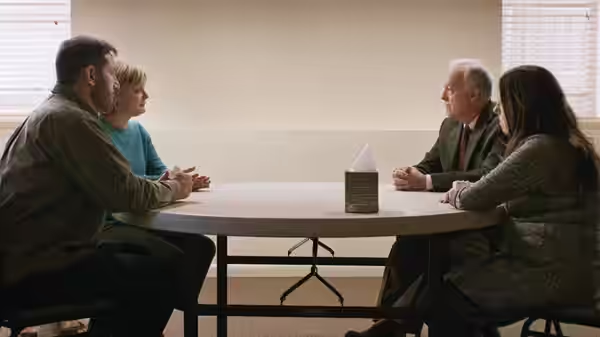
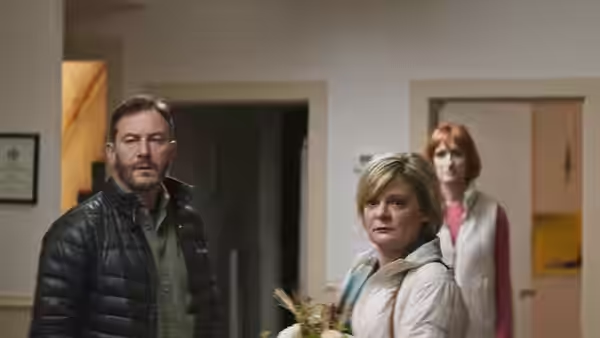
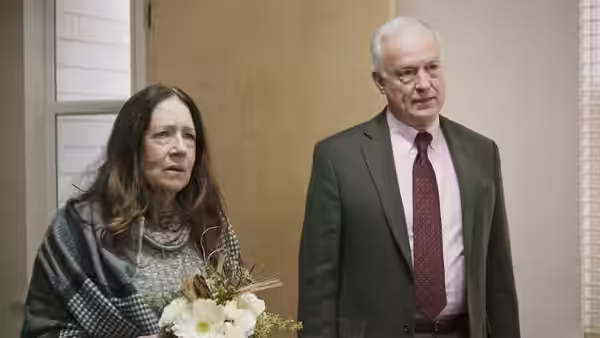
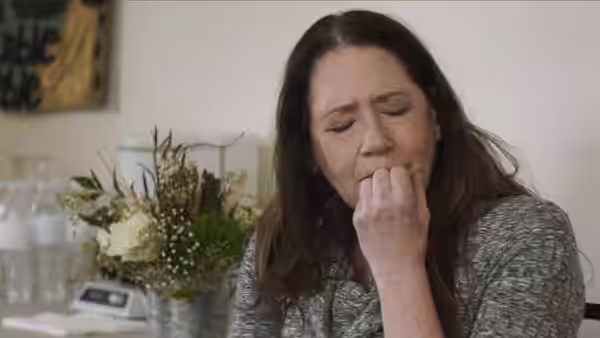
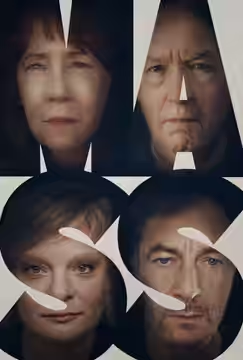
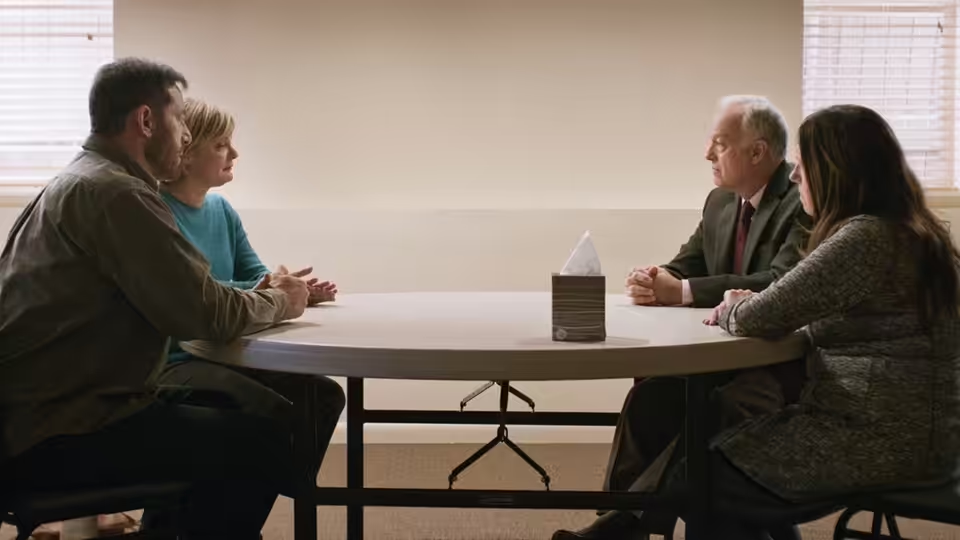
Jay (Jason Isaacs) and Gail (Martha Plimpton) face Richard (Reed Birney) and Linda (Ann Dowd) across a meeting-room table
Film review

Mass

2021 · Directed by Fran Kranz · 1h 51m

In a sentenceFour parents in one room, and no such thing as an easy question

Gail (Martha Plimpton), Jay (Jason Isaacs), Linda (Ann Dowd) and Richard (Reed Birney) come together in one room for a conversation about their children and the grief left by violence. They want to understand what has happened, but each parent brings different questions and a different burden of responsibility. Linda has to reckon with her son’s actions as well as her own sorrow. As the four begin to talk, they face questions about what parents can know about their children, what they can explain and what they need from one another.

Plays from YouTube when you press play; nothing loads from them until then.

Fi1m review

Fran Kranz’s four-parent drama is worth the emotional effort, chiefly for performances that make grief feel painfully individual. The writing sometimes pushes too hard towards release, but we recommend it to anyone prepared for a difficult conversation.

Fran Kranz’s Mass is worth seeing for the care it takes with four grieving parents, even when the writing makes their conversation sound too arranged. The writer and director gives Gail, Jay, Linda and Richard a difficult task: to talk about their children when sorrow and responsibility make almost every sentence hazardous. There is little comfort in the chamber setting, and the film asks for sustained attention to people in pain. We recommend it, with a warning that its efforts to help them sometimes become too visible.

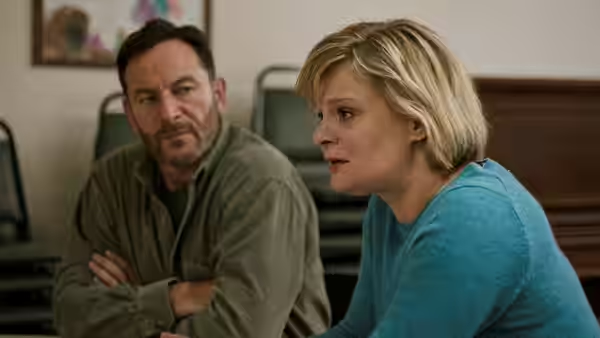
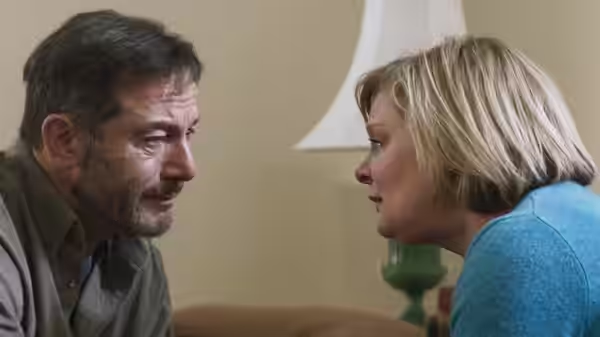
Martha Plimpton gives Gail a grief that feels difficult to contain, and she is the strongest reason to stay with an encounter that can otherwise seem carefully supervised. Her performance makes the prospect of talking about a child feel like an ordeal in itself. Jason Isaacs is just as persuasive as Jay, giving the father’s anguish enough complexity that it cannot be tidied into a single response to violence. Their performances keep the conversation from settling into a sequence of speeches about loss.

Ann Dowd has a particularly difficult task as Linda, a mother grappling with her son’s actions. We were moved by her difficulty in holding on to love for her son while reckoning with what he has done. The performance makes those feelings painfully credible without asking us to set responsibility aside. Reed Birney gives Richard enough complexity to deserve the same close attention, even beside performances that make their anguish more immediately apparent.

Ryan Jackson-Healy’s cinematography keeps the chamber setting from becoming monotonous, although the film never quite loses its stage-bound feel. The visual restraint suits a conversation in which the actors need our attention for longer than a single speech. Lindsey Moran’s production design is appropriately unobtrusive, allowing the people occupying the space to hold our interest. The enclosure helps concentrate our attention, though it also makes the carefully organised discussion harder to escape when the writing falters.

Yang-Hua Hu’s editing is less secure when abrupt cuts interrupt the atmosphere the actors have worked to establish. A pause in this conversation needs room, and some of those breaks feel impatient. Darren Morze’s music makes less of an impression than the carefully rendered room sound, which keeps us conscious of the shared space. The small sounds around the dialogue help make a potentially airless drama feel inhabited.

The screenplay’s weakness is its determination to get somewhere useful with all this suffering. Some exchanges repeat emotional ground already covered, and the pressure towards catharsis can make the parents seem to be making progress because the script requires it. The actors usually make that progress convincing, but they cannot disguise every contrivance. A chamber drama depends on our believing that the conversation could go wrong; here, the careful handling sometimes reassures us more than the circumstances warrant.

The four lead performances are reason enough to make time for these 111 minutes, provided the subject is something we feel able to sit with. There is no need to pretend the film is beyond criticism to acknowledge how forcefully it makes parental grief felt. Its solemnity can be tiring, and a companion hoping for diversion deserves fair warning. Choose it when everyone on the sofa is willing to listen.

Critical consensus AI synthesised

75
Positive
15
Mixed
4
Negative
1

Most critics find Mass a harrowing, compassionate drama, with praise centred on the four lead performances. Ann Dowd, Martha Plimpton, Jason Isaacs and Reed Birney each draw particular notice across the reviews, suggesting an ensemble whose strength extends beyond any single role. The positive consensus values the film’s sensitive treatment of grief and its willingness to let difficult conversations unfold without sensationalism. For many critics, the emotional release feels earned by the actors’ restraint and the screenplay’s care.

Reservations cluster around the staging and the pressure to deliver catharsis. Several reviews find the drama stagey or contrived, while others question moments of melodrama, sentimentality or repetition. The spread is fairly wide despite the clear positive lean: Deadline praises the film as distinctly cinematic, whereas The Wrap finds it overly contrived even while admiring the acting. The performances remain common ground when confidence in the filmmaking falls away.

The Hollywood Reporter
30 January 2021 · festival review · David Rooney
88*

Rooney praises the film as harrowing yet cathartic, valuing its psychological complexity and human connection over melodrama. He singles out Martha Plimpton’s emotionally raw performance and the ensemble’s finely calibrated work.

Read the full review →
Variety
30 January 2021 · festival review · Owen Gleiberman
88*

Gleiberman finds the film’s staged catharsis ultimately truthful and affecting, calling Kranz a bold new filmmaker. He singles out the committed performances, especially Ann Dowd’s sorrowful portrayal of a mother grappling with her son’s actions.

Read the full review →
Empire
21 January 2022 · Jordan King
85*

The critic finds the drama emotionally exhausting but deeply cathartic, and praises its sensitive handling of grief. They single out the four lead performances, especially Jason Isaacs’s portrayal of a grieving father.

Read the full review →
Little White Lies
festival review · Hannah Strong
85*

Strong finds Mass a tender, thoughtfully judged portrait of grief that avoids becoming mawkish or politically heavy-handed. She especially praises the extraordinary performances, particularly those of Martha Plimpton, Ann Dowd and Jason Isaacs.

Read the full review →
IndieWire
30 January 2021 · B · David Ehrlich
77

Ehrlich finds Mass a sobering, worthwhile drama whose intimate approach makes space for a difficult conversation. He praises the careful balance of the four lead performances, especially Reed Birney’s work, while faulting some abrupt cuts for weakening the atmosphere and catharsis.

Read the full review →
The AV Club
5 October 2021 · B · Ignatiy Vishnevetsky
77

The review finds Mass stagey and airless despite its strong performances. It especially praises Ann Dowd and the cast for carrying the film.

Read the full review →

Straight answers AI written, from our review

Is Mass worth watching?
Mass is worth watching for its four persuasive performances and its care with parental grief; we score it 82 out of 100. We recommend it to anyone prepared for a painful, sustained conversation, though the writing sometimes feels too arranged and pushes too firmly towards emotional release.
How long is Mass, and what is it rated?
Mass runs 1h 51m. It is a drama film.
Where can I watch Mass in Brazil?
Mass is streaming on Amazon Prime Video in Brazil, and it is also available to rent from Amazon Prime Video and Apple TV from R$9.90. Availability is checked daily; the links above go straight to each service.
How violent or frightening is Mass, and is it suitable for children?
Mass has a UK 12A certificate, but its sustained focus on parental grief after violence makes it a difficult choice for children. The concern we highlight is the emotional strain of listening to four parents discuss their children and responsibility; we recommend it for viewers prepared for that distressing subject rather than a family evening.
How does Mass compare to Secrets & Lies?
Mass is the more solemn choice beside Secrets & Lies, with both films drawing family pain out through difficult conversations. We recommend Secrets & Lies for a warmer evening with humour and embarrassment alongside the hurt; Mass better suits a willingness to concentrate on grief, though its writing sometimes steers the conversation too visibly.
What should I watch after Mass?
After Mass, try Secrets & Lies (1996, Fi1m 88): Family pain emerges through conversation, with room for embarrassment and unexpected warmth. Then A Separation (2011, Fi1m 93): Parents struggle with obligations nobody can meet without hurting someone else; and Ordinary People (1980, Fi1m 81): A family struggles to speak honestly about grief, guilt and staying together.

Cast

If you liked this, try…

  1. Secrets & Lies (1996, Fi1m 88)Family pain emerges through conversation, with room for embarrassment and unexpected warmth.

  2. A Separation (2011, Fi1m 93)Parents struggle with obligations nobody can meet without hurting someone else.

  3. The Son (2002) · not reviewed yetAnother patient encounter with grief, anger and the difficulty of forgiveness.

  4. Ordinary People (1980, Fi1m 81)A family struggles to speak honestly about grief, guilt and staying together.

  5. The Sweet Hereafter (1997, Fi1m 88)A community’s grief receives a wider frame, without becoming any easier to bear.