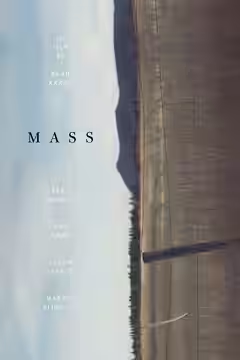
Fran Kranz’s four-parent drama is worth the emotional effort, chiefly for performances that make grief feel painfully individual. The writing sometimes pushes too hard towards release, but we recommend it to anyone prepared for a difficult conversation.
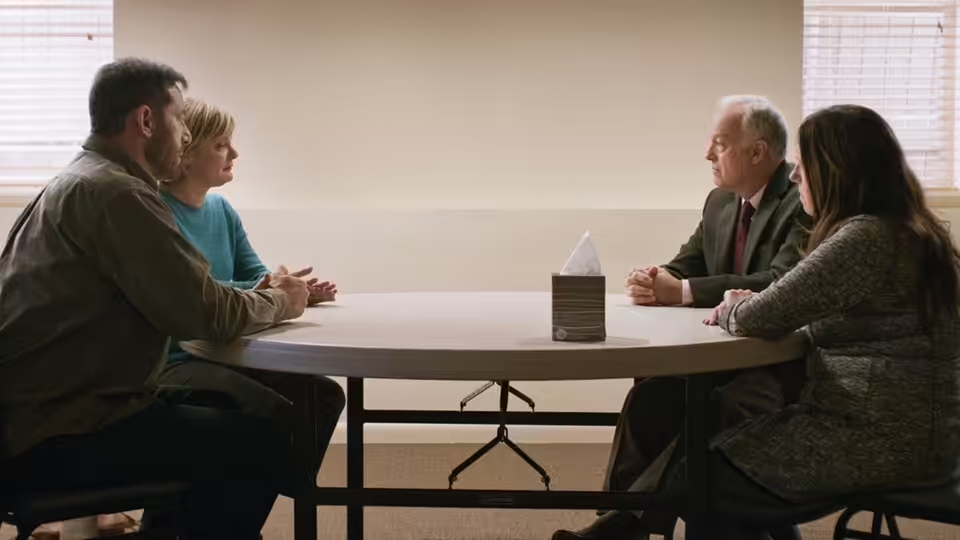
Fran Kranz’s Mass is worth seeing for the care it takes with four grieving parents, even when the writing makes their conversation sound too arranged. The writer and director gives Gail, Jay, Linda and Richard a difficult task: to talk about their children when sorrow and responsibility make almost every sentence hazardous. There is little comfort in the chamber setting, and the film asks for sustained attention to people in pain. We recommend it, with a warning that its efforts to help them sometimes become too visible.
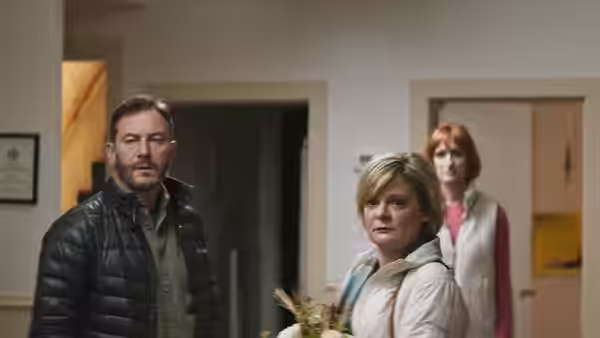
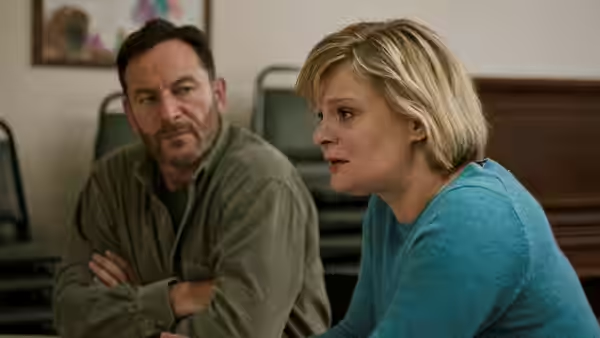
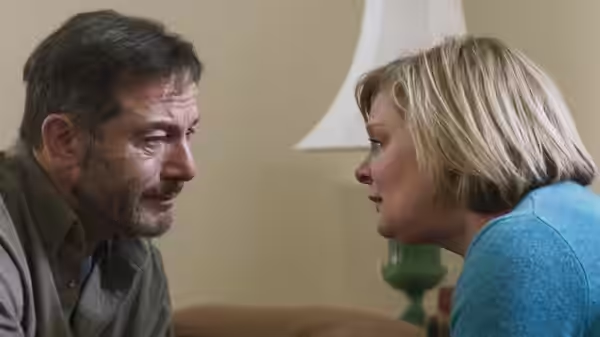
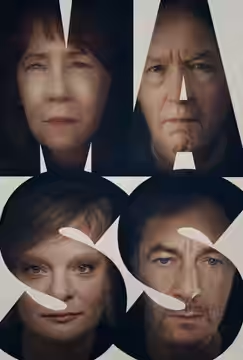
Martha Plimpton gives Gail a grief that feels difficult to contain, and she is the strongest reason to stay with an encounter that can otherwise seem carefully supervised. Her performance makes the prospect of talking about a child feel like an ordeal in itself. Jason Isaacs is just as persuasive as Jay, giving the father’s anguish enough complexity that it cannot be tidied into a single response to violence. Their performances keep the conversation from settling into a sequence of speeches about loss.
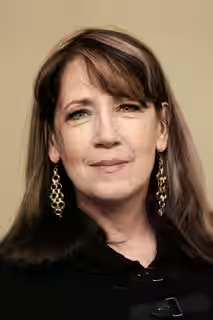
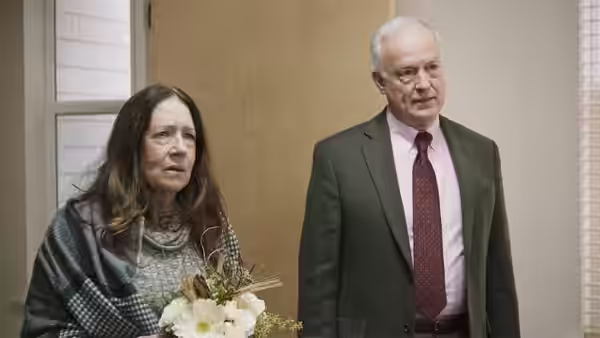
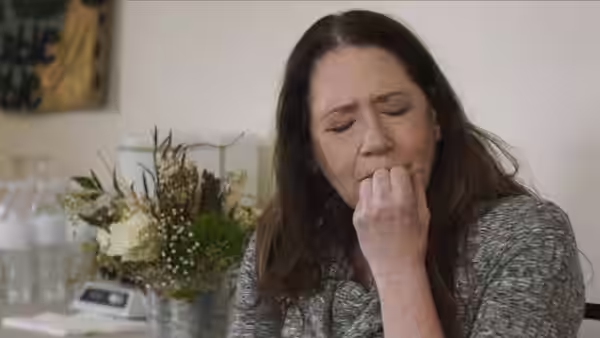
Ann Dowd has a particularly difficult task as Linda, a mother grappling with her son’s actions. We were moved by her difficulty in holding on to love for her son while reckoning with what he has done. The performance makes those feelings painfully credible without asking us to set responsibility aside. Reed Birney gives Richard enough complexity to deserve the same close attention, even beside performances that make their anguish more immediately apparent.
Ryan Jackson-Healy’s cinematography keeps the chamber setting from becoming monotonous, although the film never quite loses its stage-bound feel. The visual restraint suits a conversation in which the actors need our attention for longer than a single speech. Lindsey Moran’s production design is appropriately unobtrusive, allowing the people occupying the space to hold our interest. The enclosure helps concentrate our attention, though it also makes the carefully organised discussion harder to escape when the writing falters.
Yang-Hua Hu’s editing is less secure when abrupt cuts interrupt the atmosphere the actors have worked to establish. A pause in this conversation needs room, and some of those breaks feel impatient. Darren Morze’s music makes less of an impression than the carefully rendered room sound, which keeps us conscious of the shared space. The small sounds around the dialogue help make a potentially airless drama feel inhabited.
The screenplay’s weakness is its determination to get somewhere useful with all this suffering. Some exchanges repeat emotional ground already covered, and the pressure towards catharsis can make the parents seem to be making progress because the script requires it. The actors usually make that progress convincing, but they cannot disguise every contrivance. A chamber drama depends on our believing that the conversation could go wrong; here, the careful handling sometimes reassures us more than the circumstances warrant.
The four lead performances are reason enough to make time for these 111 minutes, provided the subject is something we feel able to sit with. There is no need to pretend the film is beyond criticism to acknowledge how forcefully it makes parental grief felt. Its solemnity can be tiring, and a companion hoping for diversion deserves fair warning. Choose it when everyone on the sofa is willing to listen.