Film review

Midnight Cowboy

1969 · Directed by John Schlesinger · 1h 53m · MPA NC-17

In a sentenceThe boots are new, the friend is a thief and the flat is condemned; welcome to New York

Drama

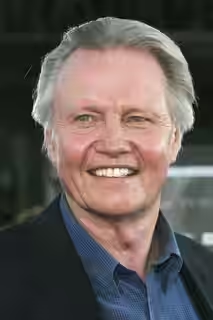
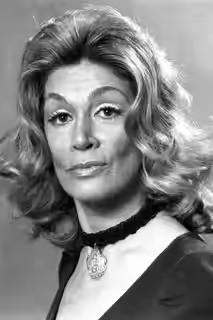
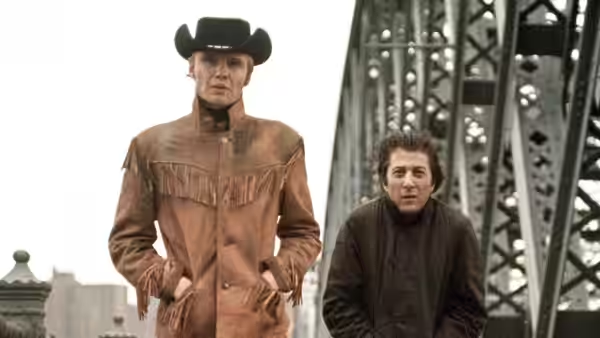
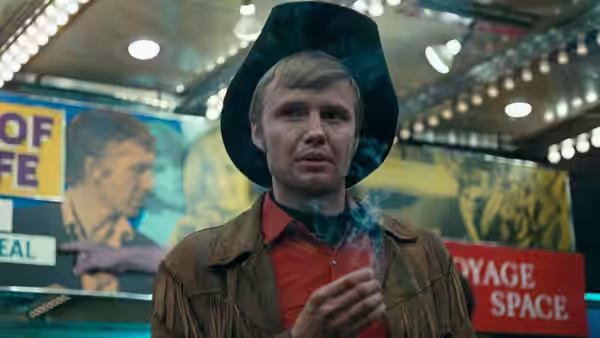
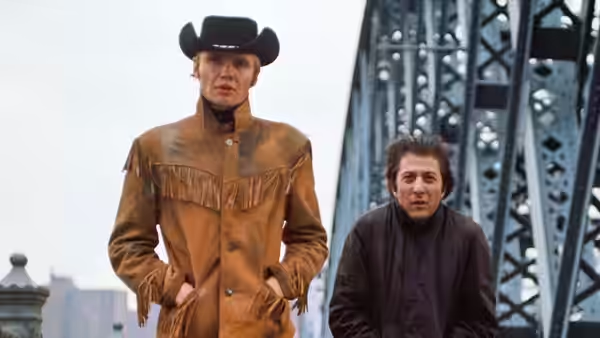
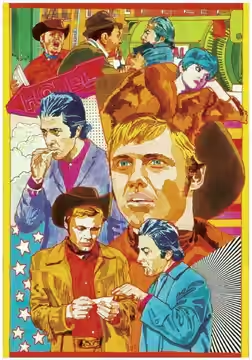
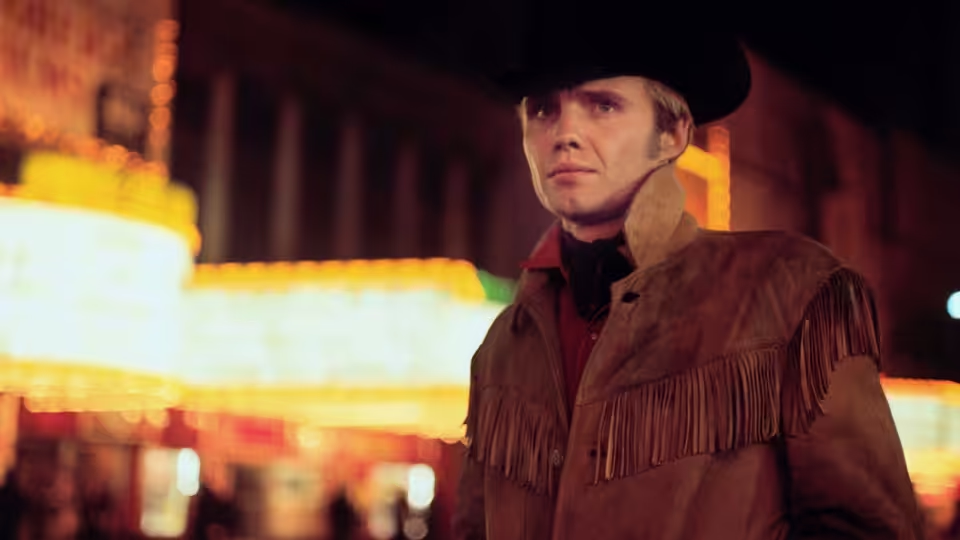
Texas, the late 1960s. Joe Buck (Jon Voight) quits his job washing dishes in a diner, buys a fringed buckskin jacket and a new hat, and boards a bus to New York planning to be paid by rich women for sex. He checks into a hotel off Times Square and goes hunting on Park Avenue, where Cass (Sylvia Miles) takes him home and then takes his money. In a bar he meets Ratso (Dustin Hoffman), a limping pickpocket who offers to introduce him to a manager, Mr. O’Daniel (John McGiver). When the hotel locks Joe out, Ratso is the only person in the city still speaking to him, and the pair set up in a condemned tenement with no heat.

Plays from YouTube when you press play; nothing loads from them until then.

Fi1m review

Schlesinger’s New York is as sour as it was in 1969, and Jon Voight and Dustin Hoffman make a friendship out of two men the city has no use for. The flashbacks that looked modern then have aged worst.

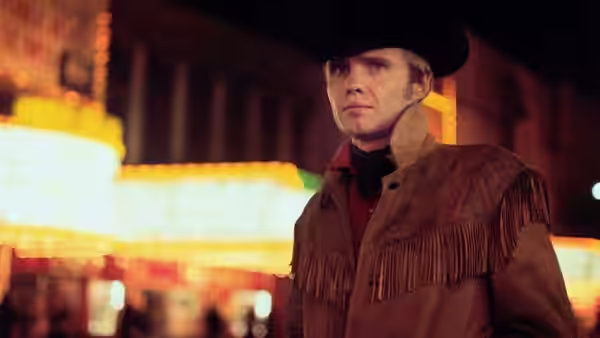
Joe Buck gets off the bus from Texas in a fringed jacket and a new hat and decides New York is going to work out. John Schlesinger spends 113 minutes taking the hat off him. Midnight Cowboy, adapted by Waldo Salt from James Leo Herlihy’s novel, is about a man with the wrong idea and a city that never bothers to correct it, and it is nearly as good as its reputation. The two lead performances are as fine as anyone says. Some of what surrounds them has dated.

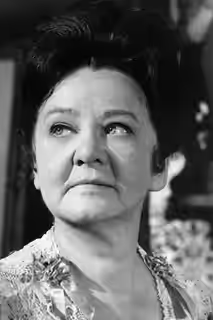
Jon Voight plays Joe as a man whose confidence has never met anything real. He talks to himself in the mirror, hums along to his radio and tips people he cannot afford to tip. The plan is to be paid by wealthy women for sex, and the first he approaches, Cass (Sylvia Miles), takes him to bed and then, in a single scene that holds a whole life, takes his money. Miles is on screen for a few minutes and we thought about her for the rest of the film.

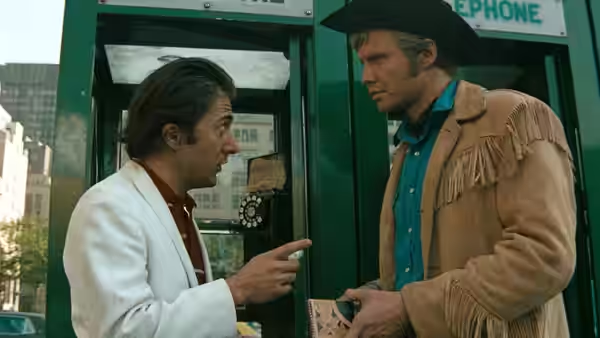
Dustin Hoffman’s Ratso arrives in a bar, limping, coughing, talking fast, and offers to manage Joe. He introduces him to Mr. O’Daniel (John McGiver), who turns out not to be a pimp, and disappears with the fee. When Joe finds him again he has nowhere else to go, and Hoffman does the hard thing: he makes a con man pitiable without once asking us to forgive him. The voice is a wheeze, the walk is a lurch, and the moment in traffic where he slaps a taxi bonnet and shouts that he is walking here has been quoted so often it is a surprise to find it still funny in context.

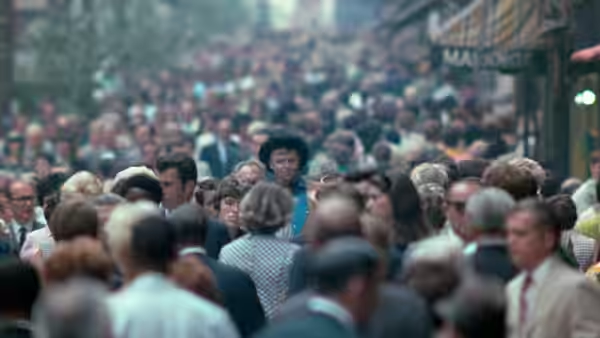
Adam Holender shoots Times Square at night as a smear of neon on wet glass, the camera down among real crowds who look at Joe’s hat and then away. His Texas is flat, bleached and empty. John Robert Lloyd’s production design gives Ratso a room in a condemned tenement, an X painted across the window, one mattress, a hotplate and a radiator that does not work, and Ann Roth keeps Joe’s buckskin clean for exactly as long as his money lasts. The music is credited to John Barry and Toots Thielemans, and its harmonica line is the loneliest sound in the film; Schlesinger rations it.

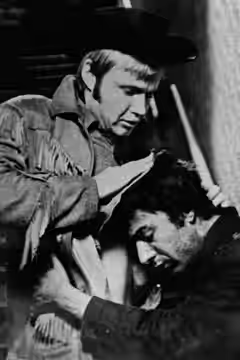
The scene that got us is the one where Ratso first shows Joe the flat. He walks him round it like an estate agent, pointing out the view, defending the cold, insisting it is fine, and Joe, who has been robbed by everyone else, stands there and decides to believe him. We were moved more than we expected, and it was Voight’s face that did it: he knows he is being lied to and has decided it does not matter. Everything the film has to say about the pair is in that flat.

What has aged is the editing. Hugh A. Robertson cuts away from the street to Joe’s childhood with Sally Buck (Ruth White) and a girl called Annie (Jennifer Salt), in bleached and tinted stock, and to black-and-white nightmares that tell us Joe is damaged without telling us anything we could not have read off Voight. It looked modern in 1969. Now it looks like a director nervous that two men in a flat would not hold us, when the two men in the flat are why the film has lasted. A long party sequence in the second half has the same restlessness, and the film’s disgust at the gay men Joe deals with is doing work the writing should have done itself.

None of that sinks it. The friendship holds, the city holds, and the final stretch, which we will not describe, is as plain and as sad as the rest has earned. It carries an 18 certificate and deserves one; there is a scene in a cinema that is hard to sit through, and it is meant to be.

Watch it with the sound up. The harmonica gets in.
Critical consensus AI synthesised

81
Positive
10
Mixed
2
Negative
0

Most critics like this, and nearly all of them like it for the same reason. Jon Voight’s Joe Buck and Dustin Hoffman’s Ratso Rizzo are named in almost every review, and the friendship between them, two lonely men in a low-rent New York with no conventional love interest to soften it, is what the reviews return to. The locations draw praise too: Times Square and the city’s shabbier corners are felt to be authentic rather than dressed. Several critics treat the film as a hinge between old Hollywood and the grittier films of the 1970s.

The reservations cluster around John Schlesinger’s direction, and specifically the flashbacks. Roger Ebert, writing in 1969, thinks the fashionable tricks undermine the material, and the Los Angeles Times still calls them a flaw a quarter of a century later. Variety is cooler still, seeing shock value more than substance. The pattern is plain: the contemporary reviews are the mixed ones, and the retrospective reviews are almost uniformly warm.

The Times
13 September 2019 · ★★★★★ · Kevin Maher
100

The tone is deceptively playful as novice prostitute Joe Buck arrives in New York with naive dreams. The beauty is the slowly evolving friendship of Buck and Dustin Hoffman’s eccentric Ratso Rizzo; the direction is radical and the lines are to die for.

Read the full review →
Time Out
10 September 2019 · ★★★★★ · Sophie Monks Kaufman
100

The critic calls the newly restored film one of the great depictions of the transition to the gritty 1970s and a moving epitaph to its two striving characters and the American dream itself. Strong praise goes to the central performances by Jon Voight and Dustin Hoffman.

Read the full review →
The AV Club
7 March 2006 · A- · Noel Murray
90

The critic sees the film as a flawed but effective New Hollywood landmark that blends edgy subject matter with pop sensibilities, praising the strong lead performances by Voight and Hoffman, authentic New York and Texas locations, visual wit, and emotional core of loneliness and yearning.

Read the full review →
The Guardian
12 September 2019
90*

Fifty years on, Jon Voight and Dustin Hoffman’s squabbling amid the squalor of low-rent New York remains a heartbreaking triumph. The film is about two men finding friendship in the desolate common cause of their loneliness, delivered with potency and force.

Read the full review →
Empire
23 March 2006 · Adam Smith
85*

The review praises the film as a landmark that took risks in the late 1960s, highlighting its outsider perspective on New York and the groundbreaking performances by Jon Voight and Dustin Hoffman as its emotional core. It notes the film's Oscar success despite its X rating and calls the mix of Oscar-winner and cult classic a testament to superb performances and a compelling script.

Read the full review →
Slant Magazine
21 August 2018 · Niles Schwartz
85*

The critic presents the film as a key New Hollywood work marking the transition from Old Hollywood, highlighting the central unlikely friendship between the delusional Joe Buck and Ratso Rizzo, the themes of isolation and human connection amid a commodified world, and Schlesinger’s expressive visual style and use of varying film stocks.

Read the full review →

Cast

Awards

Academy Awards, 1970

Nominated
Best Actor
Nominated
Best Film Editing
Nominated
Best Supporting Actress
Won
Best Director
Won
Best Picture
Won
Best Writing, Adapted Screenplay

If you liked this, try…

Scarecrow poster

Scarecrow

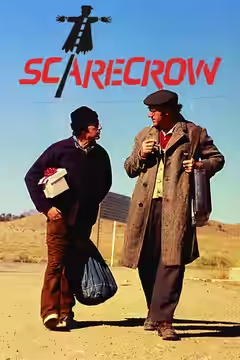
1973 · Hackman and Pacino drift across America; the same friendship, with the same weather.

Accattone poster

Accattone

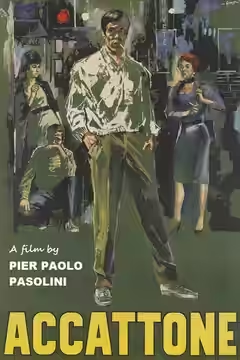
1961 · Pasolini’s Roman pimp is Ratso with better teeth and fewer illusions.

Naked poster84

Naked

1993 · Mike Leigh sends David Thewlis through London at night; talkier, angrier, just as cold.

Fat City poster

Fat City

1972 · John Huston’s boxers in Stockton, California, losing slowly and politely.

Tangerine poster84

Tangerine

2015 · Los Angeles on Christmas Eve, shot on phones, with hustlers who move faster than Joe.