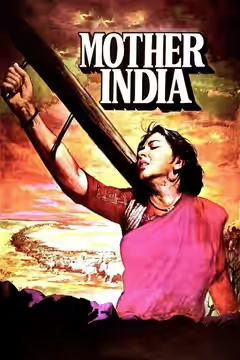
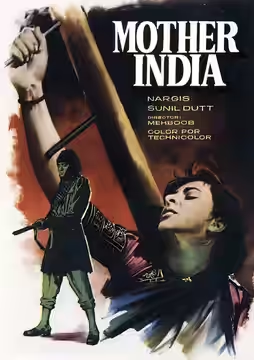
Nargis makes Mother India a moving account of endurance, despite Mehboob Khan’s tendency to underline every feeling. The colour and music justify much of its scale, though the repetition makes those 175 minutes feel long.
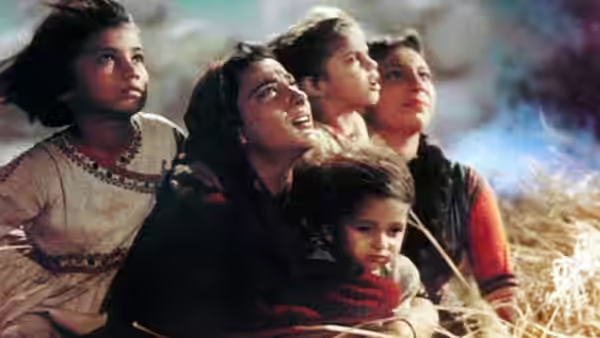
Mehboob Khan’s Mother India is good, forceful melodrama that asks for more patience than it always repays. Its scale makes sense: Radha’s endurance is meant to matter beyond her own life, and a small, discreet film would scarcely serve that ambition. Nargis gives the suffering enough stubborn humanity to make it moving. Over 175 minutes, though, the repeated emphasis becomes a burden, especially when we have understood a feeling and the film is still explaining its importance.
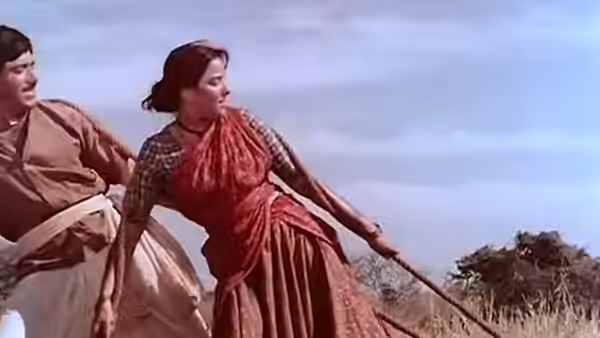
The strength of Nargis’s performance is that Radha never seems content simply to be pitied. She plays the hardship with an obstinacy that keeps the character from becoming a convenient source of tears. We were moved by that stubbornness, and by how firmly she keeps it visible beneath the sentiment. The acting is broad, but she makes determination legible without letting Radha disappear into a general lesson about courage.
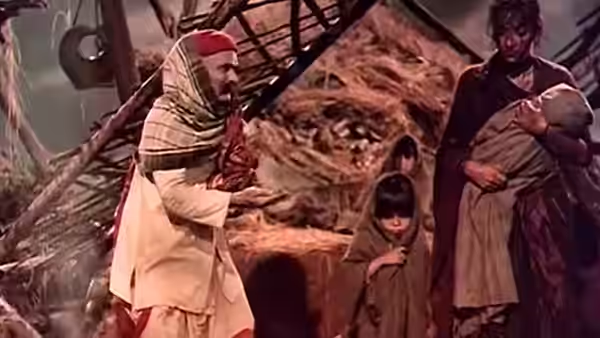
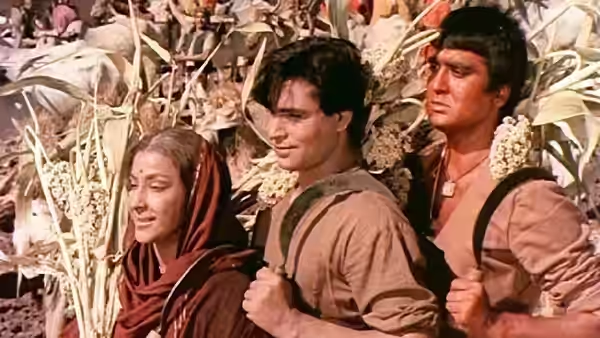
Faredoon A. Irani’s cinematography gives rural life a richness of colour that helps explain the attachment to it. There is beauty here as well as deprivation, and the film would be poorer if the setting existed only to prove how much Radha must bear. Occasionally the prettiness threatens to make the suffering seem too arranged for our benefit. For much of the running time, however, the images supply a pleasure that the story, understandably, cannot offer.
Naushad’s music is equally open about what it wants from us, giving the emotions space to expand through song. The musical passages belong to the way this film tells its story, and wishing them all away would be a peculiar way to approach it. But their persistence sometimes adds emphasis where the acting has already done enough. Some quiet would help, particularly when Nargis has already made the feeling plain and needs no further assistance.
Shamsudin Kadri’s editing accommodates that expansiveness, allowing the film to linger over its feelings. There is value in making endurance take time; a brisk account of suffering might be easier to sit through and less affecting. Some passages nevertheless continue beyond the point at which their emotional purpose is clear. More changes in pace would help justify the length, allowing us to recover between the stronger demands on our sympathy.
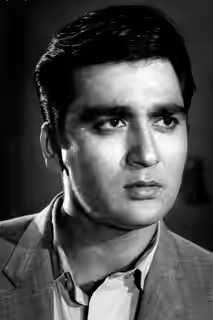
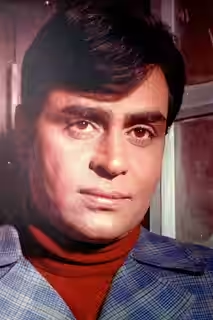
Sunil Dutt as Birju, Rajendra Kumar as Ramu and Raaj Kumar as Shamu belong to a cast working on the same emphatic scale. Judged by the standards of restrained domestic drama, much of this would look excessive; popular melodrama has other ways of making people recognisable. Even allowing for that, the film needs more variation in the size of its responses. The national significance placed on Radha’s suffering sometimes crowds out our interest in her as an individual woman.
Nargis is the reason to accept the demands: she makes perseverance interesting when it might have become merely respectable. We recommend it to anyone willing to give a large, musical melodrama room to work. Set aside the full evening, and bring some tolerance for being told twice.