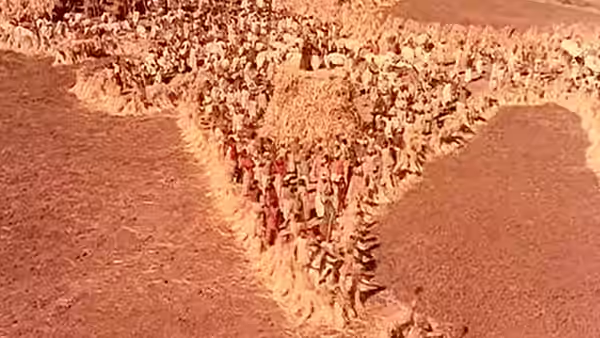
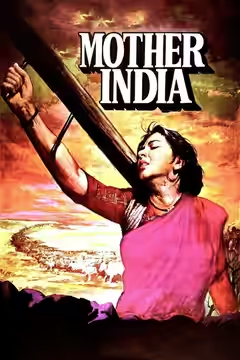
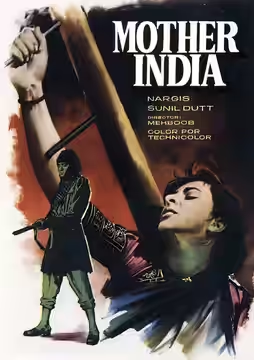
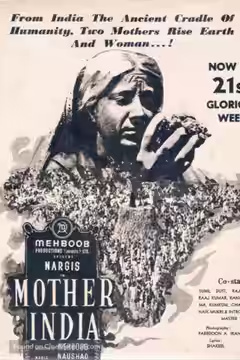
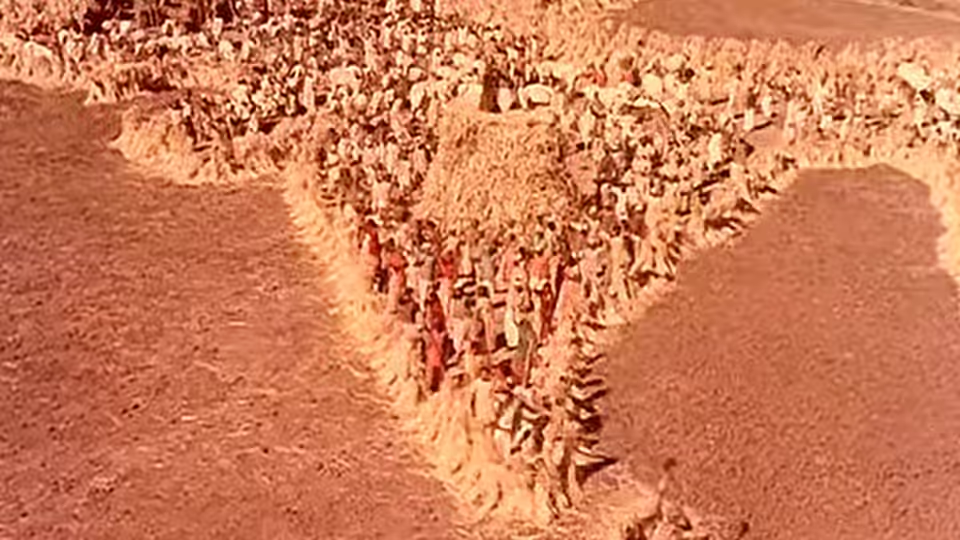
Villagers walk along a narrow path between broad fields
Film review

Mother India

1957 · Directed by Mehboob Khan · 2h 55m

In a sentenceNargis keeps going through everything; after nearly three hours, we wanted someone to bring her a chair

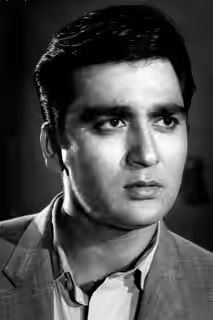
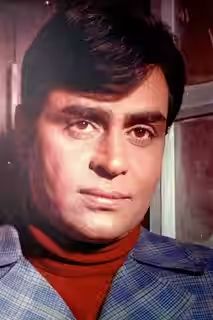
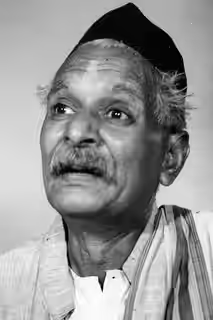
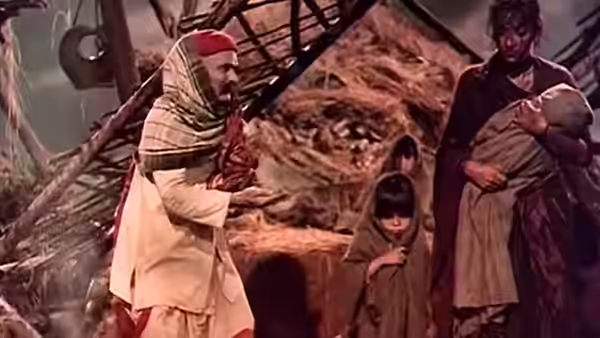
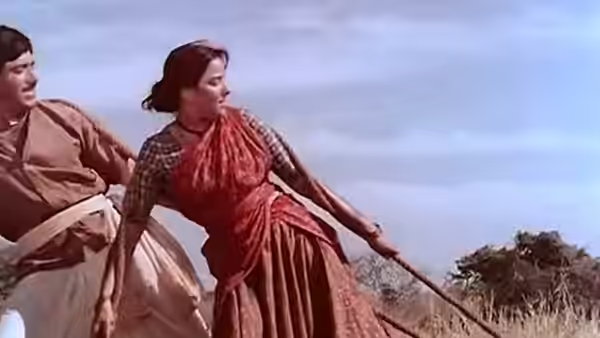
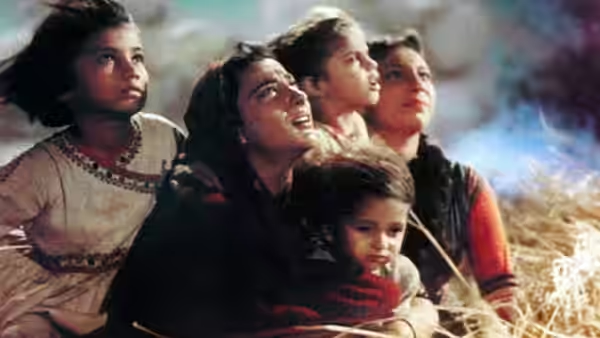
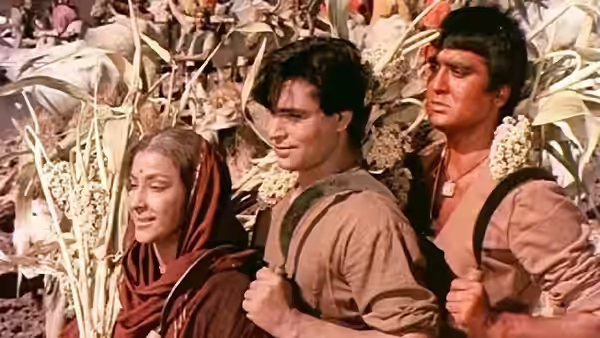
Radha (Nargis) faces hardship in a rural community, where her determination is repeatedly tested. Her story takes in Shamu (Raaj Kumar), Birju (Sunil Dutt), Ramu (Rajendra Kumar) and Sukhilala (Kanhaiyalal). Songs and dances accompany her efforts to keep going, as the drama moves between her personal suffering and a wider picture of rural life. Radha’s perseverance takes on a national significance, connecting a woman’s endurance to a country’s hardships. Mehboob Khan’s 1957 drama unfolds over 175 minutes, with Radha’s struggles at its centre.

Fi1m review

Nargis makes Mother India a moving account of endurance, despite Mehboob Khan’s tendency to underline every feeling. The colour and music justify much of its scale, though the repetition makes those 175 minutes feel long.

Mehboob Khan’s Mother India is good, forceful melodrama that asks for more patience than it always repays. Its scale makes sense: Radha’s endurance is meant to matter beyond her own life, and a small, discreet film would scarcely serve that ambition. Nargis gives the suffering enough stubborn humanity to make it moving. Over 175 minutes, though, the repeated emphasis becomes a burden, especially when we have understood a feeling and the film is still explaining its importance.

The strength of Nargis’s performance is that Radha never seems content simply to be pitied. She plays the hardship with an obstinacy that keeps the character from becoming a convenient source of tears. We were moved by that stubbornness, and by how firmly she keeps it visible beneath the sentiment. The acting is broad, but she makes determination legible without letting Radha disappear into a general lesson about courage.

Faredoon A. Irani’s cinematography gives rural life a richness of colour that helps explain the attachment to it. There is beauty here as well as deprivation, and the film would be poorer if the setting existed only to prove how much Radha must bear. Occasionally the prettiness threatens to make the suffering seem too arranged for our benefit. For much of the running time, however, the images supply a pleasure that the story, understandably, cannot offer.

Naushad’s music is equally open about what it wants from us, giving the emotions space to expand through song. The musical passages belong to the way this film tells its story, and wishing them all away would be a peculiar way to approach it. But their persistence sometimes adds emphasis where the acting has already done enough. Some quiet would help, particularly when Nargis has already made the feeling plain and needs no further assistance.

Shamsudin Kadri’s editing accommodates that expansiveness, allowing the film to linger over its feelings. There is value in making endurance take time; a brisk account of suffering might be easier to sit through and less affecting. Some passages nevertheless continue beyond the point at which their emotional purpose is clear. More changes in pace would help justify the length, allowing us to recover between the stronger demands on our sympathy.

Sunil Dutt as Birju, Rajendra Kumar as Ramu and Raaj Kumar as Shamu belong to a cast working on the same emphatic scale. Judged by the standards of restrained domestic drama, much of this would look excessive; popular melodrama has other ways of making people recognisable. Even allowing for that, the film needs more variation in the size of its responses. The national significance placed on Radha’s suffering sometimes crowds out our interest in her as an individual woman.

Nargis is the reason to accept the demands: she makes perseverance interesting when it might have become merely respectable. We recommend it to anyone willing to give a large, musical melodrama room to work. Set aside the full evening, and bring some tolerance for being told twice.

Critical consensus AI synthesised

65
Positive
2
Mixed
3
Negative
1

The reviews lean towards a mixed assessment of Mother India, with praise centred on its historical importance and its heroine’s endurance. Empire regards it as a landmark in the development of the Bollywood blockbuster, while Radio Times values its rural lyricism and emotionally resonant account of hardship. Total Film singles out Nargis’ wilful performance and her character’s resilience, finding strength in the central role despite reservations about the film’s scale and style.

The spread of opinion is wide, and the clearest disagreement concerns the melodrama. Total Film finds it overblown but representative of popular Hindi cinema; The Guardian is much less persuaded, treating the sentimentality, broad acting and relentless song-and-dance numbers as colourful kitsch. The strongest praise therefore sits some distance from the sharpest dismissal. Two of the six reviews have no accessible text, limiting what can be said about the reasons behind the middle ground.

Empire
1 January 2000 · David Parkinson
90*

The review calls the film a landmark and an essential watch for cineastes. It particularly praises its place as the birth of the Bollywood blockbuster.

Read the full review →
Radio Times
★★★★ · David Parkinson
80

The review treats the film as an epic, emotionally resonant story of hardship and perseverance. It praises the rural lyricism and Radha’s transformation into a symbol of national suffering and endurance.

Read the full review →
The New York Times
23 August 2002
64*

The page appears to be a review of the specified film, but its text is inaccessible. I cannot determine the critic’s verdict or what the review singled out.

Read the full review →
Time Out
· TJ
64*

The available page identifies this as a review, but its verdict cannot be determined from the supplied material. No praise or complaint is available because the review text is absent.

Read the full review →
Total Film
3 May 2002 · ★★★ · Total Film
60

The review finds the film an overblown but quintessential example of popular Hindi cinema. It singles out Nargis’ wilful performance and her character’s enduring resilience as the film’s strength.

Read the full review →
The Guardian
5 May 2002 · Philip French
30*

French views the film as colourful kitsch, weighed down by melodrama and sentimentality. He singles out its broad, rhetorical acting and relentless song-and-dance numbers as evidence of its overblown style.

Read the full review →

Straight answers AI written, from our review

Is Mother India worth watching?
Mother India is worth watching for Nargis’s moving performance and its rich colour and music; we score it 76 out of 100. We recommend it to anyone with an appetite for expansive musical melodrama, though repeated emotional emphasis makes its 175 minutes feel long.
How long is Mother India, and what is it rated?
Mother India runs 2h 55m. It is a drama film.
Where can I watch Mother India in Croatia?
Mother India is not on any streaming or rental service in Croatia at the moment. It is available in 1 other country; change your country at the top of the page to see where. Availability is checked daily.
How does Mother India compare to The Grapes of Wrath?
Mother India approaches rural hardship and family loyalty with more musical ceremony than The Grapes of Wrath, but comparable moral force. We favour The Grapes of Wrath for restrained performances and less insistence on each feeling; Mother India suits an appetite for broad melodrama, with Nargis giving its repeated suffering a stubborn humanity.
What should I watch after Mother India?
After Mother India, try The Grapes of Wrath (1940, Fi1m 86): Rural hardship and family loyalty, with less ceremony and comparable moral force. Then Sansho the Bailiff (1954, Fi1m 92): Family suffering given patient attention, without losing its capacity to disturb.

Cast

Awards

Academy Awards, 1958

Nominated
Best International Feature Film

Filmfare Award for Best Film, 1958

Won
Filmfare Award for Best Film

International Submission to the Academy Awards, 1958

Nominated
International Submission to the Academy Awards

If you liked this, try…

  1. The Cloud-Capped Star (1960) · not on Fi1m yetAnother woman’s endurance, treated with tenderness and a sharper anger about sacrifice.

  2. The Grapes of Wrath (1940, Fi1m 86)Rural hardship and family loyalty, with less ceremony and comparable moral force.

  3. Sansho the Bailiff (1954, Fi1m 92)Family suffering given patient attention, without losing its capacity to disturb.

  4. To Live (1994) · not on Fi1m yetA family’s daily survival makes vast political upheavals painfully particular.

  5. Daughters of the Dust (1991) · not on Fi1m yetWomen, community and richly expressive images, with a less insistent emotional rhythm.

Mother India (1957) review: Moving drama that pushes too hard (Croatia) | Fi1m