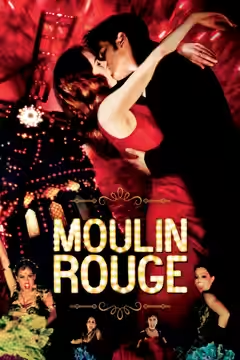
John Huston’s Toulouse-Lautrec picture opens with twenty minutes of colour and movement as exciting as anything he made, then settles into a solemn, sorrowing artist biopic. José Ferrer is dignified and the Moulin Rouge is a marvel; the script is neither.
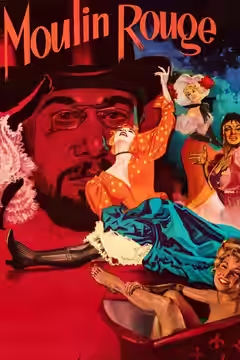
John Huston wanted to put Henri de Toulouse-Lautrec’s Paris on screen in the colours of Toulouse-Lautrec’s own posters, and for the first twenty minutes of Moulin Rouge he does exactly that. Then the dancing stops, the painter goes home and the film becomes a biopic of the tormented-artist kind, adapted by Huston and Anthony Veiller from Pierre La Mure’s novel, in which a gifted, unhappy man is told what he is by everyone he meets. It is worth seeing for the opening and for José Ferrer. It is a long evening otherwise.
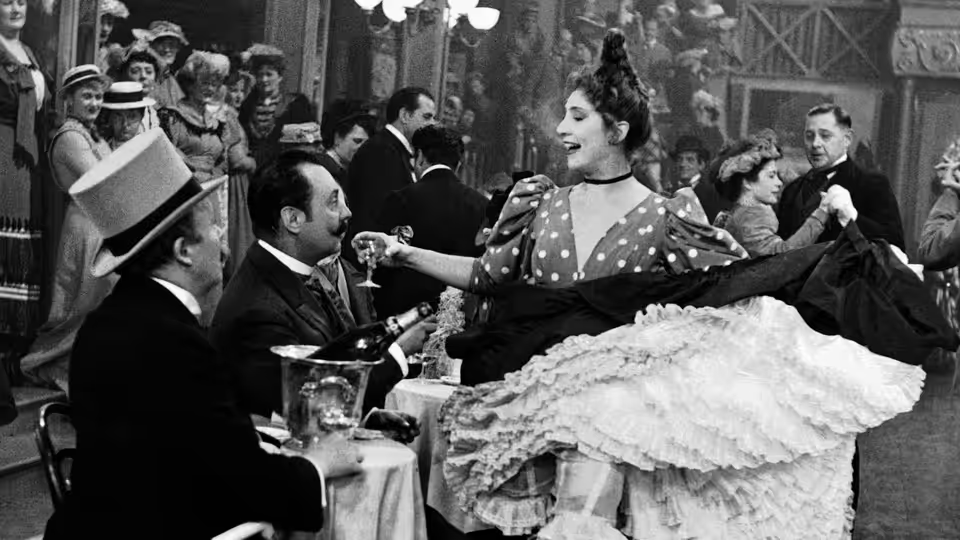
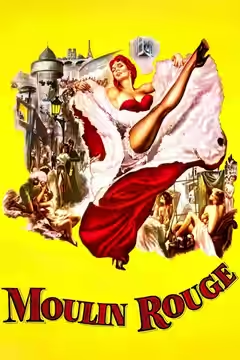
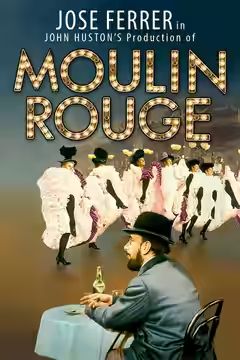
The opening is something. Oswald Morris shoots the Moulin Rouge through a haze of smoke and coloured filters, so that the whites go to chalk and the reds sit flat, like ink on paper rather than light on skin. Louise Weber (Katherine Kath), the dancer known as La Goulue, and Valentin le Desossé (Walter Crisham) take the floor, and Ralph Kemplen cuts on the kicks, so the whole hall seems to jump each time a petticoat goes up. Charles Zidler (Harold Kasket) works the tables, Jane Avril (Zsa Zsa Gabor) sings to the crowd, and at his corner table Lautrec draws it all with a cognac at his elbow. Georges Auric’s waltz comes in under her and stays in the head for a week. We sat up straight, which we do not often do for a film of this age, and we stayed sat up until the lights went down on an empty floor.
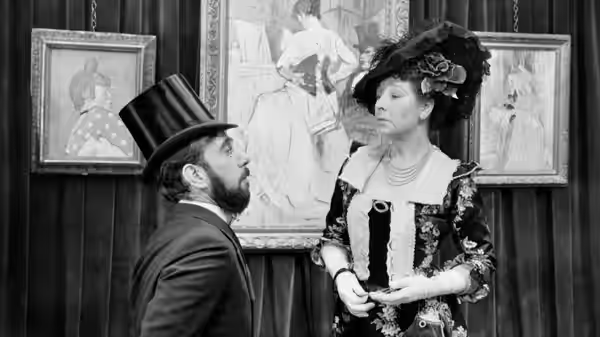
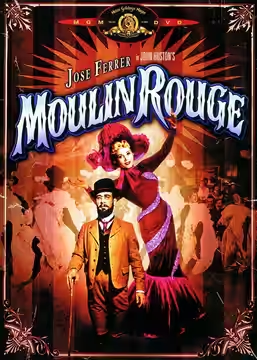
Ferrer plays Lautrec on his knees, with his lower legs strapped up behind him, and the walk he gets out of it, a quick stiff rock with the cane doing half the work, is the film’s second great effect. He gives the man a dry tongue, a bowler and a way of looking at a woman as if he were already regretting the drawing. It is a dignified performance and a lonely one, and the writing undercuts it. The script hands him speeches about art and solitude at roughly ten-minute intervals, and Ferrer delivers them as though reading them off the canvas, because there is no other way to say them.
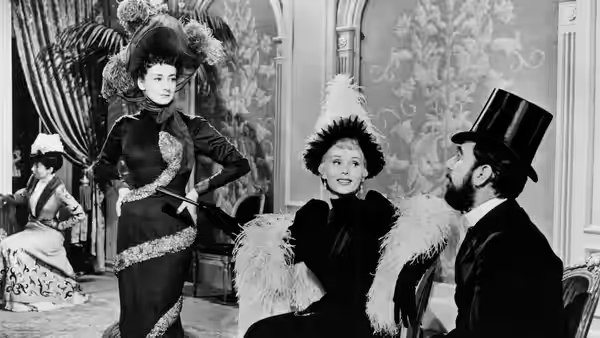
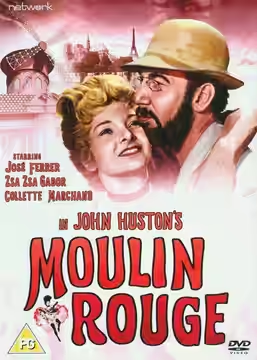
The women are the story, and the film treats them as three panels. Colette Marchand’s Marie Charlet, the streetwalker he takes in on the way home from the club, is the one who lives. She is quick and hard, she treats his rooms as a lodging and him as the wallet attached to it, and Marchand plays every kindness as something Marie is about to charge for. Their scenes have a nastiness the rest of the film cannot manage, and we winced at them, properly, more than once. Gabor’s Jane Avril is used as a poster that moves, sweeping in to be affectionately rude and sweeping out again, and that is the right use for her. Suzanne Flon’s Myriamme Hayam, the grown-up of the piece, arrives in the second half, by which time the film has slowed to the pace of a sitting.
Every time the picture leaves the dance floor for a drawing room the temperature drops. A childhood flashback with Claude Nollier as his mother, the Countess, explains the legs and the sadness in one go, as if we needed telling. Marcel Vertès’s sets and costumes, with Schiaparelli sharing the dressmaking credit, are still handsome in these stretches, all red plush and gaslight, but they are handsome the way a museum is handsome. Nobody in them is in a hurry, and Kemplen, who cut the can-can like a man possessed, cuts the conversations as though paid by the minute.
Huston is at his best with people doing things: prospectors digging in The Treasure of the Sierra Madre (1948), a gang planning a job in The Asphalt Jungle (1950). Moulin Rouge is about a man watching, and Huston does not seem to know what to do with him once the show is over. The colour does its job all the way through. The man in front of it is asked to be sad for a hundred minutes and given almost nothing else to do.
See it, then, for the first reel with the sound up, and for Ferrer and Marchand. It runs 119 minutes, and if you find your attention going somewhere around the hour mark you can console yourself that the best of it is already safely behind you.