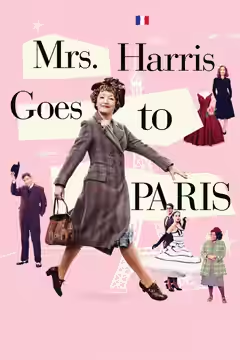
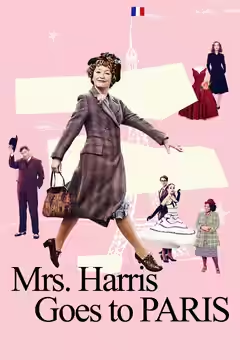
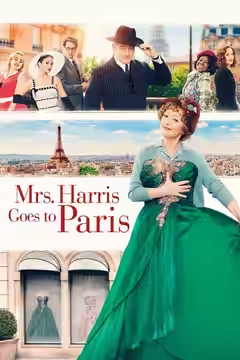
Lesley Manville gives this kind-hearted fashion fantasy enough human feeling to make its conveniences forgivable. The clothes deserve the attention, even when the plotting gets too helpful and the supporting characters are left waiting.
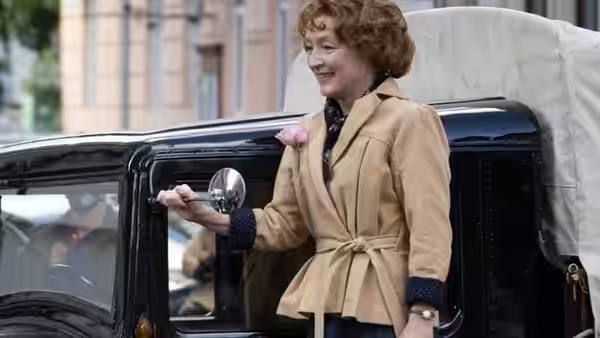
Mrs. Harris Goes to Paris is good company, provided we accept that its troubles will rarely resist kindness for long. Anthony Fabian directs this adaptation of Paul Gallico with an affection for Ada Harris that sometimes makes life rather too easy for her. We can forgive a fair amount because Lesley Manville gives her enough private feeling to keep the sweetness from becoming tiresome. The film takes her interest in beautiful clothes seriously, without treating it as foolishness. We are allowed to enjoy looking at the dresses with her.
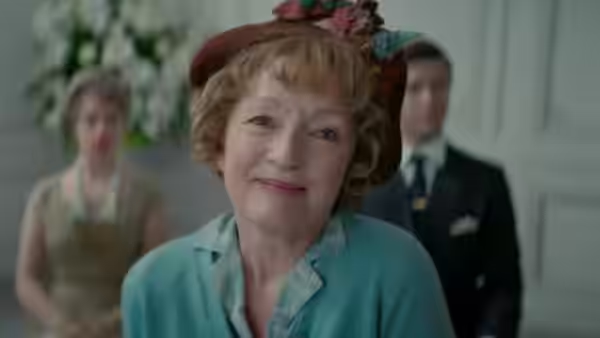
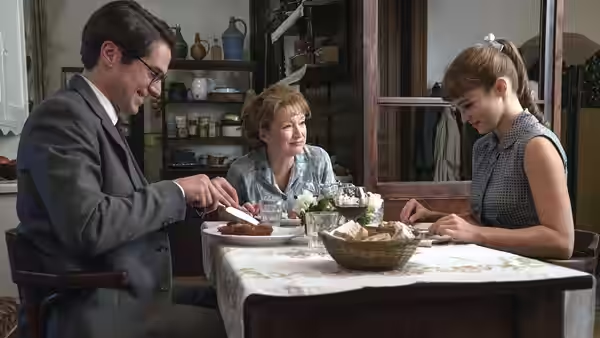
The performance works because Ada’s good humour does not seem like the only thing she possesses. There is room for disappointment and self-consciousness, and her pleasure in clothes feels considered, rather than an excuse for the film to make jokes about her. That makes it easier to accept the more fanciful developments without losing interest in the person they happen to. Isabelle Huppert plays Claudine Colbert, while Lambert Wilson plays the Marquis de Chassagne, but the supporting characters are drawn more simply. The film gives them less to work with than its lead.
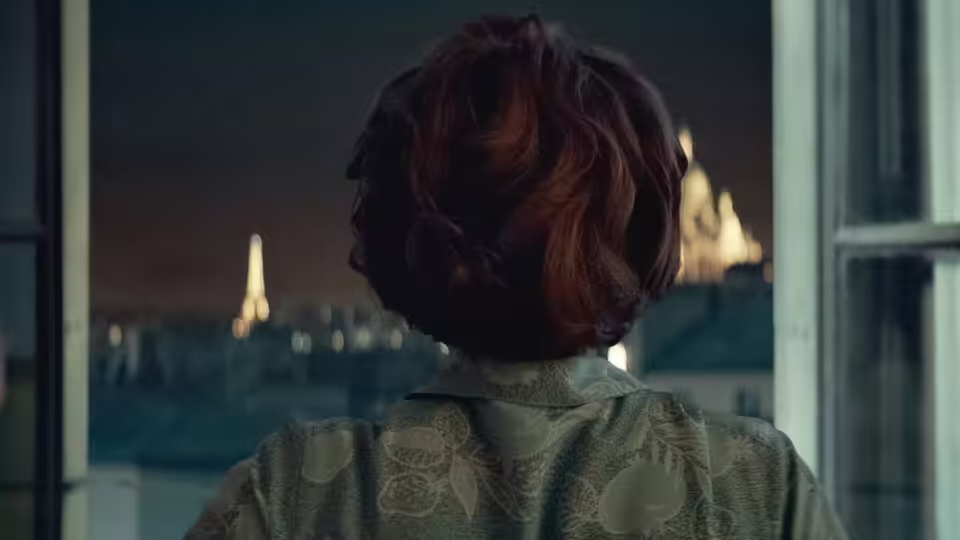
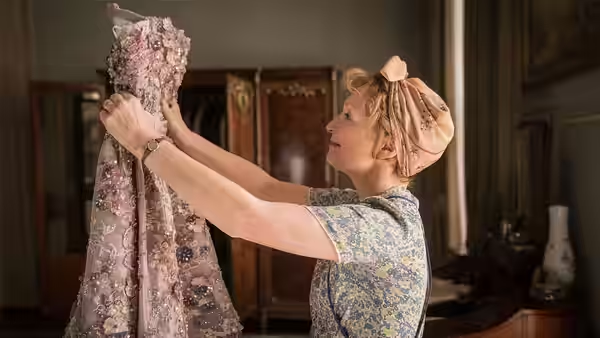
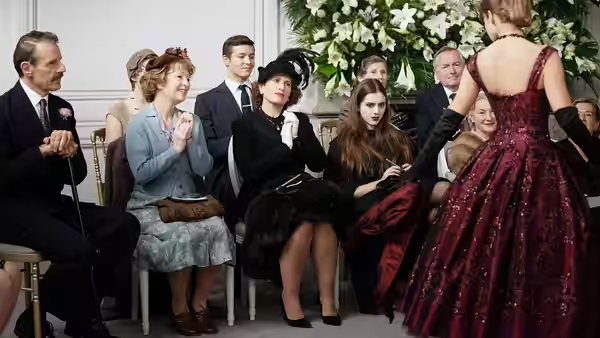
Jenny Beavan’s costumes give that enthusiasm something worth lingering over, particularly in the Dior fashion show. We smiled through it, because the care taken over the dresses makes Ada’s pleasure easy to share. The clothes have enough individual character that looking at one after another does not feel like waiting for the story to resume. Felix Wiedemann’s cinematography gives them the attention they need, allowing us to take in the shapes and appreciate the differences. This is one stretch where the film’s lack of hurry works in its favour.
Luciana Arrighi’s production design makes an inviting setting for the clothes, though the prettiness occasionally feels too carefully managed. We never much doubt that we are being offered an escape, and the surroundings do their share of the persuading. A film about wanting something beautiful has a reasonable claim on looking attractive itself. Rael Jones’s music supports the warmth, which is usually the right scale for a story whose pleasures are so straightforward. The costumes remain the most persuasive part of the film’s appeal, because they make the object of Ada’s fascination worth looking at.
The screenplay keeps arranging helpful circumstances, and eventually that reduces the pleasure of wondering what Ada might do for herself. Barney Pilling’s editing cannot quite settle the uneven pace: some passages linger beyond their usefulness while others could stand a little more breathing room. At 116 minutes, this is not a punishingly long film, but it has time to repeat assurances we have already accepted. The social distinctions are clear enough without the story working quite so hard to explain its sympathies. Its generosity becomes less interesting when the complications feel so readily manageable.
As wish-fulfilment comedies go, this has the useful advantage of liking its central character without requiring us to laugh at her taste. There is some awareness of class beneath the finery, though we would not come here for a searching account of who gets to afford it. The good humour survives the convenient plotting because the lead performance gives us sufficient reason to care. We recommend it for an evening when a modest pleasure will do, with some patience for the tidier passages. There is no need to arrive interested in fashion; an interest in watching Lesley Manville is enough.