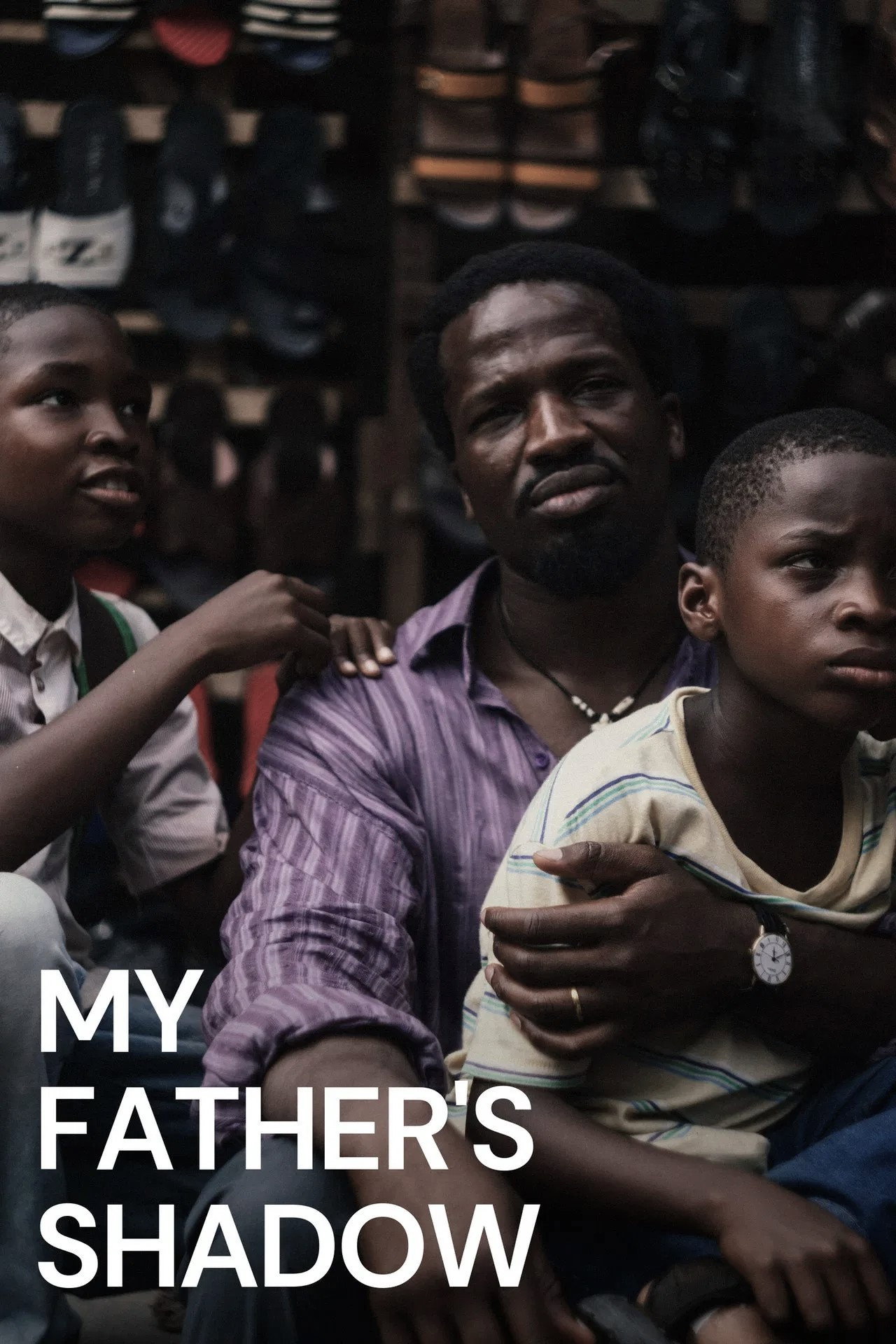
Akinola Davies Jr.’s first film gives two boys a single day in Lagos with the father who has not been there, and it is patient, plain and finally moving. The middle drifts while everyone waits for news. The ending earns the wait.
Folarin (Ṣọpẹ́ Dìrísù) has not been home in a long time. One morning he is there, in the house where his sons Olaremi (Chibuike Marvellous Egbo) and Akinola (Godwin Egbo) have been waiting without admitting it, and he takes them into Lagos for the day. It is 1993, the country has just voted, and every radio is promising a result that keeps not arriving. Akinola Davies Jr., directing his first film from a script written with Wale Davies and drawn from his own childhood, follows the three of them from morning to night. That is the whole shape of it. We liked it a great deal, and the ending is what will decide how much you do.
The two boys are brothers off screen as well as on, and it shows in the way they fight. They argue about who walks nearer their father, they translate him for each other, and when something frightens them they close ranks before either has decided to. Neither has been asked to perform childhood. Davies mostly lets them look, and gives them a great deal to look at. We laughed at their squabbling more than once, and then noticed how carefully both of them were keeping an eye on the tall man ahead.
Dìrísù plays Folarin as a man his sons have half invented. He is quiet, he answers questions a beat late, and he is trying to be a father for one day in a city that keeps pulling him into other business. Dìrísù is good at the small failures: a promise made too quickly, a look over the boys’ heads at something they cannot see. The family moves between three languages and the film does not slow down to help you. It trusts that you will get the sense from the faces, and you do.
Jermaine Canute Edwards keeps the camera low and close, so Lagos arrives the way it would to a child: in pieces, loud, mostly above eye level. Pablo and Jennifer Anti’s production design does not fuss over the period. The year is in the radios and the cars and the way strangers talk about the count, and nobody points at any of it. Duval Timothy and CJ Mirra’s music keeps to the edges and lets the street noise carry most scenes. Omar Guzmán’s editing slips into memory without announcing it: the boys appear smaller, played by Akereli David and Owa Orire Jeremiah, and a scene passes before you are certain when it was.
The middle loosens. Folarin has errands in the city we never quite understand, and for a stretch the boys are parked in rooms while adults talk over them. The election comes in as bulletins and rumour rather than anything the family is made to do, and around the halfway mark there are ten minutes where the film seems as unsure as its characters what to do while it waits. Some of that is the point; a child’s day is mostly waiting. But we were watching people wait and doing the same, and we noticed. Folarin is also kept at a distance throughout, which is right for the boys and occasionally frustrating for us.
Then the day ends, and we will not say how. What we can say is that the last stretch moved us more than the eighty minutes before it had led us to expect, and that it did so without a speech or a swell of music. It comes from a face and from the order in which Davies chooses to show us things. We sat through the credits.
Most critics have been warmer still, and we understand why; films about a remembered childhood are usually forgiven a little drift, and this one has more feeling in it than most. We would only say that the drift is there and that a first-time director will have to lose it next time. It runs 93 minutes and carries a 12A. Take a child old enough to sit through the waiting, because the waiting is where the film lives.