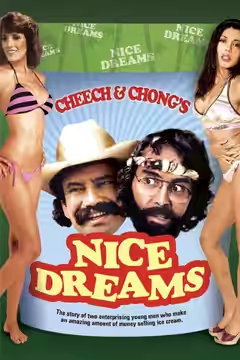
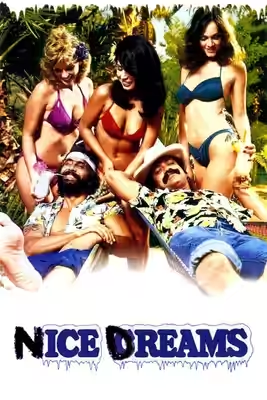
The third Cheech and Chong film has an ice cream van, a great deal of cash and Stacy Keach falling apart in a surveillance vehicle, which is nearly enough. It does not have a story, and after an hour the absence shows.
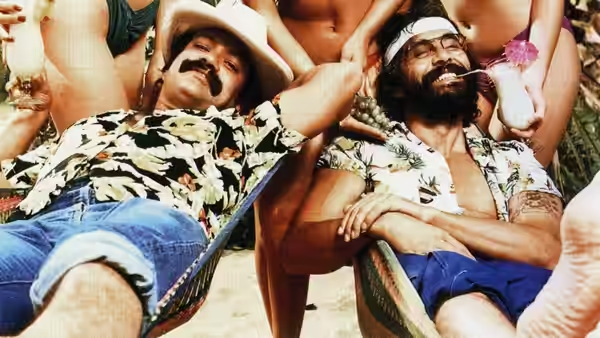
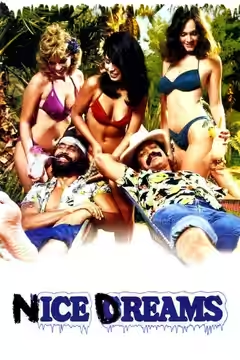
Tommy Chong directs the third Cheech and Chong film from a script he wrote with Cheech Marin, and the setup is the best idea in it: two dealers selling marijuana from an ice cream van, and making so much money they have to think about what money is for. Nice Dreams runs 88 minutes and spends them wandering, which is in character. It is funny in patches, slack for long stretches, and plainly made by people who assumed the audience would arrive in the right frame of mind. If you are that audience, it will do. If you are not, nothing in it will change your mind.
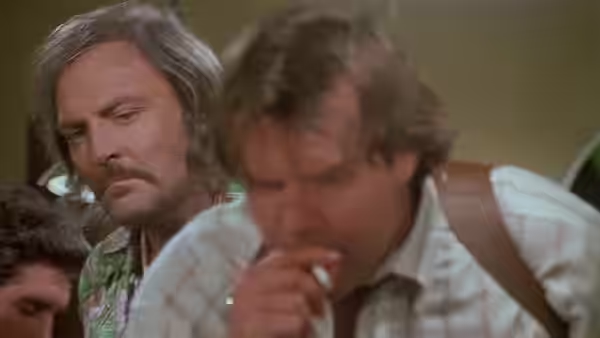
Stacy Keach is the reason to stay. His Sergeant Stedenko, back from Up in Smoke (1978), sits in a vehicle watching the van and smoking the confiscated product, and Keach plays each stage of his decline with a straight face and perfect timing, as if filing a report. We laughed properly at him, more than once, and then felt a little ashamed, because it is the same joke repeated and we laughed every time. That is the honest measure of the film. It has perhaps four jokes and it knows how to tell them.
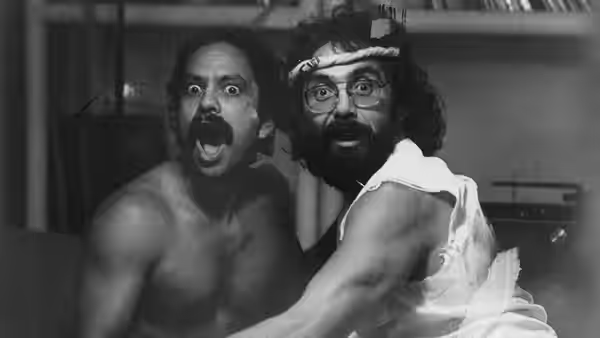
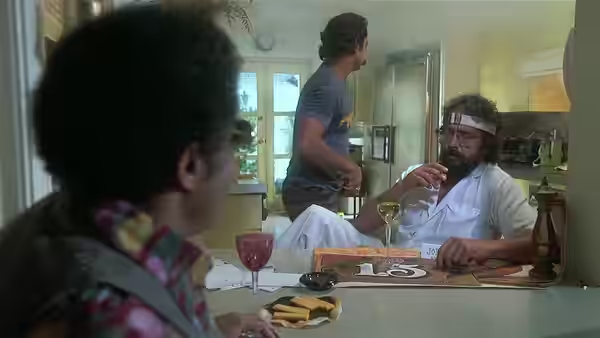
Marin does the work in the double act. He talks, moves, pursues Evelyn Guerrero’s Donna with the confidence of a man who has not noticed she is not interested, and keeps scenes alive by refusing to let them settle. Chong, directing himself, plays slow and reacts late, which is the point of the character but a problem for the director, because he gives every scene the rhythm of his own performance. Tony Lombardo and Thomas K. Avildsen hold shots well past the laugh and cut away only when someone leaves the frame. A sharper edit would have lost ten minutes and nobody would have missed them.
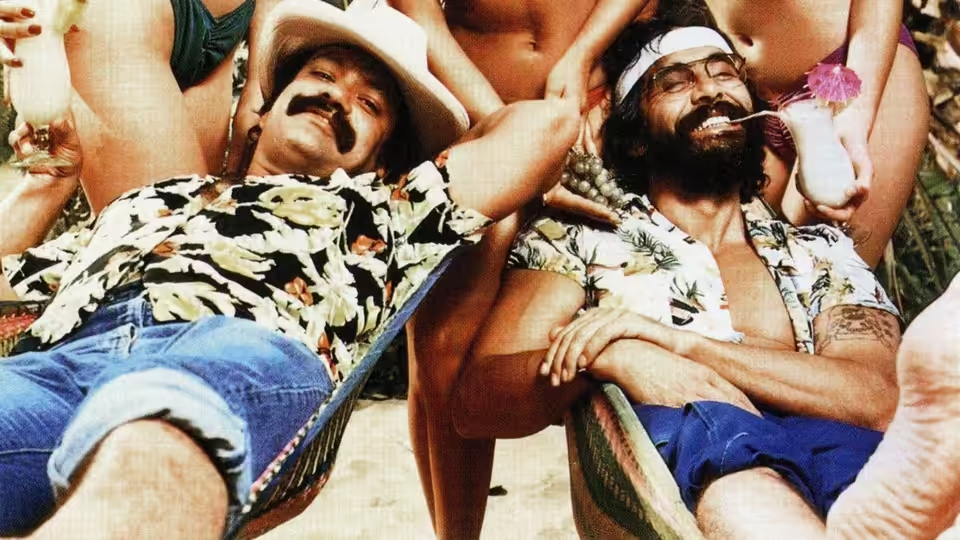
Charles Correll shoots it in flat Californian daylight, beach and car park and hotel corridor, so that the whole thing has the look of someone’s holiday photographs, which suits the material better than anything prettier would have. James William Newport’s van, painted up and lettered and playing its tune, is the one piece of design with any wit in it, and the film keeps going back to it like a comedian returning to a prop. Harry Betts’s score sits under the scenes doing little harm and less work. Paul Reubens turns up as Howie Hamburger Dude, twitchy and talking at double speed, and for his few minutes the film has an energy it cannot keep. Guerrero is given a dress and a set of reactions and not much else.
The second half takes a turn we will not describe. Before it gets there, the film sags. Somewhere around the hour mark we realised we were waiting for the van to come back, and that we had stopped caring whether the money was safe, and the film had not noticed. It was not anger, exactly. It was the feeling of being at a party that has gone on past the point anyone had something to say.
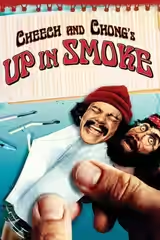
Up in Smoke had a destination: a van, a border, a contest at the end. This has none, and the difference is the whole difference. Sketch comedians can carry a feature when the sketches are strung on something, and here they are strung on the fact that the two men are still high. That is the premise, not the plot, and by the finish Marin and Chong seem to know it, because the last stretch leans on cameos to get across the line.
See it with the people who already like Cheech and Chong, late, with the lights low, and it will seem better than it is. Keach would survive in any company. The rest of it is agreeable, sunlit and content to be nothing more, and at 88 minutes it has the decency to leave before you do.